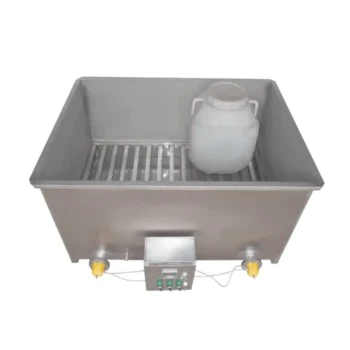
A professional Honey Processing Unit serves as the technological bridge between raw agricultural extraction and the standardized requirements of the formal marketplace. It functions by converting raw harvested honey—which is often variable in texture and purity—into a stable, high-quality product through integrated filtration, heating, dehydration, and impurity removal processes.
Informal honey production is often limited to local sales due to inconsistent moisture levels and visual impurities. By precisely controlling moisture content and eliminating contaminants, professional processing units create the shelf stability and sensory consistency required to meet strict food safety regulations and enter major retail channels.
Achieving Commercial Standardization
The primary barrier to entering formal markets is variability. Retailers require products that are uniform in quality, appearance, and longevity.
Precision Moisture Control
Raw honey frequently contains high water content, which can lead to fermentation and spoilage. A professional processing unit utilizes dehydration technologies to reduce moisture to precise, safe levels. This ensures the extended shelf life necessary for supply chains that span months rather than days.
Elimination of Impurities
Informal extraction methods often leave wax particles, debris, or biological impurities in the final product. Integrated filtration systems mechanically remove these contaminants without degrading the honey. This results in the clear, polished visual aesthetic expected by premium buyers and supermarkets.
Sensory Consistency
Consumers in formal markets expect a specific taste and texture profile every time they purchase a brand. Controlled heating and blending homogenize the batch, preventing immediate separation or inconsistent crystallization. This builds brand trust, as the customer receives the same experience with every jar.
Enabling Scale and Compliance
Transitioning to formal markets requires more than just good honey; it requires adherence to industrial standards.
Meeting Food Safety Regulations
Formal retail channels demand rigorous hygiene standards that manual processing cannot guarantee. Automated units create a closed environment that drastically reduces the risk of secondary contamination. This compliance allows producers to legally sell to supermarkets, export markets, and hospitality chains.
Solving the Efficiency Bottleneck
Manual processing is labor-intensive and creates bottlenecks that limit volume. Professional units automate the workflow, allowing apiaries to process significantly higher volumes without sacrificing quality. This scalability is essential for fulfilling large, recurring commercial orders.
Understanding the Trade-offs
While essential for growth, adopting professional processing technology introduces new variables that must be managed carefully.
The Risk of Over-Processing
Excessive heating or ultra-filtration can strip honey of its unique local pollen and enzymes. If not monitored, this can degrade the product's nutritional value and distinct flavor profile. Operators must balance commercial stability with the preservation of the honey's natural characteristics.
Capital and Operational Complexity
These units represent a significant financial investment compared to traditional extraction gear. They also require a higher level of technical expertise to operate and maintain. Mismanagement of the equipment can lead to scorched batches or equipment failure, negating the efficiency gains.
Making the Right Choice for Your Goal
To successfully transition to a formal market, your equipment choice must align with your specific commercial target.
- If your primary focus is large-scale supermarket retail: Prioritize units with high-throughput dehydration and aggressive filtration to ensure maximum shelf stability and uniform clarity.
- If your primary focus is high-end boutique or health markets: Select equipment with precise, low-temperature controls to stabilize the honey while preserving its enzymatic activity and distinct floral notes.
Investing in the right processing capability transforms beekeeping from a variable agricultural activity into a reliable, scalable commercial enterprise.
Summary Table:
| Feature | Informal Production | Professional Processing Unit | Commercial Benefit |
|---|---|---|---|
| Moisture Control | High/Variable (Fermentation Risk) | Precision Dehydration | Extended Shelf Life & Stability |
| Purity | Contains Wax/Debris | Integrated Multi-stage Filtration | Visual Appeal & Food Safety |
| Texture | Inconsistent Crystallization | Homogenization & Controlled Heating | Brand Trust & Sensory Consistency |
| Volume | Labor-intensive/Limited | Automated High-throughput | Scalability for Large Orders |
| Compliance | Difficult to Certify | Closed Sanitary Environment | Access to Supermarkets & Exports |
Scale Your Apiary into a Global Brand with HONESTBEE
Transitioning from local sales to professional retail requires more than just honey—it requires industrial precision. HONESTBEE empowers commercial apiaries and distributors with a complete suite of professional beekeeping tools and advanced machinery.
Whether you need specialized hive-making machines, high-speed honey-filling lines, or commercial-grade processing units, our equipment is designed to ensure your product meets the most rigorous international standards. We provide the full spectrum of industry consumables and honey-themed cultural merchandise to help you capture every segment of the market.
Ready to automate your production and secure your place in the formal market?
Contact our experts today to build your customized processing solution.
References
- William Shu Neba, Pius T. Tanga. APICULTURE AS A LIVELIHOOD ACTIVITY IN MAYO DARLE, CAMEROON: A SUSTAINABLE LIVELIHOOD FRAMEWORK ANALYSIS. DOI: 10.62034/2815-5300/2024-v1-i5-007
This article is also based on technical information from HonestBee Knowledge Base .
Related Products
- Electric Double Wall Honey Filtering Machine Purifier Equipment for Honey Processing Plant
- Heavy Duty Stainless Steel Honey Processing Machine Decrystallizing Tank
- Double Wall Honey Heating Stirring Homogenizer Mixing Machine with Various Capacity
- Honey Concentrating and Filtering Dehumidifier Machine 2T Capacity for Honey
- 0.5T Capacity Honey Dehumidifier Dryer with Vacuum Heating and Thickening Filtering Machine
People Also Ask
- What types of equipment are used in honey filtering? Build an Efficient System for Pure, Marketable Honey
- What is the process of filtering honey? A Guide to Clean, Pure, and Market-Ready Honey
- What is the overall importance of using the right equipment in honey filtering? Boost Quality & Marketability
- What are the benefits of drying honey filtering equipment after use? Protect Your Honey Quality & Equipment Investment
- How should honey filtering equipment be properly maintained? Extend Equipment Life & Protect Honey Purity