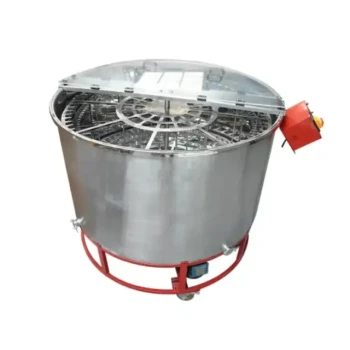
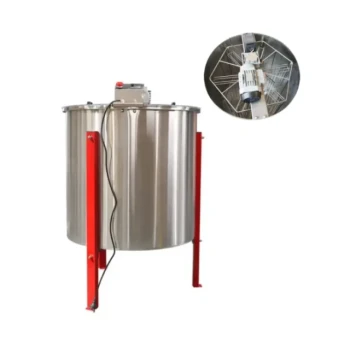
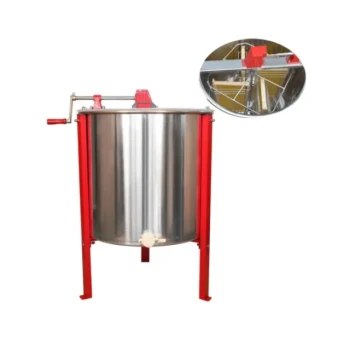
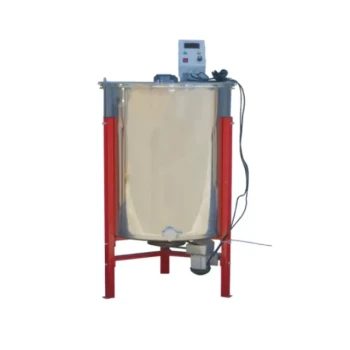
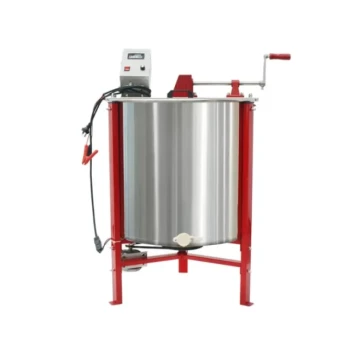
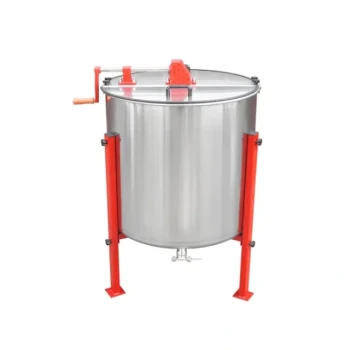
A honey extractor serves as the cornerstone of modern efficient apiary management by using centrifugal force to separate liquid honey from the comb without destroying the wax structure. This mechanical process allows the empty honeycombs to be returned to the hive intact, eliminating the need for bees to rebuild them and thereby significantly boosting future production.
By preserving the honeycomb structure during harvest, an extractor redirects the colony's energy from construction back to production. This critical shift shortens the turnaround time between harvests and increases the total honey yield.
The Mechanics of Extraction
Leveraging Centrifugal Force
The fundamental function of a honey extractor is the application of centrifugal force.
Frames of uncapped honey are placed into a drum, which is then spun. This physical force draws the liquid honey out of the cells and onto the walls of the extractor, where it drains to the bottom for collection.
Non-Destructive Separation
Unlike traditional methods that crush or press the comb to release honey, an extractor leaves the structural integrity of the wax completely intact.
This is the device's primary technical advantage. It isolates the harvestable product (honey) while preserving the production infrastructure (the comb).
The Biological Impact on Yield
Reducing Energy Waste
Bees consume a significant amount of honey and energy to secrete the wax required to build honeycombs.
When a beekeeper uses an extractor, they prevent the destruction of this wax. Consequently, the colony does not need to consume its own honey stores to rebuild the hive structure, directly preserving resources.
Shortening the Production Cycle
Because the honeycombs are recycled back into the beehive immediately after extraction, the colony can resume foraging and nectar storage without delay.
This significantly shortens the production cycle. The time that would have been spent rebuilding the nest is instead spent filling the existing cells with new nectar.
Increasing Overall Yield
The combination of reduced energy consumption by the bees and a faster return to foraging leads to a measurable increase in total honey yield.
By mechanizing the extraction, the beekeeper essentially allows the colony to focus entirely on production rather than reconstruction.
Operational Trade-offs
Equipment Maintenance and Hygiene
While extraction increases yield, it introduces a requirement for strict equipment hygiene.
Extractors must be thoroughly cleaned to prevent contamination or the spread of disease between frames. The efficiency gained in the hive is balanced by the operational maintenance required to keep the machinery sanitary.
Dependence on Frame Standardization
The use of an extractor requires the apiary to utilize movable frames that fit the specific dimensions of the machine's basket.
This dictates a level of standardization in hive management. Beekeepers cannot easily extract honey from wild comb or irregular structures without reverting to destructive methods.
Making the Right Choice for Your Goal
To maximize the benefits of a honey extractor, consider your specific production objectives:
- If your primary focus is Maximizing Yield: Prioritize the immediate return of wet, extracted combs to the hive, as this eliminates the biological "tax" bees pay to create new wax.
- If your primary focus is Speed of Production: Utilize the extractor to minimize hive downtime, allowing for multiple harvest cycles within a single season.
Ultimately, the honey extractor transforms beekeeping from a resource-intensive cycle of destruction and rebuilding into a continuous, efficient loop of production.
Summary Table:
| Feature | Mechanical Impact | Biological Benefit |
|---|---|---|
| Centrifugal Force | Separates honey from cells without crushing | Preserves the integrity of the wax comb |
| Comb Preservation | Allows empty combs to be recycled into hives | Saves bees from high-energy wax production |
| Cycle Efficiency | Minimizes hive downtime between harvests | Enables faster foraging and increased total yield |
| Standardization | Requires movable, uniform frame systems | Facilitates professional, large-scale hive management |
Elevate Your Apiary Efficiency with HONESTBEE
As a professional beekeeper or distributor, your success depends on maximizing honey yield while minimizing labor. HONESTBEE specializes in empowering commercial apiaries with high-performance honey-extracting machinery and a full spectrum of beekeeping tools designed for durability and hygiene.
From automated honey-filling machines to specialized hive-making equipment and essential consumables, we provide the hardware you need to turn a resource-intensive cycle into a streamlined production loop. Partner with us to access professional wholesale solutions tailored to your business growth.
Ready to scale your production?
Contact HONESTBEE Today to explore our comprehensive equipment catalog!
References
- Tamrat Gebiso. Adoption of Modern Bee Hive in Arsi Zone of Oromia Region: Determinants and Financial Benefits. DOI: 10.4236/as.2015.63038
This article is also based on technical information from HonestBee Knowledge Base .
Related Products
- HONESTBEE 72 Frame Industrial Electric Honey Extractor for Beekeeping
- Commercial Electric 12 Frame Honey Extractor Spinner Motorized Honey Extractor
- HONESTBEE 6 Frame Self Reversing Electric Honey Extractor for Beekeeping
- HONESTBEE 3-Frame Manual Acrylic Honey Extractor
- Stainless Steel Manual 8 Frame Radial Honey Extractor Machine for Beehives
People Also Ask
- What is the importance of balancing honeycomb frames within a honey extractor? Ensure Stability and Protect Machinery
- How is honey separated from the frames after they are uncapped? Efficient Extraction Methods for High Yields
- What are the main benefits of using a honey extractor? Maximize Yields and Protect Your Honeycomb
- What are the recommended methods for removing honey from the honeycomb? Top Extraction Techniques for Maximum Efficiency
- How do manual honey extractors compare to electric honey extractors? Choosing the Right Tool for Your Apiary Growth