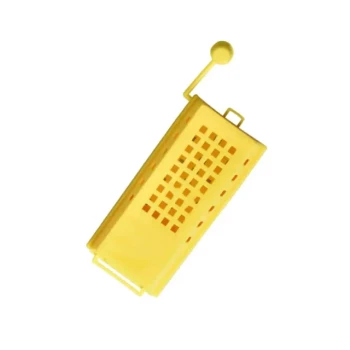
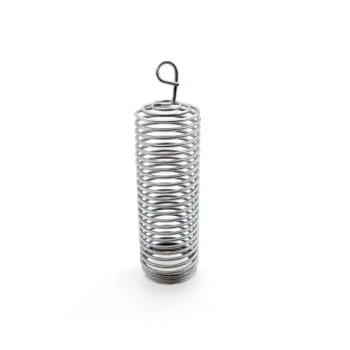
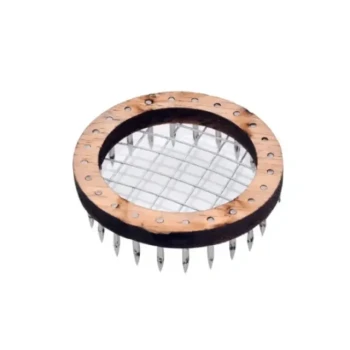
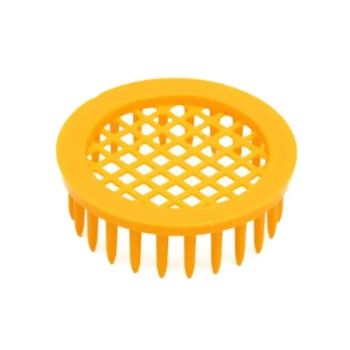
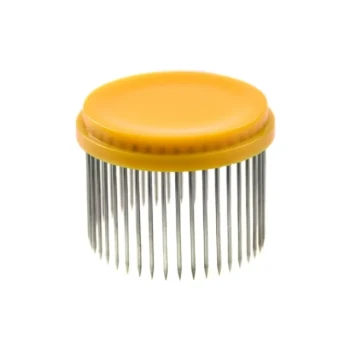
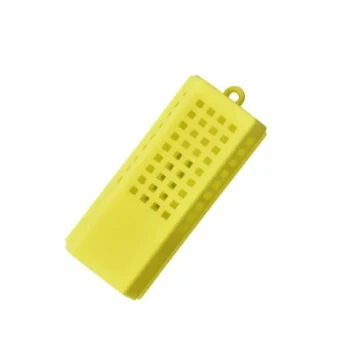
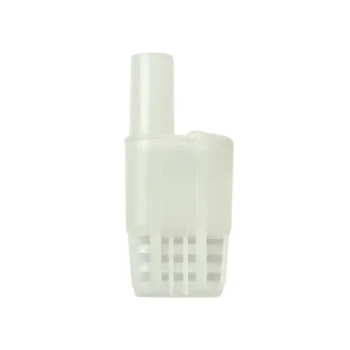
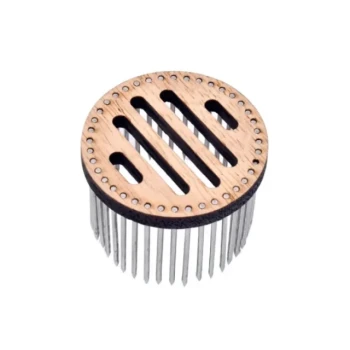
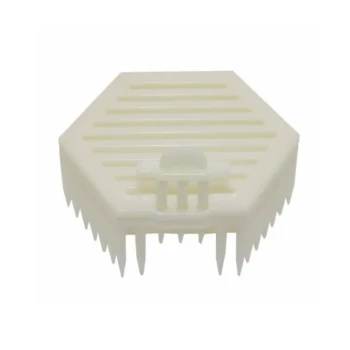
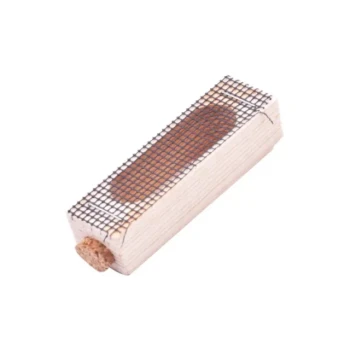
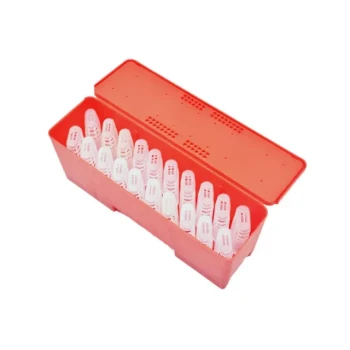
A queen confinement cage functions by physically isolating the queen to halt egg production, thereby creating an artificial broodless period within the colony. This process forces parasitic Varroa mites out of protected brood cells and onto adult bees, exposing them to treatment.
Core Takeaway The queen cage is a strategic preparatory tool that interrupts the Varroa reproductive cycle. By eliminating capped brood, it forces all mites into a vulnerable "phoretic" state, maximizing the effectiveness of subsequent contact-based treatments like oxalic acid.
The Mechanics of Induced Broodlessness
Restricting Reproductive Conditions
The primary function of the cage is to restrict the queen honeybee's egg-laying capability. By confining her to a specific area where she cannot lay eggs, the beekeeper manually induces a broodless state.
Because Varroa mites require capped brood cells to reproduce, this physical restriction effectively cuts off their reproductive conditions. Without developing larvae to parasitize, the mite's reproductive chain is immediately broken.
Forcing the Phoretic Phase
Once the existing brood emerges and no new eggs are laid, the colony eventually becomes entirely devoid of capped brood.
This forces all Varroa mites to migrate onto the bodies of adult worker bees, a state known as the phoretic phase. In a normal colony, many mites are hidden safely inside capped cells; the cage forces them into the open environment of the hive.
Inducing Biological Disruption
Beyond simple exposure, this technique disrupts the biological success of the mite population.
Research indicates that the interruption leads to a significant decrease in Varroa reproductive success even after the queen is released. This manifests as an increased sterility rate among mites once egg-laying resumes.
Optimizing Treatment Efficacy
Removing the Brood Shield
The most critical advantage of using a queen cage is the optimization of the efficacy window for treatments.
Standard treatments often struggle to penetrate capped brood cells, leaving a reservoir of mites untouched. By ensuring the colony is broodless, the "shield" protecting the mites is removed.
Enhancing Contact-Based Treatments
With all mites exposed on adult bees, the colony becomes highly sensitive to interventions.
This state allows for highly efficient contact-based treatments, particularly oxalic acid. The primary reference highlights that this technical step is essential for maximizing the kill rate of these applications.
Understanding the Trade-offs
Dependence on Secondary Treatment
It is critical to understand that the queen cage is primarily a biotechnical enabler, not a standalone cure.
While it breaks the reproductive cycle, it does not kill existing mites on its own. It serves to create the necessary conditions to make subsequent physical or chemical treatments effective.
Simulation of Swarming
The process effectively simulates a natural swarming state within the hive.
While this is beneficial for mite control, beekeepers must recognize that this creates a temporary pause in colony population growth. The technique relies on the precise timing of the broodless window to balance mite control with colony health.
Making the Right Choice for Your Goal
This tool is best utilized when integrated into a broader Integrated Pest Management (IPM) strategy.
- If your primary focus is maximizing treatment kill rates: Use the cage to ensure a 100% broodless state before applying oxalic acid, ensuring no mites survive behind wax cappings.
- If your primary focus is reducing synthetic chemical use: Utilize the cage to break the mite reproductive cycle and increase mite sterility, reducing reliance on harsh acaricides.
The queen confinement cage transforms the hive from a complex defensive structure into an open battlefield where mites have nowhere to hide.
Summary Table:
| Feature | Function in Varroa Control | Impact on Hive |
|---|---|---|
| Queen Isolation | Halts egg production & larval development | Creates a temporary artificial broodless state |
| Cycle Interruption | Cuts off mite reproductive conditions | Prevents mites from breeding in capped cells |
| Phoretic Shift | Forces mites onto adult bees | Removes the "shield" protecting mites from treatments |
| Treatment Timing | Optimizes the efficacy window | Maximizes kill rate of contact-based treatments |
| Mite Sterility | Increases post-release mite sterility | Lowers long-term Varroa population growth |
Elevate Your Apiary Management with HONESTBEE
Maximize your colony health and operational efficiency with professional-grade beekeeping solutions. HONESTBEE caters to commercial apiaries and distributors with a comprehensive wholesale offering. Whether you need specialized queen confinement tools, high-capacity honey-filling machines, or durable hive-making equipment, we provide the full spectrum of hardware and industry consumables to scale your business.
Ready to optimize your Varroa management and upgrade your equipment?
Contact HONESTBEE Today for a Quote
References
- Franco Mutinelli, Marica Toson. Some Considerations about Winter Colony Losses in Italy According to the Coloss Questionnaire. DOI: 10.3390/insects13111059
This article is also based on technical information from HonestBee Knowledge Base .
Related Products
- Professional Bamboo Queen Isolation Cage
- Professional Queen Cage with Sliding Gate and Feeder Plug
- Durable Galvanized Steel Spring Queen Bee Cage
- Professional Queen Bee Introduction and Transport Cage
- Professional Multi-Functional Queen Bee Cage
People Also Ask
- Why are specialized queen bee cages used for the banking of mated queen bees? Maximize Commercial Apiary Storage Efficiency
- What is the mechanism of action for using temporary queen bee cages? Master Successful Queen Introduction
- How does the side ventilation design of a queen bee cage impact the safety of the queen during long-distance transport?
- What should you do if the queen is still in the cage and the worker bees have not accepted her? Protect Your Colony from Queen Rejection
- What technical precaution must be taken regarding the mesh or grill side of a queen bee cage? Ensure Queen Survival