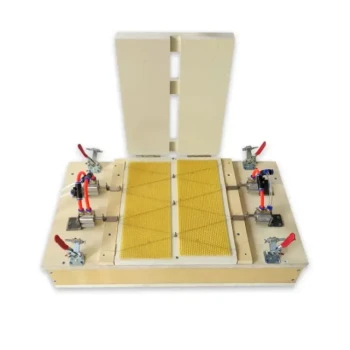
A wired foundation system functions by creating an internal support skeleton within an open wooden frame using tensioned wires. Instead of inserting a full sheet of pre-embossed wax or plastic, the beekeeper strings wires—typically horizontally, vertically, or diagonally—across the frame to reinforce the space where the bees will build their natural comb.
Core Takeaway A wired foundation offers a balance between structural support and natural comb building. By using tensioned wires for strength and a wax starter strip for guidance, you create a reinforced framework that prevents comb collapse without restricting the bees to a full sheet of pre-made foundation.
The Mechanics of a Wired Frame
Creating the Internal Structure
The primary mechanism of this system is the wire itself. Beekeepers string galvanized wire across the frame in various patterns, most commonly horizontal, vertical, or diagonal.
These wires act similarly to rebar in concrete. They provide the necessary tensile strength to the comb, ensuring that the fragile wax structure does not break or sag under the heavy weight of honey and brood.
Guiding the Bees
While wires provide strength, they do not inherently tell the bees where to build. To solve this, beekeepers often attach a small strip of wax foundation along the bottom of the top bar.
This strip acts as a "starter" or guide. The bees detect the wax strip and begin drawing their comb down from it, naturally incorporating the wires into the wall of the comb as they build downward.
The Beekeeper's Role
Unlike pre-assembled frames, wired foundations typically require manual assembly. The text notes that this wiring process is typically done by the beekeeper.
This allows for customization regarding wire tension and pattern, but it requires a hands-on understanding of how to thread and secure the wires properly to ensure the frame remains square and the wires remain tight.
Understanding the Trade-offs
Manual Labor vs. Customization
The primary trade-off is time. Stringing, tensioning, and embedding wires is a labor-intensive process compared to snapping in a plastic foundation.
However, this effort yields a "reinforced space" that allows bees to build natural comb size while still giving the beekeeper a frame durable enough to handle standard inspections.
Stability vs. Natural Building
A wired frame is more stable than a completely foundationless frame (which has no wires) but less rigid than a plastic foundation.
The wires prevent the comb from bowing or falling out of the frame during hot weather or manipulation. However, if the wires are loose, the comb can become wavy or irregular.
Making the Right Choice for Your Goal
If you are considering using wired foundations, evaluate your resources and objectives:
- If your primary focus is natural comb: This method is ideal as it minimizes the use of foreign wax sheets while still providing the structural reinforcement needed for hive management.
- If your primary focus is durability: The tensioned wires ensure the comb is strong enough to be handled, making it a safer option than purely foundationless frames for beginning beekeepers.
- If your primary focus is convenience: You may find the manual process of stringing and tensioning wires too time-consuming compared to pre-molded plastic alternatives.
By understanding the structural role of the wire and the guiding role of the wax strip, you can effectively manage a hive that supports natural bee behavior with the necessary durability for modern beekeeping.
Summary Table:
| Feature | Wired Foundation System Details |
|---|---|
| Core Mechanism | Internal wire skeleton (horizontal, vertical, or diagonal) |
| Reinforcement | Acts like rebar to provide tensile strength to fragile wax |
| Guidance Method | Wax starter strip attached to the top bar for straight building |
| Bees' Role | Build natural comb size while incorporating wires into walls |
| Best Suited For | Natural comb production with added stability for inspections |
| Main Advantage | Prevents comb collapse without the use of full plastic sheets |
Maximize Your Apiary's Productivity with HONESTBEE
At HONESTBEE, we understand the precision required for professional beekeeping. Whether you are a commercial apiary or a global distributor, we provide the industrial-grade tools you need to scale your operations. From high-tension wiring tools and premium wooden frames to advanced honey-filling machines and specialized hive-making equipment, our comprehensive wholesale portfolio is designed to enhance your efficiency.
Ready to elevate your beekeeping business? Our team is dedicated to supplying the full spectrum of machinery and consumables that modern industry demands.
Contact us today to discuss your wholesale needs
Related Products
- HONESTBEE Wired and Assembled Wooden Bee Frames Foundation for a Thriving Hive
- Manual Spur Wheel Wire Embedder for Foundation
- Professional Frame Preparation: The HONESTBEE Electric Wire Embedder
- HONESTBEE Pneumatic Dual Wire Embedder for W-Pattern Foundation Wiring
- Fully Automatic Beeswax Embossing Machine Foundation Mill
People Also Ask
- What role does replacing foundation and frames play in controlling American Foulbrood (AFB)? A Key to Hive Sanitation
- What is the difference between frames and foundation in a bee hive? A Guide to Hive Structure and Comb Building
- What is the role of frames and foundation in a bee hive? Build a Stable and Productive Apiary with Modern Design
- What is the purpose of frames and foundations in a beehive? Achieve a Healthy, Manageable Hive
- How do wooden and plastic hive frames compare in terms of durability? Wood vs. Plastic Longevity & Repairability