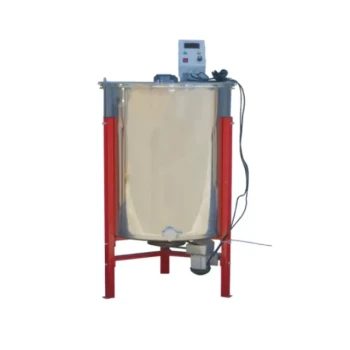
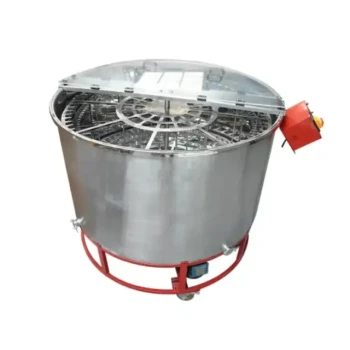
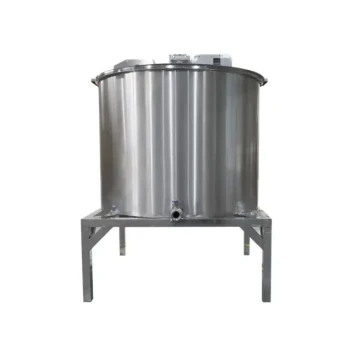
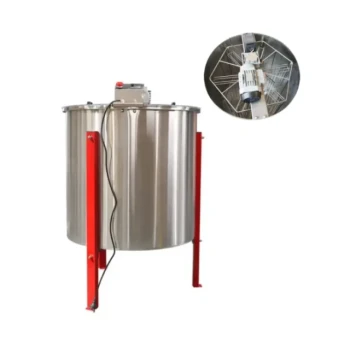
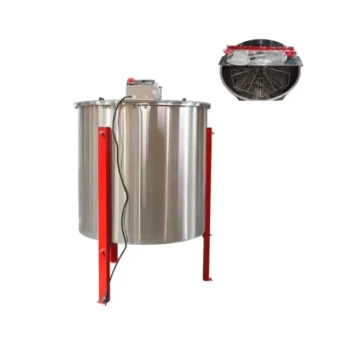
An industrial centrifuge secures analytical reliability by applying intense centrifugal force to accelerate the separation of solid residuals from the liquid honey extract. This process rapidly layers acid-extracted particles away from the target solution, ensuring that the sample introduced to downstream analysis is physically clear and free of obstructive matter.
Core Insight: The reliability of honey analysis depends heavily on the physical purity of the sample before it reaches the testing instrument. The industrial centrifuge acts as a critical defensive barrier, removing micro-particles that would otherwise clog extraction columns and degrade precision equipment.
The Mechanics of Separation
Accelerating Particle Removal
The clarification process begins by utilizing centrifugal force to significantly accelerate solid-liquid separation. This is far more efficient than passive settling, especially for viscous substances like honey.
Layering Acid-Extracted Residuals
During the extraction phase, honey is often treated with acid, creating distinct residual particles. The centrifuge forces these acid-extracted honey residual particles out of suspension, layering them distinctly away from the target extract solution.
Eliminating Micro-Particles
The primary goal is the removal of suspended micro-particles. By stripping these minute solids from the liquid, the centrifuge produces a supernatant that is free of the physical impurities that compromise analysis.
Safeguarding Downstream Analytical Integrity
Protecting Solid-Phase Extraction (SPE) Columns
Reliable analysis often requires passing the extract through solid-phase extraction columns. If the extract contains suspended solids, these particles interfere with the permeability of the columns.
Preventing Flow Obstructions
By removing micro-particles beforehand, the centrifuge ensures that the liquid maintains consistent flow rates through the SPE media. This prevents clogging and ensures that the chemical interactions within the column occur predictably.
Reducing Wear on Precision Equipment
Analytical instruments are highly sensitive and prone to damage from abrasive materials. Particulate matter remaining in a sample can cause physical wear on injectors, valves, and sensors.
Extending Instrument Lifespan
The clarification provided by the centrifuge effectively shields this downstream equipment. By delivering a clean sample, it prevents the accumulation of debris that leads to mechanical failure or signal drift over time.
Operational Considerations and Limitations
Physical vs. Chemical Separation
It is critical to understand that the centrifuge removes insoluble particles only. While it clarifies the liquid physically, it does not remove soluble chemical impurities; those must be addressed by the subsequent solid-phase extraction.
The Necessity of Proper Speed
The effectiveness of this protection relies on generating sufficient force. If the rotation speed is too low, lighter micro-particles may remain suspended, negating the protective benefits for the SPE columns.
Making the Right Choice for Your Goal
To ensure your honey analysis delivers consistent results, align your clarification step with your specific analytical needs.
- If your primary focus is Equipment Longevity: Prioritize high-efficiency centrifugation to remove all abrasive particulate matter that causes wear on precision sensors.
- If your primary focus is Workflow Consistency: Ensure the centrifuge completely layers acid-extracted residuals to maintain the permeability and flow rate of your solid-phase extraction columns.
Reliable results are the product of a sample that is physically compatible with your analytical hardware.
Summary Table:
| Feature | Function in Honey Clarification | Impact on Analytical Reliability |
|---|---|---|
| Centrifugal Force | Accelerates solid-liquid separation | Rapidly clears sample of obstructive matter |
| Particle Layering | Removes acid-extracted residuals | Maintains permeability of SPE columns |
| Micro-particle Removal | Eliminates suspended solids | Prevents clogging and flow rate inconsistencies |
| Physical Shielding | Protects injectors, valves, and sensors | Reduces equipment wear and prevents signal drift |
Elevate Your Honey Processing Efficiency with HONESTBEE
At HONESTBEE, we understand that precision is the foundation of a successful commercial apiary or distribution business. As a premier provider of professional beekeeping machinery, we supply the high-performance industrial centrifuges and honey-filling machines necessary to ensure your extracts meet the highest purity standards.
Our comprehensive wholesale portfolio covers everything from specialized hive-making hardware to essential industry consumables, specifically designed to help distributors and large-scale operations optimize their workflow. Partner with us to enhance your equipment longevity and maintain consistent analytical results.
Ready to upgrade your apiary’s capabilities? Contact HONESTBEE today to explore our full spectrum of beekeeping tools and machinery.
References
- Ewelina Kowalczyk, K. Kwiatek. Simultaneous determination of pyrrolizidine and tropane alkaloids in honey by liquid chromatography–mass spectrometry. DOI: 10.2478/jvetres-2022-0032
This article is also based on technical information from HonestBee Knowledge Base .
Related Products
- electric honey extractor honey centrifuge 3 frame honey extractor stainless steel honey frame extractor
- Manual Hand Crank 4 Frame Honey Extractor Centrifuge for Beekeeping
- Professional 4 Frame Self Reversing Electric Honey Extractor for Beekeeping
- HONESTBEE 72 Frame Industrial Electric Honey Extractor for Beekeeping
- Honey Concentrating and Filtering Dehumidifier Machine 2T Capacity for Honey
People Also Ask
- What are the characteristics of electric honey extractors? Boost Your Apiary Efficiency with Automated Technology
- What are the disadvantages of using an electric honey extractor? Weighing Cost, Power, and Comb Safety
- What are the advantages of an electric honey extractor? Boost Efficiency and Scale Your Honey Production
- What are the technical advantages of electric honey extractors? Maximize Yield and Protect Your Bee Colony
- How does an electric honey extractor affect the quality of honey? Preserve Flavor & Purity with Precision Extraction