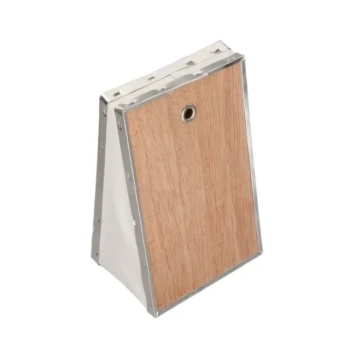
An industrial-grade bee smoker functions as a physiological interrupt, utilizing cool smoke generated by the incomplete combustion of natural fuels to alter honeybee behavior. This process disrupts the colony's defensive capabilities by triggering deep-seated survival instincts and chemically blocking communication channels, allowing apiarists to safely perform hive management.
By introducing smoke, you are effectively "hacking" the hive's biological response system. The smoke forces bees to prioritize resource preservation over defense while simultaneously severing the pheromonal link that coordinates colony aggression.
The Dual-Action Control Mechanism
The effectiveness of a bee smoker relies on two distinct biological interventions: a physical survival response and a chemical blockade.
Inducing the Engorgement Response
When smoke enters the hive, the bees interpret it as a sign of a nearby fire.
This triggers a survival instinct that compels the colony to prepare for a potential evacuation.
Reacting to this threat, the bees immediately begin to consume their honey stores.
The Resulting Lethargy
The act of gorging on honey has a profound physical effect on the individual bees.
As they become full, the bees enter a state of lethargy, moving significantly slower than usual.
This physiological change directly reduces aggressive behavior, making the colony less reactive to the beekeeper's presence.
Masking the Alarm Network
Honeybees rely heavily on chemical signals, specifically alarm pheromones, to coordinate defense.
When a guard bee senses a threat, it releases these pheromones to alert the rest of the hive to attack.
The dense smoke physically masks these pheromones, effectively jamming the colony's communication network.
Without this signal, the colony cannot organize a mass defensive response, providing a safe window for the operator.
Operational Constraints and Trade-offs
While effective, the bee smoker must be operated with precision to avoid detrimental effects on the colony.
The Necessity of "Cool" Smoke
The primary reference specifies that the smoker must produce cool smoke.
Hot smoke can singe the bees' wings or bodies, causing permanent injury and inciting panic rather than calm.
It can also melt the wax combs, damaging the structural integrity of the hive.
Controlling Incomplete Combustion
The smoke is generated through incomplete combustion, meaning the fuel must smolder rather than burn with an open flame.
If the combustion is too complete (too much oxygen), the fuel burns hot and clean, producing little smoke and high heat.
If the combustion is too stifled, the smoker will extinguish; achieving the correct balance is critical for consistent output.
Optimizing Hive Management
Understanding the biological impact of smoke allows you to tailor your approach to the specific task at hand.
- If your primary focus is routine inspection: Apply puffs gently at the entrance to mask pheromones immediately, preventing the initial alert signal from guard bees.
- If your primary focus is invasive work (like queen rearing): Allow time after smoking for the "engorgement response" to set in, ensuring the colony is lethargic before disrupting deep frames.
Used correctly, the smoker transforms a defensive super-organism into a manageable resource.
Summary Table:
| Mechanism | Biological Trigger | Resulting Effect |
|---|---|---|
| Resource Preservation | Fire instinct / Engorgement | Bees gorge on honey, leading to physical lethargy. |
| Communication Masking | Pheromone blocking | Guard bee alarm signals are jammed, preventing mass aggression. |
| Precision Combustion | Cool, incomplete burn | Ensures smoke density while protecting wings and wax from heat. |
| Strategic Application | Routine vs. Invasive work | Calibrates colony response for specific management tasks. |
Elevate Your Apiary Operations with HONESTBEE
At HONESTBEE, we specialize in empowering commercial apiaries and global distributors with the industry's most reliable beekeeping solutions. From high-output, industrial-grade smokers to advanced honey-filling machinery and specialized hive-making equipment, our comprehensive wholesale portfolio is designed for scale and efficiency.
Partner with us to access:
- Premium Tools & Machinery: Full-spectrum equipment for high-volume honey production.
- Essential Consumables: A consistent supply of hardware and hive components.
- Global Distribution Support: Tailored solutions for wholesale partners worldwide.
Ready to optimize your production and ensure the safety of your colonies? Contact us today to discuss your wholesale needs and discover how HONESTBEE can grow your business.
References
- Universiti Malaysia Terengganu. CURRENT AND FUTURE TECHNOLOGIES IN THE BEEKEEPING PRACTICE. DOI: 10.46754/jssm.2025.09.012
This article is also based on technical information from HonestBee Knowledge Base .
Related Products
- Professional Bee Smoker with Elongated Spout and Durable Bellows for Beekeeping
- Heavy-Duty Bee Smoker with Durable Plastic Bellows for Beekeeping
- Stainless Steel Honey Bee Smoker Hive and Honeycomb Smoker for Beekeeping
- European Stainless Steel Bee Smoker for Honey Bee Hive
- Electric Bee Smoker European Style Bee Hive Smoker for Beekeeping
People Also Ask
- What roles do bee smokers and precision tools play in honey harvesting? Master Safety and Quality Control
- Why is a professional bee smoker considered an essential tool for hive management and safety? Master Colony Control.
- Why is the use of professional bee smokers and specialized fuel essential? Protect Honey Purity & Colony Safety
- Why is a professional Smoker essential during routine apiary inspections? Enhance Safety and Operational Efficiency
- What is the mechanism by which a professional bee smoker assists in colony management? Boost Hive Safety and Efficiency