Swarming is a colony-level decision, not a queen-issued command. Older worker bees assess congestion, brood expansion, resource conditions, and queen pheromone distribution, then reinforce a collective decision through chemical and acoustic signals. Commercial beekeepers prevent population loss by acting before that consensus forms: expanding hive space, monitoring swarm preparation, managing brood and queen condition, and recovering swarms that do escape.
The practical principle is simple: prevent the colony from reaching the biological conditions that favor swarming, while maintaining equipment and procedures to capture valuable bees if prevention fails.
How Decentralized Decision-Making Directs Swarming
Worker bees create the decision
Honeybee colonies do not depend on the queen to decide when to swarm. The queen remains central to reproduction, but older worker bees evaluate conditions throughout the colony and collectively influence the timing of departure.
Their signals reflect factors such as brood-chamber congestion, rapid population growth, reduced queen pheromone concentration per worker, and resource imbalances.
Acoustic and chemical signals reinforce consensus
Workers use acoustic piping, pheromone cues, contact signals, and behavioral changes to coordinate colony-wide action. These signals help direct the queen and prepare the colony for departure.
This is a distributed system: no single bee has a complete overview, but many local assessments produce a coordinated colony response.
Physical conditions reveal the developing decision
Before swarming, workers commonly build queen cell cups along the lower edges of frames. As preparation progresses, the queen may reduce egg-laying, and the brood nest can become increasingly restricted by stored honey.
The colony may also begin backfilling the brood nest, placing honey where the queen would otherwise lay eggs. These are operational warning signs that the worker consensus is strengthening.
Why Swarming Creates Commercial Population Loss
The parent colony loses field strength
A swarm usually includes the old queen and a substantial portion of the adult workers. The departing bees may cluster temporarily on a branch or structure while scout bees search for a permanent cavity.
For a commercial operation, unmanaged departure can remove a major share of the colony’s foraging workforce and honey-production capacity at the point when seasonal flows may be most valuable.
Swarm preparation consumes time and resources
Bees preparing to leave build reproductive structures, adjust brood-rearing behavior, and accumulate honey reserves. This redirects labor away from field collection and can reduce the parent colony’s productive momentum even before the swarm exits.
The result is not only lost livestock, but also weaker production across the affected colony.
Tools That Prevent Swarm-Related Loss
Expansion supers and brood-space management
Adding honey supers, brood boxes, foundation frames, or drawn comb before congestion becomes severe gives the colony room to store resources and maintain brood production.
Timing matters. Space added after queen cells are already advanced may not reliably reverse the swarm impulse, so managers should expand colonies in anticipation of rapid spring growth.
Frame inspections and hive tools
Regular inspections—particularly during spring and early summer—help identify queen cups, swarm cells, backfilled brood nests, and restricted laying space. A standard hive tool supports frame manipulation, removal of unwanted queen cells, and replacement of congested or honey-bound frames.
Inspection intervals should be matched to local swarm pressure and colony development. A seven-to-ten-day schedule is commonly used during high-risk periods, but weather and management conditions may require adjustment.
Additional entrances and frame replacement
A top hive entrance can reduce traffic through the brood area by giving foragers another route into the hive. This may help relieve internal congestion, although it does not replace adequate brood and storage space.
Where congestion is severe, removing honey-filled frames and replacing them with empty drawn comb or foundation can reopen laying space. Removing capped-brood frames for a controlled split or nuc is another management option when the operation has the equipment and queens to support it.
Queen excluders used appropriately
A queen excluder can help keep the queen in the intended brood area while allowing workers to occupy honey supers. It is a zoning tool, not a standalone swarm-prevention device.
If an excluder is installed before the colony is strong enough to pass through it, or if it limits practical access to storage space, it can contribute to congestion. Its use should therefore be coordinated with colony strength, supering, and the availability of drawn comb.
Monitoring tools and inspection records
Hive monitoring tools can track changes associated with swarm risk, including colony weight, temperature, activity, and inspection observations. Their value is greatest when data is connected to an action threshold.
For commercial operations, consistent records help prioritize inspections, allocate labor, and identify colonies that require early expansion or splitting.
How to Recover Swarms That Escape
Bait hives, swarm traps, and lures
Bait hives, swarm traps, and swarm lures placed around apiary perimeters can intercept swarms searching for a cavity. These systems provide a practical recovery channel when prevention is incomplete.
Captured bees can then be transferred into standard hive equipment after appropriate inspection and handling.
Swarm catchers and swarm bags
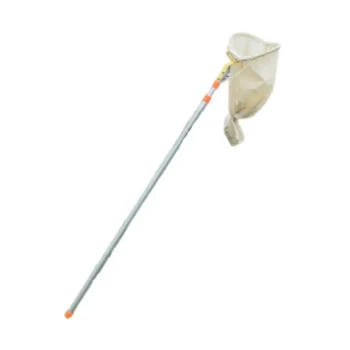
When a swarm clusters on a tree, building, or other elevated structure, swarm catchers and swarm bags allow operators to collect the bees more safely and efficiently than improvised methods.
The recovery plan should include suitable hive bodies, frames, protective equipment, and a location prepared to receive the colony.
Queen clipping as a limited safeguard
Precision queen wing clippers may be used by some beekeepers to limit the queen’s ability to fly with a swarm. However, clipping does not remove the colony’s swarm impulse and does not prevent workers from leaving.
It should never substitute for inspections, space management, or swarm-control procedures. Local welfare standards and operating practices should guide its use.
Distinguishing Swarming from Absconding
Swarming is reproductive division
Swarming is a planned colony-reproduction process. The colony raises or prepares queens, and a portion of the population leaves with the existing queen to establish a new nest.
The parent colony may remain viable, but its adult population and production potential are reduced.
Absconding is colony abandonment
Absconding is a different event in which the colony abandons the hive, often in response to starvation, severe pest pressure, or prolonged broodlessness during a dearth.
Preventive measures include retaining adequate honey stores after extraction and providing sugar syrup and pollen supplements when appropriate. These measures address abandonment risk, not the underlying reproductive decision to swarm.
Understanding the Trade-offs
Overexpansion can be counterproductive
Adding space too early or providing equipment the colony cannot occupy may reduce management efficiency and complicate temperature or pest control. Expansion should follow colony strength and expected growth rather than a fixed calendar alone.
Removing brood requires a complete plan
Brood removal can reduce congestion, but it also changes colony strength and future production. The removed frames need an appropriate destination, such as a nuc or additional hive body, along with a viable queen or queen-rearing plan.
Queen excluders are not universal solutions
Excluders can support honey management, but they do not directly resolve congestion in the brood nest. Poor placement or premature installation may restrict access to supers and intensify the very pressure the beekeeper is trying to relieve.
Recovery equipment does not guarantee recovery
Traps and bait hives improve the probability of collecting escaped swarms, but placement, lure condition, inspection frequency, and local swarm behavior affect results. Recovery equipment should be treated as a secondary control layer, not a replacement for prevention.
How to Apply This to Your Apiary
The most effective commercial program combines biological observation with dependable equipment availability and rapid intervention.
- If your primary focus is preventing swarm loss: Inspect colonies regularly, identify queen-cell and backfilling activity early, and expand brood and storage space before congestion becomes severe.
- If your primary focus is maximizing honey production: Preserve field-force strength by maintaining adequate laying space, using supers appropriately, and avoiding management practices that restrict worker access or brood development.
- If your primary focus is recovering escaped livestock: Position bait hives, swarm traps, and lures around the apiary, and keep swarm catchers, bags, hive bodies, and frames ready for immediate transfer.
- If your primary focus is efficient commercial procurement: Source compatible supers, frames, hive tools, monitoring equipment, queen-management tools, and swarm-recovery products through a responsive supplier capable of consolidated fulfillment.
By recognizing decentralized swarm signals early and matching them with timely management, commercial beekeepers can protect both colony populations and honey-flow performance.
Summary Table:
| Aspect | Key Points |
|---|---|
| Decision-Making | Older worker bees assess colony conditions and use signals to coordinate swarming. |
| Warning Signs | Queen cups, backfilling brood nest, reduced laying. |
| Impact | Loss of foragers and honey production. |
| Prevention | Expansion supers, inspections, top entrances, queen excluders, monitoring. |
| Recovery | Bait hives, swarm catchers, queen clipping. |
| Swarming vs. Absconding | Swarming is reproductive; absconding is abandonment. |
| Trade-offs | Overexpansion, brood removal, excluder misuse, recovery limitations. |
Protect your apiary from swarm losses with comprehensive tools and expert support. At HONESTBEE, we supply a full spectrum of beekeeping equipment—from hive-making machinery to swarm traps and monitoring systems—tailored for commercial apiaries and distributors. With rapid response, dedicated service, and efficient fulfillment, we help you maintain colony health and maximize productivity. Contact us today to discuss your needs and discover how our one-stop solutions can boost your operation's efficiency and profitability.
Related Products
- HONESTBEE Collapsible Tiered Bee Swarm Catcher for Beekeeping
- Plastic Beetle Blaster Trap Beekeeping Tools and Supplies
- Professional Dual Action Queen Excluder Scraper for Beekeeping
- Economy Galvanized Beekeeping Honey Bee Smoker for Wholesale
- Metal Bee Hive Stand Bee Box Stand for Beekeeping
People Also Ask
- What should be done if the swarm is situated on the bottom of a tree limb? A Guide to Methodical Bee Capture
- What role do swarm catchers play in maintaining the production scale of an apiary? Turn Colony Loss into Growth.
- What role does a Swarm Catcher play in the process of expanding apiary colony scale? Optimize Growth & Reduce Costs
- What information should be gathered before attempting to catch a swarm of bees? A Safe and Successful Guide
- What precautions can be taken to prevent a newly captured swarm from absconding? Secure Your Swarm with Proven Methods