Industrial-grade cleaning equipment serves as the primary firewall against contamination, ensuring the integrity of bee propolis during the manufacturing process. It functions by rigorously preventing cross-contamination to maintain the propolis’s distinct sensory profile—its appearance, color, odor, and flavor—while utilizing non-reactive construction materials to stop the migration of harmful metal ions into the finished product.
Core Insight: True quality assurance in propolis production requires more than just surface hygiene; it demands equipment that is chemically inert to prevent material migration and advanced enough to preserve heat-sensitive bioactive compounds during the purification process.
Preserving Chemical and Sensory Integrity
Preventing Cross-Contamination
The primary function of industrial cleaning equipment is to isolate the product from external pollutants. By effectively removing residues, the equipment ensures that the unique appearance, color, odor, and flavor of the propolis are not compromised by foreign substances or previous batches.
Eliminating Material Leaching
A critical aspect of quality assurance is the composition of the cleaning and processing equipment itself. High-quality industrial machinery is manufactured from non-reactive materials.
Blocking Metal Ion Migration
Standard equipment can degrade over time, leaching microscopic particles into the resin. Industrial-grade solutions prevent the migration of metal ions and other harmful substances, guaranteeing the chemical purity of the final propolis resin.
Enhancing Bioactivity Through Advanced Mechanisms
Utilizing Ultrasonic Cavitation
Advanced industrial units, such as ultrasonic cleaners, do more than wash; they utilize high-frequency cavitation effects. This generates micro-jets and shock waves that break down microscopic particles of propolis powder, effectively penetrating complex cellular barriers.
Protecting Heat-Sensitive Compounds
Unlike rudimentary cleaning or extraction methods that may rely on high heat, modern industrial equipment supports processing at lower temperatures (e.g., 40°C). This thermal control ensures the maximum enrichment of heat-sensitive active substances, such as total phenols and flavonoids.
Maximizing Separation Efficiency
Specialized processing equipment enables the precise separation of propolis from beeswax and royal jelly. This mechanical efficiency preserves bioactive compounds better than traditional manual extraction, transforming raw hive by-products into pharmaceutical-grade raw materials.
Understanding the Operational Trade-offs
The Cost of Complexity
While industrial equipment guarantees higher purity, it introduces significant operational complexity and capital cost. Implementing ultrasonic systems and non-reactive alloy machinery requires a higher initial investment compared to manual processing methods.
Maintenance Dependencies
The reliability of this equipment is circular; the cleaning equipment itself requires rigorous maintenance. If the ultrasonic transducers or non-reactive linings are damaged, the equipment can become a source of the very contamination—specifically metal ion migration—that it was designed to prevent.
Making the Right Choice for Your Production Goals
To select the appropriate equipment strategy for your propolis line, consider your specific quality targets:
- If your primary focus is Sensory Purity: Prioritize equipment constructed from certified non-reactive materials to prevent the leaching of metal ions that alter flavor and color.
- If your primary focus is Potency and Yield: Invest in ultrasonic technology that utilizes cavitation to maximize phenolic extraction without using destructive high temperatures.
The correct equipment does not just clean the product; it actively protects the chemical structure that gives propolis its value.
Summary Table:
| Feature | Quality Impact | Technical Mechanism |
|---|---|---|
| Material Inertness | Prevents chemical leaching | Non-reactive alloys stop metal ion migration |
| Ultrasonic Cavitation | Increases extraction yield | High-frequency waves break down cellular barriers |
| Thermal Control | Preserves bioactivity | Low-temp processing (40°C) protects phenols/flavonoids |
| Isolation Systems | Sensory integrity | Rigorous residue removal maintains color and flavor |
Elevate Your Propolis Production with HONESTBEE
At HONESTBEE, we empower commercial apiaries and distributors with the specialized machinery needed to produce pharmaceutical-grade propolis. Our comprehensive portfolio includes everything from honey-filling machines to advanced processing equipment designed to eliminate contamination and maximize the potency of your hive products.
Why partner with HONESTBEE?
- Wholesale Excellence: Full spectrum of beekeeping tools and industrial-grade machinery.
- Quality Protection: Equipment crafted from non-reactive materials to ensure sensory and chemical purity.
- Expert Support: We provide the hardware and consumables necessary to scale your operations efficiently.
Ready to enhance your yield and secure your product's integrity? Contact our expert team today to discover the perfect solution for your apiary business.
References
- Roman Dvykaliuk, SEDAT SEVIN. REVIEW OF NATIONAL REGULATORY REQUIREMENTS FOR PROPOLIS QUALITY FOR COMPLIANCE WITH INTERNATIONAL STANDARDS. DOI: 10.31548/animal.13(2).2022.16-25
This article is also based on technical information from HonestBee Knowledge Base .
Related Products
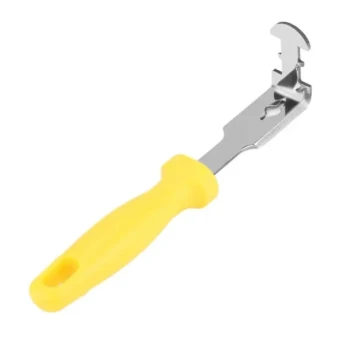
- Heavy Duty Stainless Steel Frame Cleaner with Plastic Handle
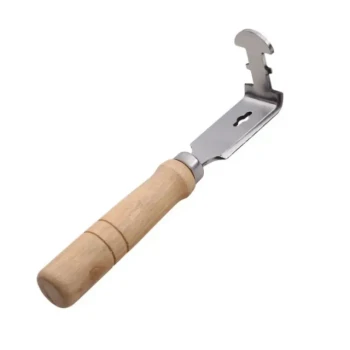
- Professional Stainless Steel Frame Cleaner with Ergonomic Wood Handle
- Precision Stainless Steel Frame Cleaner for Hive Grooves and Corners
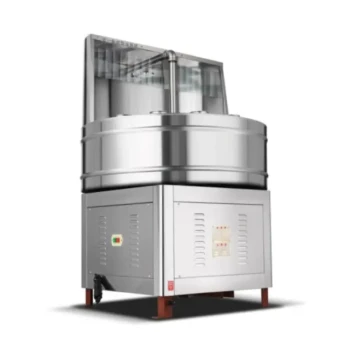
- HONESTBEE 24 Head Rotary Bottle Washing Machine
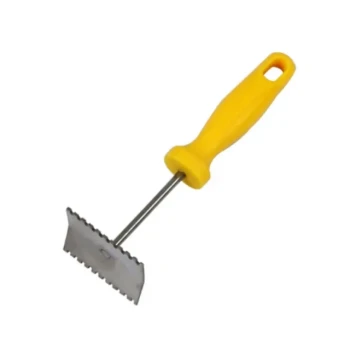
- Heavy-Duty Ergonomic Stainless Steel Pollen Shovel
People Also Ask
- What tools are used for cleaning frames? A Beekeeper's Simple 4-Tool Guide
- What are the physical characteristics of the frame cleaning tool? Durable Wood Design for Effective Hive Maintenance
- What is the purpose of the frame cleaning tool? A Precision Tool for Efficient Frame Maintenance
- In what specific situation is the frame cleaning tool particularly useful? Master Cut Comb Maintenance
- What is the function of the frame cleaning tool in beekeeping? Streamline Your Apiary Hygiene and Maintenance