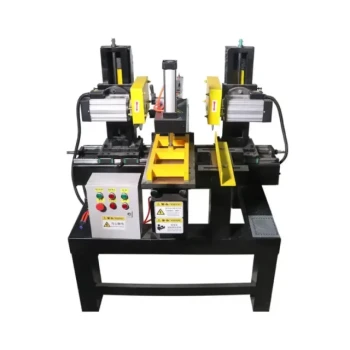
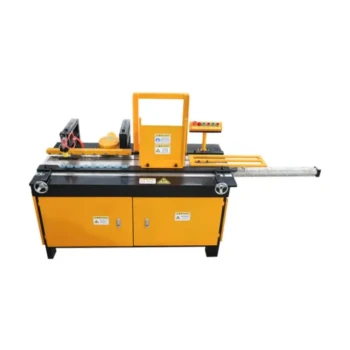
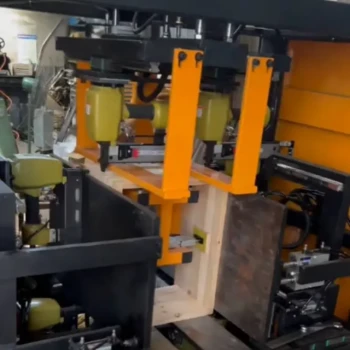
Industrial-grade hive manufacturing equipment serves as the critical infrastructure bridge between fragmented, non-professional beekeeping methods and streamlined commercial operations. By delivering standardized, high-quality hive components, this technology enables efficient colony management in demanding environments—such as forests—and provides the physical foundation necessary to support large-scale production capacities of up to 2,000 tons annually.
Core Takeaway In regions dominated by non-professional setups, the transition to commercial viability relies on eliminating physical variability. Industrial manufacturing ensures every hive component is identical, allowing for interchangeable parts, mechanized processing, and the structural reliability needed to scale from hobbyist levels to industrial tonnage.
Building the Foundation for Scale
Establishing Physical Consistency
In non-professional beekeeping, handmade or sourced equipment often varies in size and quality. Industrial-grade machinery eliminates this irregularity by utilizing high-precision woodworking and automated assembly.
This ensures that every hive body, frame, and bottom board meets exact specifications. Consequently, apiaries can move away from "craft" maintenance to unified, systematic management.
Enabling Interchangeability
The immediate benefit of physical consistency is the ability to exchange components between colonies.
Standardized frames and supers allow beekeepers to move resources—such as honey or brood combs—between strong and weak hives without compatibility issues. This interchangeability is a prerequisite for stabilizing colony populations across a large commercial operation.
Facilitating Mechanization
Standardization is the key that unlocks further automation in the production line.
When hives have uniform dimensions, they become compatible with automated honey extractors and cleaning equipment. This compatibility drastically reduces the manual labor required per hive, lowering unit costs and increasing overall processing speed.
Operational Efficiency in Challenging Environments
Durability in Rugged Terrain
Commercial apiaries often operate in difficult environments, such as dense forests, to access specific nectar sources.
Industrial manufacturing produces high-quality, structurally stable components capable of withstanding these rough conditions. This durability ensures that infrastructure does not fail in the field, where maintenance would be difficult and costly.
Supporting High-Volume Production
To achieve industrial-scale output, such as 2,000 tons of honey annually, the physical infrastructure must be robust.
Manual hive construction cannot pace with the growth required for this level of production. Industrial equipment provides the necessary volume of reliable hardware to expand operations rapidly without sacrificing quality.
Biological and Quality Implications
Enhancing Colony Health
Precision manufacturing does more than fit parts together; it creates a tighter, more protective environment for the bees.
High-precision sealing improves overwintering conditions and disease resistance by eliminating drafts and gaps common in lower-quality hives. This helps maintain stable colony sizes even during harsh seasons.
Preserving Honey Quality
Standardized equipment supports a smoother extraction process, which reduces stress on the bee colonies.
By minimizing disturbance and facilitating gentle, mechanical extraction, the system helps preserve the natural enzyme levels and active ingredients in the honey. This ensures the final product retains its biological value from the hive to the bottle.
Understanding the Trade-offs
High Initial Capital Investment
While the long-term cost per unit decreases, the upfront cost of industrial-grade manufacturing equipment is significant. Operators must have sufficient capital and projected volume to justify the investment in such machinery compared to sourcing cheaper, variable equipment.
Rigidity of Standardization
Industrial systems rely on uniformity, which can be inflexible.
If a specific local bee species or unique environmental condition requires a non-standard hive modification, retooling industrial machinery is difficult and expensive. Beekeepers sacrifice the flexibility of custom, artisanal modifications for the efficiency of mass production.
Making the Right Choice for Your Goal
The shift to industrial manufacturing is a strategic decision based on your production targets.
- If your primary focus is rapid expansion: Invest in standardized equipment to ensure all components are interchangeable and compatible with automated extraction lines.
- If your primary focus is colony survival: Prioritize the structural precision of industrial hives to improve overwintering success and disease resistance.
- If your primary focus is operational efficiency: Use standardized hives to reduce manual labor costs and enable unified management strategies across diverse locations.
Standardization is not just about making hives look the same; it is about creating a predictable, scalable system that turns beekeeping into a reliable industry.
Summary Table:
| Feature | Impact on Commercial Apiaries | Value Proposition |
|---|---|---|
| Physical Consistency | Eliminates size variability in hive parts | Seamless component interchangeability |
| Structural Durability | Resists harsh forest/outdoor conditions | Reduced infrastructure failure and maintenance |
| System Compatibility | Enables use of automated extractors/machinery | Drastic reduction in labor costs per unit |
| Precision Sealing | Improved overwintering and disease control | Higher colony survival and honey quality |
| Production Speed | Rapidly scales hardware for large outputs | Supports capacities up to 2,000 tons annually |
Scale Your Apiary with HONESTBEE Precision Equipment
Transitioning from hobbyist setups to industrial-scale success requires more than just bees—it requires the right infrastructure. HONESTBEE specializes in empowering commercial apiaries and distributors with the high-precision tools needed to dominate the market.
Why partner with HONESTBEE?
- Comprehensive Wholesale Range: From hive-making and honey-filling machines to a full spectrum of beekeeping tools.
- Standardized Excellence: Ensure every component is interchangeable, durable, and compatible with modern automation.
- Industry Expertise: We supply the machinery and consumables essential for managing high-volume, professional operations.
Ready to transform your production capacity and ensure long-term profitability? Contact us today to explore our wholesale solutions!
References
- Ben Ali Samir, Dalhoumi Lamin. Determinants of Tunisian consumer preferences for forest honey: a market segmentation analysis. DOI: 10.31428/10317/10621
This article is also based on technical information from HonestBee Knowledge Base .
Related Products
- High-Efficiency Pneumatic Bee Hive Making Machine for Rapid Box Assembly
- Beehive Machine Double End Saw for Precision Hive Component Manufacturing
- Beehive Handle and Frame Rest Cutting Machine: Your Specialized Hive Machine
- Professional Stainless Steel Pry-Bar Hive Tool
- Mini Desktop Bee Hive Frame Forming Making Machine
People Also Ask
- How does the introduction of professional beehive-making machinery benefit sustainable beekeeping? Scale Your Apiary
- Why is specialized beehive-making machinery critical for low-defense breeding? Enhance Selection with Precision Tools
- How does the introduction of specialized beehive making machinery contribute to increasing the scale of regional beekeeping industries?
- What is the importance of specialized beehive making machinery in a circular bio-economy? Build Local Sustainability
- Why is specialized beehive-making machinery essential? Scale Your Apiary with Precision Industrial Standards