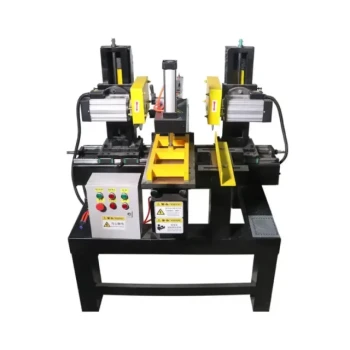
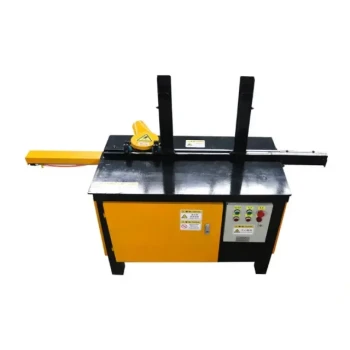
Industrial hive-making machinery acts as the critical logistical foundation for large-scale commercial apiaries by enabling the rapid, mass production of uniform beehive components. By ensuring high dimensional consistency, this technology drastically reduces the unit cost of infrastructure and eliminates the structural inaccuracies that plague manual construction, thereby simplifying the maintenance and management of thousands of colonies.
Core Insight: The primary value of industrial hive-making machinery is not just speed, but standardization. By replacing manual variability with industrial precision, these machines transform individual beehives into interchangeable assets, making the mechanized management of massive apiaries physically and economically feasible.
The Power of Standardization
The transition from hobbyist to commercial beekeeping relies heavily on the elimination of variables. Industrial machinery provides the rigorous consistency required to treat hive components as modular industrial assets rather than handcrafted individual units.
Achieving Dimensional Precision
Industrial-grade machinery utilizes high-precision cutting and assembly processes to produce components with exact specifications. This eliminates the dimensional inaccuracies common in manual construction, ensuring that every box, bottom board, and cover fits together perfectly without gaps that could induce bee stress or invite pests.
Enabling Component Interchangeability
Because the machinery produces identical hardware, frames and hive bodies can be exchanged freely between different colonies. This interchangeability is a prerequisite for modern apiary management, allowing beekeepers to balance resources or isolate issues without struggling with mismatched equipment.
Economic and Operational Efficiency
Scaling an apiary requires strict control over capital expenditures and labor costs. Industrial machinery directly addresses these financial constraints through mass production capabilities.
Reducing Acquisition Costs
The ability to mass-produce hive components creates economies of scale that significantly lower the cost per unit. This reduction in the acquisition cost of infrastructure is essential for operations looking to expand their assets from hundreds to thousands of colonies.
Simplifying Maintenance Protocols
Standardized output simplifies routine maintenance and parts replacement. When a component breaks, it can be swapped immediately with a stock part without the need for custom fitting or modification, significantly reducing the labor time required per hive.
Facilitating Advanced Management Practices
Beyond the physical structure of the hive, industrial machinery creates the "hardware compatibility" necessary for other advanced beekeeping technologies.
Supporting Mechanized Harvesting
Automated honey processing lines rely on hives having specific, predictable dimensions. Industrial hive-making ensures that hive bodies fit into automated un-cappers and extractors, streamlining the harvest workflow and increasing overall production capacity.
Enabling Migratory Beekeeping
Large-scale operations often practice migratory beekeeping, moving colonies to follow seasonal blooms. The structural consistency and weather resistance provided by machine-made hives ensure that equipment can withstand the rigors of transport and frequent handling.
Understanding the Trade-offs
While industrial machinery is vital for scale, it introduces specific constraints that operators must acknowledge.
The Rigidity of Standardization
High-volume manufacturing requires committing to a specific hive standard (e.g., Langstroth). Once an operation scales using machine-produced components, switching to a different hive style or dimension becomes logistically difficult and prohibitively expensive due to the lack of backward compatibility.
Dependence on Capital Equipment
Relying on industrial machinery shifts the operation from labor-intensive to capital-intensive. While this reduces daily labor costs, it increases the upfront investment required for machinery maintenance and energy, requiring a large enough volume of production to justify the return on investment (ROI).
Making the Right Choice for Your Goal
The role of this machinery depends heavily on the specific phase of your apiary's growth.
- If your primary focus is Rapid Expansion: Prioritize machinery that offers the highest volume of output to minimize the unit cost of new infrastructure.
- If your primary focus is Operational Efficiency: Focus on the precision of the machinery to ensure seamless compatibility with automated honey harvesting lines.
- If your primary focus is Colony Health: Ensure the machinery produces weather-resistant components with tight tolerances to minimize pest intrusion and thermal stress.
Ultimately, industrial hive-making machinery is the bridge that allows beekeeping to evolve from a craft into a scalable, efficient industry.
Summary Table:
| Feature | Impact on Commercial Apiaries | Key Benefit |
|---|---|---|
| Dimensional Precision | Eliminates structural gaps and manual errors | Reduced bee stress and pest prevention |
| Standardization | Creates interchangeable modular hive components | Simplified maintenance and resource balancing |
| Mass Production | Lowers per-unit acquisition costs | Enables cost-effective large-scale expansion |
| Hardware Compatibility | Ensures fit with automated extractors | Facilitates mechanized honey harvesting |
| Structural Durability | Withstands frequent transport and handling | Supports the rigors of migratory beekeeping |
Scale Your Apiary with Industrial Precision
Transitioning from a hobbyist setup to a large-scale commercial operation requires more than just bees—it requires a robust, standardized infrastructure. HONESTBEE empowers commercial apiaries and distributors with the specialized machinery and tools needed to build a scalable foundation.
From high-precision hive-making machines and automated honey-filling lines to a comprehensive range of beekeeping consumables and hardware, we provide the full spectrum of industrial solutions. Our mission is to help you reduce labor costs, ensure component interchangeability, and maximize your production efficiency.
Ready to industrialize your production? Contact our experts today to discover how HONESTBEE can streamline your wholesale beekeeping needs.
References
- Veer Sain. Economics and Importance of Beekeeping. DOI: 10.26717/bjstr.2017.01.000561
This article is also based on technical information from HonestBee Knowledge Base .
Related Products
- High-Efficiency Pneumatic Bee Hive Making Machine for Rapid Box Assembly
- Beehive Handle and Frame Rest Cutting Machine: Your Specialized Hive Machine
- Mini Desktop Bee Hive Frame Forming Making Machine
- Automatic High-Speed Bee Hive Box Stapling Machine
- Beehive Machine Double End Saw for Precision Hive Component Manufacturing
People Also Ask
- How does the introduction of professional beehive-making machinery benefit sustainable beekeeping? Scale Your Apiary
- Why is specialized beehive-making machinery critical for low-defense breeding? Enhance Selection with Precision Tools
- How does the introduction of specialized beehive making machinery contribute to increasing the scale of regional beekeeping industries?
- What is the importance of specialized beehive making machinery in a circular bio-economy? Build Local Sustainability
- Why is specialized beehive-making machinery essential? Scale Your Apiary with Precision Industrial Standards