At its core, a hive tool is a specialized steel pry bar and scraper. It is the single most essential handheld tool a beekeeper uses for inspecting and maintaining a beehive. Its primary purpose is to pry apart hive components and frames that bees have sealed shut with a powerful, glue-like substance called propolis.
A beehive is not a set of loosely stacked boxes; it is a fortress sealed from the inside by its inhabitants. The hive tool is the beekeeper's key, designed specifically to overcome the bees' natural defenses without causing damage to the colony or its home.

The Problem: Why Hives Need to Be Pried Open
To understand the hive tool, you must first understand the substance that makes it necessary: propolis.
What is Propolis?
Bees collect resin from trees and other plants, mixing it with their own enzymes to create propolis. They use this incredibly sticky, anti-microbial substance as a sealant.
Think of it as the bees' combination of caulk, glue, and disinfectant. They use it to seal every crack and seam in the hive, protecting it from weather, predators, and disease.
The Impact of "Bee Space"
Beekeepers build hives around a principle called "bee space," a gap of about 3/8 of an inch (9.5mm) that bees will naturally keep clear.
If a gap is larger than this, bees will fill it with comb. If it is smaller, they will seal it shut with propolis. This means every frame, lid, and box in a manufactured hive is eventually "glued" into place by the bees.
The Core Functions of a Hive Tool
The hive tool is a multi-tool designed to efficiently manage a propolis-sealed environment. Its functions are direct responses to the challenges of hive inspection.
Prying and Separating
The primary function is to provide leverage. The tool's flat, beveled end is wedged between hive bodies or supers to break the propolis seal and separate them. This requires a strong, unbending tool.
Lifting and Loosening Frames
Once inside a hive body, individual frames of honeycomb are also sealed in place. The hive tool is used to gently pry the ends of the frames loose. Many tools include a "J-hook" specifically for hooking under a frame's top bar to lift it straight up without damaging the comb or angering the bees.
Scraping and Cleaning
The tool's sharp, flat edges are perfect for scraping away unwanted burr comb (comb built outside the frames) and excess propolis. This cleaning is critical for keeping hive components fitting properly and ensuring frames are easy to remove in the future.
General Utility
Beyond its main roles, a beekeeper will constantly find other uses for the tool, from squashing invasive pests like hive beetles to cutting a queen cell from a frame.
Understanding the Trade-offs and Risks
While essential, the choice and use of a hive tool are not without consequence. Using the wrong tool or using it improperly can create problems.
The Wrong Tool for the Job
Using a screwdriver or a simple putty knife is a common mistake for beginners. These tools lack the proper leverage and strength, often bending or failing to break a strong propolis seal. More importantly, their shape can easily gouge and damage the wooden hive components.
The Risk of Spreading Disease
A hive tool is used to scrape propolis, wax, and bee remains. If you move from a diseased hive to a healthy one without cleaning your tool, you can easily transmit pathogens like American Foulbrood.
Proper Sanitation is Non-Negotiable
A responsible beekeeper always sanitizes their hive tool. This can be done by stabbing it into the ground several times to wipe it clean or, for more thorough sterilization, using the heat from the smoker's fire pot to burn off any residue between hive inspections.
Making the Right Choice for Your Goal
Selecting a hive tool is straightforward, but keeping your primary goal in mind ensures you get the most value from this indispensable piece of equipment.
- If you are a new beekeeper: Choose a "J-hook" style hive tool. Its built-in frame lifter is incredibly useful and makes learning to perform inspections much easier.
- If you manage multiple apiaries or hives: Own at least two hive tools. This allows you to work efficiently, always having a clean, sanitized tool ready while another may be cooling after sterilization.
- If your primary focus is durability: Invest in a tool made from high-quality spring steel. It will resist bending under pressure and retain its sharp scraping edge for years.
Ultimately, mastering the hive tool is the first step toward working with your bees confidently and effectively.
Summary Table:
| Function | Purpose | Key Benefit |
|---|---|---|
| Prying & Separating | Breaks propolis seal between hive boxes. | Enables safe hive inspections. |
| Lifting Frames | Loosens and lifts frames with a J-hook. | Prevents damage to delicate honeycomb. |
| Scraping & Cleaning | Removes excess propolis and burr comb. | Keeps hive components fitting properly. |
| General Utility | Pest control, cutting queen cells, etc. | A versatile multi-tool for the apiary. |
Ready to Master Hive Inspections with the Right Tools?
As a commercial beekeeper or distributor, your efficiency and the health of your colonies depend on reliable, durable equipment. HONESTBEE supplies professional-grade beekeeping tools and equipment designed for the demands of high-volume operations.
We help you:
- Boost Productivity: Durable hive tools that withstand constant use.
- Protect Your Investment: Proper tools prevent damage to hive components.
- Ensure Colony Health: Source equipment that supports your sanitation protocols.
Contact HONESTBEE today to discuss your wholesale supply needs and equip your apiary for success.
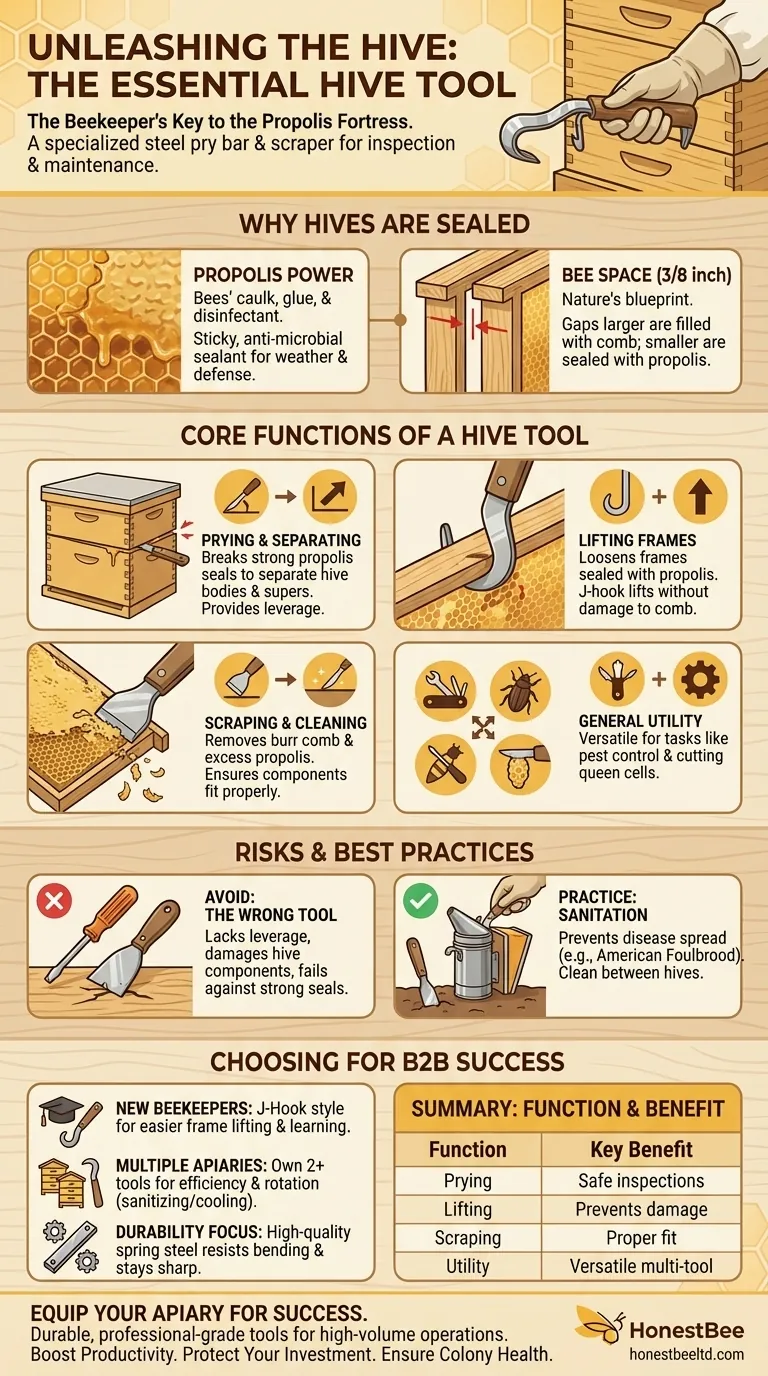
Visual Guide
Related Products
- Professional Multi-Function Stainless Steel Hive Tool
- Professional Stainless Steel Pry-Bar Hive Tool
- HONESTBEE Professional Long Handled Hive Tool with Precision Cutting Blade
- HONESTBEE Premium Italian Style Hive Tool with Hardwood Handle
- Ergonomic Plastic Frame Spacer Tool for Rapid Hive Management Beekeeping
People Also Ask
- Why are professional hive tools considered indispensable? Master Beekeeping Maintenance with Precision Leverage
- What is the role of professional hive tools in routine apiary maintenance? Expert Tips for Hive Health and Longevity
- What are the benefits of a multi-functional hive tool? Streamline Your Apiary Workflow with One Tool
- What advantages do multi-functional hive tools offer? Maximize Your Apiary Efficiency and Workflow
- What are the common construction features of hive tools? Key Insights for Superior Beekeeping Efficiency