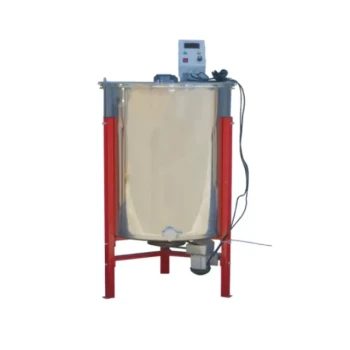
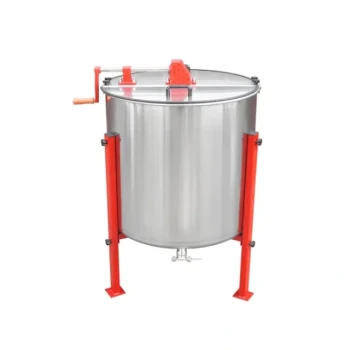
Production volume is the definitive metric when selecting between manual and automatic honey extractors. For small-scale operations with limited output, a manual extractor is a cost-effective and sufficient solution. However, as production scales up—specifically in commercial or large apiary settings—the time efficiency and labor savings of an automatic model become prerequisites for a viable workflow.
Core Takeaway While manual extractors offer precision and low entry costs for hobbyists, they become a significant bottleneck as hive counts increase. Automatic extractors transform the workflow from a physically demanding chore into a streamlined process, justifying their higher cost through massive gains in time efficiency.
The Role of Manual Extractors in Low-Volume Operations
Cost-Effectiveness for Hobbyists
For beekeepers extracting honey strictly for personal use or from a very small number of hives, the manual extractor is the logical choice. It serves as an affordable entry point for beginners who do not yet need the throughput of industrial machinery.
Precision and Comb Preservation
Lower production volume allows for greater attention to detail during the spin. Manual cranking provides immediate tactile feedback, allowing the operator to control the speed and direction precisely.
This "gentle" extraction is crucial for preserving delicate combs that might otherwise blow out under high-speed automation. It fosters a deeper, more hands-on connection to the harvest process.
Portability and Off-Grid Capability
Manual units are generally lighter and require no electricity. This makes them the only viable option for extracting in remote locations or off-grid apiaries where power is inaccessible.
Scaling Up: The Necessity of Automatic Extraction
The Ten-Hive Threshold
Industry consensus suggests a specific "tipping point" for upgrading equipment. Once an operation expands beyond ten hives, manual extraction often becomes functionally obsolete.
At this volume, the time required to hand-crank batch after batch creates a workflow bottleneck that slows down the entire harvest.
Decoupling Labor from Extraction
The primary advantage of an automatic (electric) extractor in high-volume settings is the ability to multitask. The machine runs independently, freeing the beekeeper to uncap the next set of frames.
This continuous cycle drastically reduces the total time spent in the honey house, a critical factor for business operations.
Eliminating Physical Strain
Manual extraction is physically laborious and can become tedious during long harvest sessions. Automatic models significantly reduce physical effort, making them essential for beekeepers with physical limitations or those wishing to conserve energy for other apiary tasks.
Understanding the Trade-offs
Maintenance and Complexity
While automatic extractors offer speed, they introduce mechanical complexity. Manual extractors are simpler devices that are easier to clean and require significantly less maintenance over their lifespan.
The Cost of Efficiency
The jump to automation involves a substantial financial investment. For a beekeeper with only a few hives, the time saved by an electric model rarely justifies the steep price difference compared to a manual unit.
Making the Right Choice for Your Goal
Select your equipment based on your current hive count and your 3-year growth plan.
- If your primary focus is Budget and Control: Choose a manual extractor to minimize costs and ensure gentle handling of combs for small batches (under 10 hives).
- If your primary focus is Efficiency and Growth: Invest in an automatic extractor to streamline operations, reduce physical fatigue, and handle the volume of 10+ hives effectively.
Ultimately, the right extractor is one that removes the bottleneck from your harvest without overcapitalizing your operation.
Summary Table:
| Feature | Manual Extractor (Low Volume) | Automatic Extractor (High Volume) |
|---|---|---|
| Ideal Hive Count | < 10 Hives | 10+ Hives |
| Primary Benefit | Low cost & precision control | High efficiency & labor savings |
| Power Source | Manual labor (no electricity) | Electric motor |
| Multitasking | Impossible (requires manual cranking) | Possible (operator can uncap frames) |
| Physical Strain | High (physically demanding) | Low (motorized operation) |
| Maintenance | Minimal & easy cleaning | Requires mechanical upkeep |
Scale Your Apiary with HONESTBEE’s Professional Equipment
Whether you are a growing distributor or managing a large-scale commercial apiary, HONESTBEE provides the industrial-grade solutions you need to eliminate production bottlenecks. From high-capacity automatic honey extractors and honey-filling machines to specialized hive-making hardware, we supply the full spectrum of beekeeping tools and essential consumables.
Why partner with HONESTBEE?
- Comprehensive Wholesale Offering: A one-stop shop for all beekeeping machinery and hardware.
- Tailored for Growth: Equipment designed to transition your operation from manual labor to streamlined automation.
- Global Industry Expertise: Supporting distributors with reliable, high-performance beekeeping supplies.
Ready to enhance your harvest efficiency? Contact us today to discuss your wholesale needs!
Related Products
- HONESTBEE 72 Frame Industrial Electric Honey Extractor for Beekeeping
- Commercial Electric 12 Frame Honey Extractor Spinner Motorized Honey Extractor
- HONESTBEE 6 Frame Self Reversing Electric Honey Extractor for Beekeeping
- HONESTBEE 3-Frame Manual Acrylic Honey Extractor
- Stainless Steel Manual 8 Frame Radial Honey Extractor Machine for Beehives
People Also Ask
- What is the importance of balancing honeycomb frames within a honey extractor? Ensure Stability and Protect Machinery
- How is honey separated from the frames after they are uncapped? Efficient Extraction Methods for High Yields
- What are the main benefits of using a honey extractor? Maximize Yields and Protect Your Honeycomb
- What are the recommended methods for removing honey from the honeycomb? Top Extraction Techniques for Maximum Efficiency
- How do manual honey extractors compare to electric honey extractors? Choosing the Right Tool for Your Apiary Growth