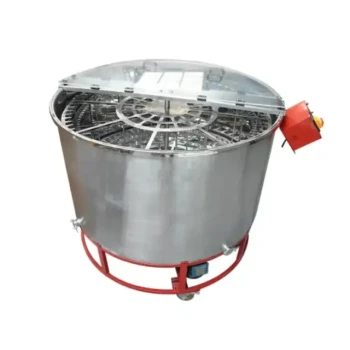
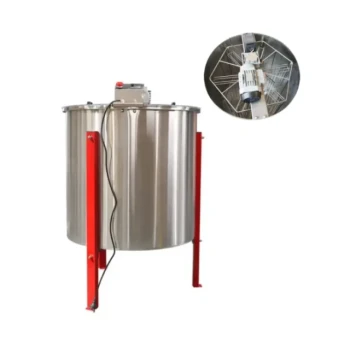
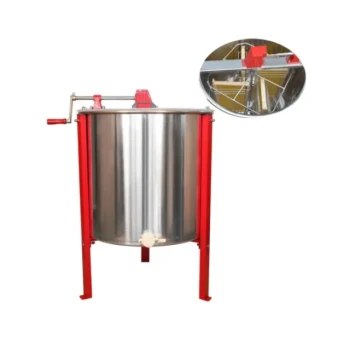
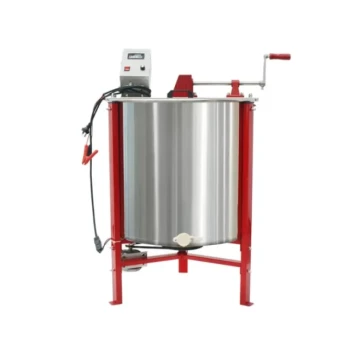
To properly use a honey extractor, you must first clear the frame of bees and remove the wax cappings before placing the frames vertically into the machine. Spin the frames for approximately 5 to 6 minutes, then reverse the spinning direction—or physically flip the frames if using a tangential model—to extract the opposite side before collecting the honey in a clean bucket.
Core Takeaway While the mechanical process of extraction is simple, the quality of your harvest depends on protecting the comb. Proper load balancing and speed control are just as critical as the spinning itself to ensure you harvest honey without destroying the frame structure.
Preparation and Loading
Preparing the Hive Frames
Before bringing frames to the extractor, you must ensure they are free of pests. Use a bee brush to gently wipe away any lingering bees.
Once the frame is clear, you must remove the wax cappings (uncapping). This is a critical step; if the caps are not removed, the honey cannot flow out, and the centrifugal force may damage the comb.
Loading the Machine
Place each frame vertically inside the extractor drum.
It is vital to load frames in a balanced manner. If the weight is not distributed deeply evenly, the extractor will vibrate excessively, potentially damaging the machine or the frames.
The Extraction Process
Managing the Spin Cycle
Once loaded, spin the frames for approximately 5 to 6 minutes.
If you are using a motorized extractor, this allows you to step away and perform other tasks, such as uncapping the next batch of frames.
Extracting Both Sides
Honey frames have two sides, and extraction requires attention to both. After the initial spin, you must reverse the direction of the force.
In radial extractors (where frames sit like spokes on a wheel), simply reverse the motor or crank direction. In tangential extractors, you must manually pull the frames out, flip them, and re-insert them to extract the second side.
Controlling Speed
If using an electric model, utilize the speed control features.
Plastic foundations are durable and can withstand higher speeds. However, delicate wax foundations require a gentle ramp-up in speed to prevent the comb from collapsing under pressure.
Post-Extraction and Maintenance
Collection and Filtration
After spinning, drain the honey from the extractor into a clean bucket.
While the primary goal is collection, best practices dictate that you filter the honey at this stage. This removes residual wax particles and impurities introduced during uncapping, ensuring a clean final product for bottling.
Equipment Care
To ensure longevity, disassemble the extractor after use. Wash all parts thoroughly with warm soapy water to remove sticky residue that attracts bacteria and mold.
Store the equipment in a dry, cool area to prevent rust and mechanical degradation.
Common Pitfalls to Avoid
Comb Blowouts
The most common error is applying too much centrifugal force too quickly. If the comb breaks, you lose the primary benefit of extraction: preserving the honeycomb structure for the bees to reuse, which saves them energy and increases future yields.
Imbalanced Loads
Never run an extractor with an odd number of frames or uneven weights without a counter-balance. Excessive vibration can cause the extractor to "walk" across the floor or damage the internal bearings.
Making the Right Choice for Your Harvest
Efficient extraction balances speed with preservation. Tailor your approach based on your equipment and goals:
- If your primary focus is Speed: Use an electric extractor with plastic foundations, as they allow for higher RPMs and faster processing times.
- If your primary focus is Comb Preservation: Use a manual speed ramp-up and lower maximum speeds, especially if utilizing natural wax foundations.
- If your primary focus is Quality: Ensure you filter the honey immediately upon leaving the extractor to separate wax debris before it settles.
Mastering the extractor allows you to harvest efficiently while returning high-quality, intact drawn comb to your colony for immediate reuse.
Summary Table:
| Extraction Step | Action Required | Key Consideration |
|---|---|---|
| Preparation | Remove bees & wax cappings | Essential for honey flow & purity |
| Loading | Vertical placement & balancing | Prevents machine vibration & damage |
| Spinning | 5-6 mins per side; reverse or flip | Radial: reverse motor; Tangential: flip |
| Speed Control | Gradual ramp-up | Protects delicate wax foundations |
| Finishing | Filter honey & clean equipment | Removes debris; ensures tool longevity |
Maximize Your Honey Yield with Professional-Grade Equipment
At HONESTBEE, we understand that efficient extraction is the backbone of a successful beekeeping operation. Whether you are scaling a commercial apiary or serving as a regional distributor, we provide the comprehensive tools you need to succeed. Our portfolio includes everything from high-capacity electric honey extractors and honey-filling machines to essential consumables and honey-themed cultural merchandise.
Why partner with HONESTBEE?
- Precision Machinery: Specialized hardware designed for durability and high-volume output.
- Full-Spectrum Supply: From hive-making machines to premium beekeeping tools.
- Wholesale Expertise: Tailored solutions and bulk offerings for industry professionals.
Contact us today to upgrade your extraction workflow!
Related Products
- HONESTBEE 72 Frame Industrial Electric Honey Extractor for Beekeeping
- Commercial Electric 12 Frame Honey Extractor Spinner Motorized Honey Extractor
- HONESTBEE 3-Frame Manual Acrylic Honey Extractor
- electric honey extractor honey centrifuge 3 frame honey extractor stainless steel honey frame extractor
- HONESTBEE 6 Frame Self Reversing Electric Honey Extractor for Beekeeping
People Also Ask
- What is the importance of balancing honeycomb frames within a honey extractor? Ensure Stability and Protect Machinery
- How is honey separated from the frames after they are uncapped? Efficient Extraction Methods for High Yields
- What are the main benefits of using a honey extractor? Maximize Yields and Protect Your Honeycomb
- What are the recommended methods for removing honey from the honeycomb? Top Extraction Techniques for Maximum Efficiency
- How do manual honey extractors compare to electric honey extractors? Choosing the Right Tool for Your Apiary Growth