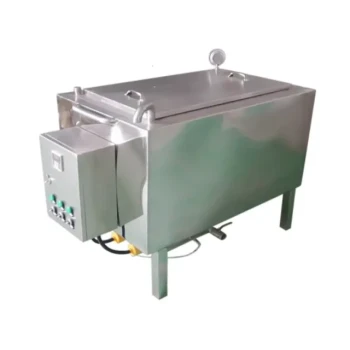
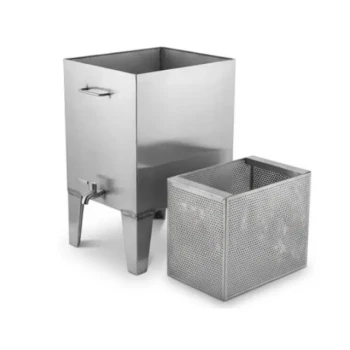
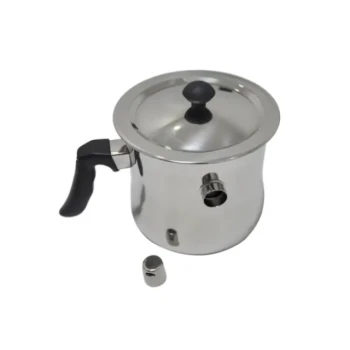
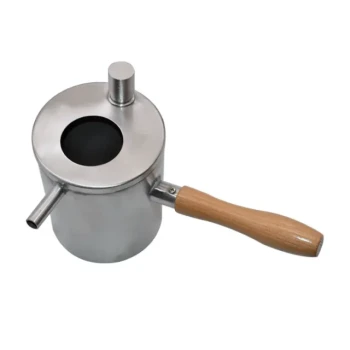
Professional beeswax melting and refining equipment transforms low-value apiary by-products into high-purity industrial assets through controlled thermal processing and filtration. By converting old honeycombs and wax cappings into refined beeswax blocks, these machines enable a circular economy that significantly reduces the cost of consumables. This equipment is the technical foundation for a closed-loop supply chain, allowing beekeepers to reprocess waste into standardized foundation sheets or high-value commodities for the cosmetic and pharmaceutical sectors.
Professional beeswax melting and refining equipment facilitates resource recycling by turning waste wax into high-purity raw materials. This process creates a sustainable, closed-loop system that lowers operational costs while opening new revenue streams in industrial markets.
The Technical Mechanism of Resource Recovery
Precision Thermal Processing
Professional equipment uses controlled heating to liquefy old honeycombs, burr combs, and cappings without damaging the wax's natural properties. This precise temperature management ensures that the solid beeswax is converted into a liquid state that is easy to manipulate and purify.
Multi-Stage Filtration and Purification
The refining process employs multi-stage filtration to remove impurities, debris, and cocoons from the crude wax. This results in high-purity, industrial-grade beeswax that meets the stringent standards required for commercial resale or internal reuse.
Maintenance of Chemical Integrity
High-quality refining equipment is designed to preserve the natural chemical properties of the wax. By avoiding overheating and chemical additives, the equipment ensures the resulting beeswax remains a premium commodity suitable for over 300 industrial applications.
Establishing a Closed-Loop Supply Chain
Internal Foundation Production
Once the wax is refined, it can be fed into beeswax foundation machines to create new foundation sheets. These sheets act as templates, guiding bee colonies to build straight, orderly combs, which increases the efficiency of the entire apiary.
Significant Cost Reduction
By recycling their own wax, apiaries achieve effective cost control by reducing the need to purchase external consumables. This self-sufficiency protects the operation from price fluctuations in the global wax market and ensures a steady supply of materials.
Resource Circularity and Waste Minimization
The ability to take "waste" materials and return them to the production cycle as standardized templates ensures that no organic byproduct is lost. This circularity is a hallmark of modern, high-efficiency commercial beekeeping operations.
Enhancing Apiary Productivity and Hygiene
Disease Prevention Through Replacement
Regularly replacing old combs is essential for apiary hygiene and preventing the spread of brood diseases. Specialized melting equipment facilitates this frequent turnover by making the disposal and recovery of old wax economically viable.
Structural Standardization
Refined wax can be cast into foundations that provide a stable physical structure for honey storage and larval development. This uniformity allows for easier mechanical harvesting and more predictable growth patterns across thousands of hives.
Industrial Value Transformation
For large-scale operations, refining equipment transforms a byproduct into an export-ready commodity. High-purity beeswax blocks are in high demand for pharmaceuticals and cosmetics, providing an additional, high-margin revenue stream.
Understanding the Trade-offs and Risks
Thermal Degradation vs. Processing Speed
While high heat speeds up the melting process, it carries the risk of thermal degradation, which can darken the wax and lower its market value. Professionals must balance throughput with temperature precision to maintain the highest wax grade.
Equipment Complexity and Maintenance
Professional-grade refining systems offer superior purity but require regular maintenance and technical expertise to operate. Distributors should ensure their clients have access to technical support to prevent downtime during peak harvesting seasons.
Filtration Limits
Even the best filtration systems may struggle with certain types of environmental contaminants if the raw material is severely degraded. Success in recycling depends as much on the quality of the input material as it does on the technical capabilities of the refinery.
Selecting the Right Equipment for Your Portfolio
To provide the best value to your clients, it is essential to align equipment specifications with their specific operational goals and scale.
- If your primary focus is internal cost reduction: Recommend a combined system of a wax melter and a foundation machine to enable a complete, self-sustaining closed-loop cycle.
- If your primary focus is industrial commodity sales: Prioritize high-capacity refining equipment with multi-stage filtration to ensure the output meets pharmaceutical and cosmetic purity standards.
- If your primary focus is rapid apiary expansion: Focus on high-throughput melting devices that allow for the fast turnover of old combs to maintain hive hygiene and structural uniformity.
By integrating professional refining equipment into their operations, apiaries can transform waste management into a strategic advantage that drives both sustainability and profit.
Summary Table:
| Feature | Recycling Function | Business Benefit |
|---|---|---|
| Thermal Processing | Liquefies waste combs/cappings without degradation | Preserves wax quality for high-value resale |
| Multi-Stage Filtration | Removes impurities and organic debris | Produces industrial-grade pure beeswax |
| Closed-Loop Integration | Feeds refined wax into foundation machines | Eliminates the cost of purchasing new foundation |
| Hygiene Management | Facilitates rapid turnover of old combs | Prevents brood disease and boosts hive health |
Scale Your Wholesale Business with HONESTBEE’s Sourcing Solutions
Are you looking to provide your clients with industry-leading efficiency? HONESTBEE is your premier partner for one-stop beekeeping sourcing. We cater specifically to distributors, wholesalers, and B2B resellers with a comprehensive portfolio ranging from high-capacity beeswax refining machinery and honey-filling systems to essential industry consumables.
Why partner with HONESTBEE?
- Comprehensive Full-Spectrum Portfolio: Access everything from hive-making machines to premium cultural merchandise.
- Maximizing Profit Margins: Benefit from our competitive wholesale pricing and OEM/ODM support.
- Ultra-Fast Fulfillment: Rely on our rapid response times and efficient delivery to keep your inventory stocked.
- Deep Industry Expertise: Leverage our professional technical support to better serve your commercial apiary clients.
Ready to enhance your supply chain reliability? Contact our team today to explore our wholesale offerings and secure your competitive edge in the beekeeping market!
References
- Марія Шульган. ОСОБЛИВОСТІ ТА УДОСКОНАЛЕННЯ СИНТЕТИЧНОГО І АНАЛІТИЧНОГО ОБЛІКУ ГОТОВОЇ ПРОДУКЦІЇ В БДЖІЛЬНИЦТВІ. DOI: 10.52058/2786-6025-2024-4(32)-421-440
This article is also based on technical information from HonestBee Knowledge Base .
Related Products
- Electric Commercial Beeswax Melter for Factory Use
- Steam Beeswax Melter Wax Warmer for Wax Processing
- Beeswax Melter for Candle Making Honey Bee Wax Melter
- Solar Beeswax Melter Easy Solar Wax Melter for Beeswax
- Electric Flatting and Embossing Machine with Tray for Beekeeping
People Also Ask
- Why might a commercial beekeeper prefer an electric beeswax melter? Maximize Profit with Speed & Scale
- What safety precautions should be taken when melting beeswax? A Guide to Flammable Wax Handling
- What types of beeswax melters are available for different scales of beekeeping? Solar vs. Electric Melters Compared
- What are the three popular methods for melting beeswax? Safely Process Your Wax with Ease
- How do you melt beeswax without making a mess? Master Safe & Clean Techniques