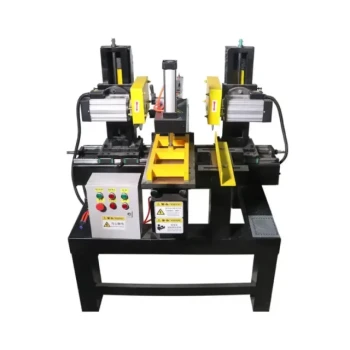
Professional hive-making equipment drives standardization by manufacturing high-precision components that strictly adhere to critical biological parameters, specifically "bee space." This mechanical precision guides bees to construct nests in predictable patterns within the hive, which facilitates the use of standardized honey extractors, minimizes waste during harvesting, and ensures the structural uniformity required for modern apiary management.
The transition to professional manufacturing equipment establishes a consistent physical foundation for apiculture, transforming it from a variable craft into a scalable industry where interchangeable parts and automated compatibility enable high-output production.
Adherence to Biological Parameters
The Criticality of "Bee Space"
Professional equipment allows manufacturers to maintain tight tolerances that manual construction often misses. This precision is vital for respecting "bee space"—the exact gap required for bees to move freely without filling it with propolis or burr comb.
Controlled Nest Construction
By enforcing these precise dimensions, the equipment forces the colony to build comb exactly where the beekeeper intends. This prevents cross-combing, where bees connect adjacent frames, making inspections and harvesting destructive to the colony.
Enhanced Disease Management
Standardized internal dimensions facilitate easier and more frequent inspections. When frames can be removed effortlessly due to precise fit, beekeepers can more effectively monitor for pests and diseases without disrupting the colony's stress levels.
Operational Efficiency and Scalability
Universal Component Interchangeability
Industrial-grade machinery ensures that every hive body, frame, and bottom board is identical to the next. This allows beekeepers to swap components between hives seamlessly, which is essential for scientific colony splitting and resource balancing.
Compatibility with Automation
Modern honey processing relies on automated extraction lines. Hives produced with professional equipment fit perfectly into these machines, ensuring smooth operation and preventing the jamming or breakage associated with irregular, hand-built frames.
Standardization of Hygiene Standards
Mass-produced, uniform equipment supports consistent hygiene protocols. Smooth, machine-finished surfaces are easier to clean and sterilize, helping producers meet strict international compliance requirements for high-quality agricultural exports.
Infrastructure Durability and Climate Regulation
Micro-Climate Regulation
Beyond dimensional fit, professional manufacturing ensures structural integrity that acts as a micro-climate regulator. Precise joints and seals provide better thermal insulation and ventilation, protecting the colony from extreme temperature fluctuations and urban noise pollution.
Reducing Maintenance Difficulty
Standardized structures significantly lower the difficulty of ongoing maintenance. When parts fit together correctly without gaps, the hive is more durable and resistant to weathering, reducing the labor and cost required for repairs.
Understanding the Trade-offs
High Initial Investment
While standardized equipment reduces the cost of infrastructure in the long run, the initial acquisition of professional hive-making machinery represents a significant fixed asset investment. Small-scale operations may find the upfront capital expenditure difficult to justify compared to traditional methods.
Systemic Lock-In
Adopting a specific standard of equipment creates a dependency on that specific ecosystem (e.g., Langstroth vs. Dadant dimensions). Once an apiary scales up with thousands of standardized frames, switching to a different hive geometry becomes logistically and financially prohibitive.
Making the Right Choice for Your Goal
To leverage standardization effectively, align your equipment choice with your operational scale:
- If your primary focus is Industrial-Scale Production: Prioritize equipment that guarantees compatibility with automated extraction lines to maximize throughput and minimize labor costs.
- If your primary focus is Colony Health and Biology: Focus on the precision of the machinery to ensure exact adherence to bee space, reducing colony stress and burr comb production.
- If your primary focus is Expanding a Small Apiary: Select equipment that offers strict component interchangeability, allowing you to split colonies and manage resources without buying custom parts for every hive.
True modernization in beekeeping begins not with the bees, but with the precise engineering of the environment they inhabit.
Summary Table:
| Feature | Impact on Standardization | Operational Benefit |
|---|---|---|
| Precision Bee Space | Eliminates burr comb & cross-combing | Easier inspections & healthier colonies |
| Interchangeable Parts | Universal fit across all hive bodies | Seamless colony splitting & resource management |
| Automation Ready | Uniform frame & box dimensions | Compatibility with high-speed honey extractors |
| Structural Integrity | Consistent thermal & ventilation seals | Enhanced climate regulation & hive durability |
| Surface Finish | Smooth, machine-finished components | Simplified sterilization & hygiene compliance |
Elevate Your Apiary with HONESTBEE Precision Engineering
Standardization is the backbone of a profitable, scalable beekeeping enterprise. At HONESTBEE, we empower commercial apiaries and global distributors with the professional machinery and high-precision tools needed to transform traditional beekeeping into a high-output industrial operation.
Why partner with HONESTBEE?
- Advanced Machinery: From automated hive-making to honey-filling machines, we provide the hardware that ensures every component meets rigorous biological standards.
- Comprehensive Wholesale: Access a full spectrum of beekeeping equipment, tools, and essential industry consumables in one place.
- Proven Scalability: Our solutions are designed to integrate perfectly with automated extraction lines, reducing labor costs and maximizing throughput.
Ready to modernize your infrastructure and achieve industry-leading efficiency? Contact us today to discuss your wholesale needs and see how our expertise can drive your growth.
References
- D. Panigrahi, S. Samal. Bee Flora Diversity in Dhenkanal District of Odisha. DOI: 10.20546/ijcmas.2020.909.450
This article is also based on technical information from HonestBee Knowledge Base .
Related Products
- High-Efficiency Pneumatic Bee Hive Making Machine for Rapid Box Assembly
- Mini Desktop Bee Hive Frame Forming Making Machine
- Professional Multi-Function Stainless Steel Hive Tool
- Professional Stainless Steel Pry-Bar Hive Tool
- Stainless Steel J Hook Hive Tool for Beekeeping
People Also Ask
- How does the introduction of professional beehive-making machinery benefit sustainable beekeeping? Scale Your Apiary
- Why is specialized beehive-making machinery critical for low-defense breeding? Enhance Selection with Precision Tools
- How does the introduction of specialized beehive making machinery contribute to increasing the scale of regional beekeeping industries?
- What is the importance of specialized beehive making machinery in a circular bio-economy? Build Local Sustainability
- Why is specialized beehive-making machinery essential? Scale Your Apiary with Precision Industrial Standards