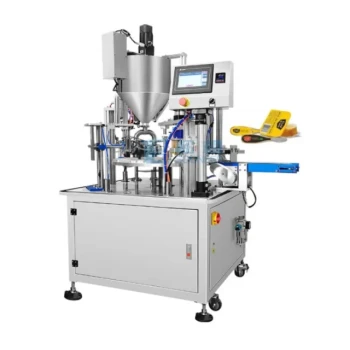
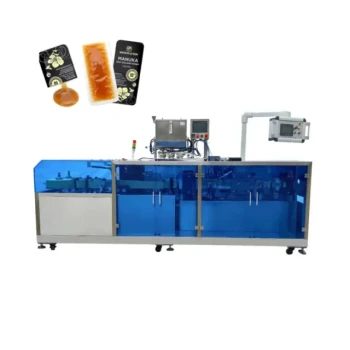
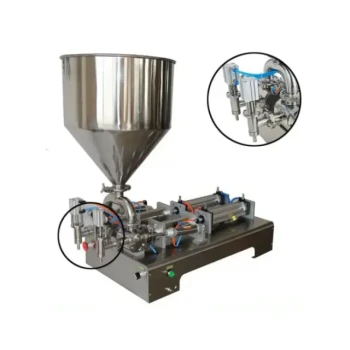
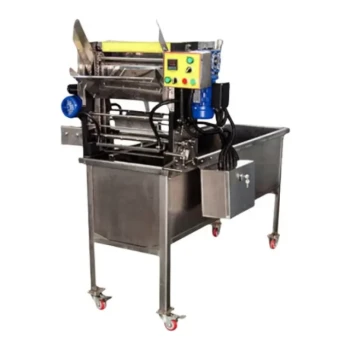
Resource mapping serves as the foundational data layer for sizing and selecting industrial honey processing infrastructure. By explicitly identifying the production potential of specific forest types—such as the high-yield herbaceous birch forests versus the lower-yield bilberry birch forests—operators can accurately forecast total honey volume. This volume data is the primary driver for determining the necessary throughput specifications, processing capacity, and consumable planning for automated filling equipment.
Accurate resource mapping mitigates financial risk by ensuring that the specifications of automated filling equipment are perfectly aligned with the natural yield capacity of the surrounding birch forest ecosystem.
Translating Yield Data into Equipment Specifications
Quantifying Forest Production Potential
Not all birch forests offer the same commercial viability for honey production. Resource mapping distinguishes between high-potential zones, such as herbaceous birch forests, and lower-potential areas like bilberry birch forests.
Understanding these spatial distinctions allows you to move beyond generalized estimates. You can calculate the precise expected tonnage based on the specific biological makeup of your harvesting territory.
Aligning Throughput with Natural Supply
The primary function of yield data is to dictate the processing capacity required of your automated equipment. A facility situated near high-yield herbaceous zones requires machinery with high-volume throughput to prevent production bottlenecks.
Conversely, operations focused on lower-yield bilberry zones should select equipment with lower capacity specifications. This prevents over-investment in industrial-grade machinery that will never be utilized to its full potential.
Forecasting Consumable Requirements
Resource mapping also informs the logistical side of the filling process. By understanding the specific yield potential, you can accurately predict consumable requirements for the automated line, such as jars, labels, and seals.
This ensures that your procurement of packaging materials is synchronized with the actual output of the forest, preventing storage overflows or supply shortages.
operational Efficiency and Quality Control
Minimizing Environmental Exposure
Automated filling equipment is critical for rapid processing, which minimizes the honey's exposure to the environment. This rapid "forest-to-jar" timeline significantly reduces oxidation risks.
By selecting equipment properly sized to the forest's yield, you ensure the honey is packaged immediately upon extraction. This preserves the unique biological active components and distinct flavor profiles that drive commercial value.
Preventing Processing Bottlenecks
If the equipment is undersized relative to a high-yield forest map, extracted honey may sit in holding tanks too long. This delay can compromise sterility and quality.
Correctly sized automation ensures a continuous flow. This facilitates sterile packaging and maintains the integrity of the honey’s floral characteristics.
Understanding the Trade-offs
The Risk of Over-Specification
Investing in maximum-capacity equipment without mapping validation is a common capital error. If your resource map indicates a prevalence of lower-yield bilberry birch forests, a high-speed industrial filler becomes a stranded asset, draining budget while sitting idle.
The Risk of Under-Specification
Alternatively, failing to account for the high potential of herbaceous zones can lead to under-sized equipment. This creates a hard cap on your revenue, as you physically cannot package the volume of honey your bees are producing during peak flow.
Making the Right Choice for Your Goal
To optimize your investment, use your forest resource map as the primary procurement guide.
- If your primary focus is High-Volume Efficiency: Prioritize high-throughput automated lines only if your mapping confirms access to extensive herbaceous birch forest zones.
- If your primary focus is Cost Control: Select modular or lower-capacity equipment to match the reduced output predicted for bilberry birch forest regions.
By letting the biological reality of the forest dictate your mechanical specifications, you build a production line that is both economically sound and operationally resilient.
Summary Table:
| Forest Type | Honey Yield Potential | Equipment Requirement | Procurement Strategy |
|---|---|---|---|
| Herbaceous Birch Forest | High Tonnage | High-Throughput Automated Lines | Invest in high-volume machinery to avoid bottlenecks |
| Bilberry Birch Forest | Lower Yield | Modular or Lower-Capacity Fillers | Prioritize cost control and avoid over-specification |
| Mixed Forest Ecosystem | Variable Yield | Scalable/Flexible Equipment | Focus on adaptable processing capacity |
Maximize Your Harvest Efficiency with HONESTBEE
At HONESTBEE, we understand that your equipment needs are dictated by the land you harvest. We provide a comprehensive wholesale offering of specialized beekeeping tools, hive-making machines, and precision honey-filling equipment designed to match your specific forest yield.
Whether you are a commercial apiary scaling up for high-yield herbaceous zones or a distributor looking for reliable machinery for your clients, we deliver the hardware and industry consumables you need to ensure a sterile, rapid "forest-to-jar" process.
Ready to align your technology with your territory?
Contact HONESTBEE today to discuss our custom equipment solutions and wholesale opportunities.
References
- Irina Samsonova, Petr Sidarenko Petr. DYNAMICS OF BIODIVERSITY OF NECTAR-BEARING RESOURCES IN THE STRUCTURE OF BIRCH FORESTS. DOI: 10.34220/issn.2222-7962/2019.4/8
This article is also based on technical information from HonestBee Knowledge Base .
Related Products
- Fully Automatic Honey Filling Packaging Machine for Processing Line
- Automatic Honey Filling and Filtering Machine for Beekeeping Bottle Filling
- Precision Durable Efficient HONESTBEE Rotary Honey Filling Machine
- Precision Automated Packaging Turntable Honey Spoon Filling Sealing Packing Machine
- Semi Automatic Small Honey Bottle Filling Machine Honey Filler
People Also Ask
- Why are fully automatic honey filling and packaging lines essential? Boost Your Honey's Market Value and Quality
- What is a fully-automatic honey filler? Streamline Your Production with High-Precision Automation
- How do automated honey filling and packaging machines affect profitability? Boost Margins with HONESTBEE Technology
- How do automated honey filling and packaging machines contribute to the market value of honey products? Maximize Your ROI
- How do industrial-grade automated honey filling and packaging machines mitigate the risk of physical contamination?