The scientific impact of smoke on honey bees is twofold: chemical interference and physiological distraction. Primarily, smoke masks alarm pheromones, specifically chemicals like isopentyl acetate, which prevents guard bees from coordinating a defensive attack against the beekeeper. Additionally, the presence of smoke triggers an evolutionary survival instinct, causing bees to gorge on honey in preparation to flee a potential forest fire, which physically restricts their ability to sting.
Smoke functions as a sensory blockade rather than a sedative. By temporarily jamming the colony's chemical communication network and triggering a resource-gathering response, it minimizes aggression and protects both the hive and the keeper from harm.
The Chemical Interference Mechanism
Disruption of Alarm Signals
Honey bees rely heavily on olfactory communication to regulate colony behavior. When a guard bee identifies a threat, it releases volatile alarm pheromones, most notably isopentyl acetate (often described as smelling like bananas).
The Masking Effect
Smoke creates a dense particulate barrier that effectively "masks" or dilutes these pheromones. This prevents the chemical signal from traveling through the hive, meaning the rest of the colony remains unaware of the perceived threat and does not mobilize a defensive response.
The Physiological Response
The "Fire Drill" Instinct
Beyond simple masking, smoke acts as a simulation of a natural disaster. When bees detect smoke, their evolutionary programming interprets it as a nearby forest fire, triggering a preparation for hive abandonment.
Gorging on Resources
In response to this potential need to flee, bees instinctively retreat to the honey stores and begin to gorge themselves on nectar and honey. They consume these resources to ensure they have enough energy to build a new comb if they are forced to evacuate.
Mechanical Restriction of Stinging
This feeding frenzy results in distended abdomens full of nectar. A bee with a full abdomen finds it physically difficult to bend its body into the necessary curve to deploy its stinger. Consequently, the colony becomes docile not just because they are distracted, but because they are mechanically less capable of attacking.
Understanding the Trade-offs
Temperature Sensitivity
While smoke is a vital tool, temperature is a critical safety variable. Smoke that is too hot can singe the bees' wings or burn their bodies, causing permanent injury or stress; it is essential to let the smoker smoulder to ensure the smoke is cool before application.
Duration of Effect
The effects of smoke are temporary and reversible. The colony’s sensitivity to pheromones typically returns to normal levels 10 to 20 minutes after the smoke dissipates, requiring beekeepers to work efficiently or reapply cool smoke for longer inspections.
The Mortality Trade-off
Although smoke places the hive on high alert, it is scientifically considered the ethical choice. Because a honey bee dies after using its stinger, preventing the stinging response actually reduces overall bee mortality during an inspection.
Applying This to Your Hive Management
To utilize smoke effectively while prioritizing colony health, consider your specific objective:
- If your primary focus is minimizing colony stress: Ensure your smoker fuel is smouldering coolly and allow a few minutes after application for the feeding response to set in before opening the hive.
- If your primary focus is inspection efficiency: Monitor the hive's behavior closely; if aggression rises after 15 minutes, the masking effect is wearing off, and a gentle re-application is necessary.
Mastering the use of smoke requires balancing the interruption of defensive signals with the preservation of the colony's physical well-being.
Summary Table:
| Mechanism | Primary Action | Biological Result |
|---|---|---|
| Chemical Masking | Dilutes alarm pheromones (isopentyl acetate) | Prevents guards from signaling a defensive attack |
| Physiological Trigger | Simulates a forest fire threat | Bees gorge on honey/nectar to prepare for hive evacuation |
| Mechanical Restriction | Distends the bee's abdomen | Makes it physically difficult for the bee to curve and sting |
| Thermal Variable | Requires cool, smoldering smoke | Prevents physical injury to wings and delicate bee anatomy |
Elevate Your Beekeeping Operation with HONESTBEE
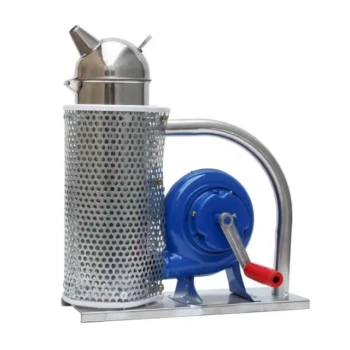
Understanding the science of bee behavior is only half the battle; having the right tools is the other. HONESTBEE provides commercial apiaries and distributors with professional-grade beekeeping equipment designed for efficiency and safety. From high-quality smokers that ensure cool, consistent smoke to advanced hive-making and honey-filling machinery, we support your entire production chain.
Whether you are scaling a commercial apiary or supplying the industry as a distributor, our comprehensive wholesale portfolio of tools, consumables, and honey-themed merchandise is built to meet your needs. Contact us today to explore our wholesale solutions and see how HONESTBEE can optimize your colony management and business growth.
Related Products
- Stainless Steel Honey Bee Smoker Hive and Honeycomb Smoker for Beekeeping
- Professional Bee Smoker with Elongated Spout and Durable Bellows for Beekeeping
- Miniature Stainless Steel Bee Smoker for Beekeeping
- Galvanized Beekeeping Smoker for Honey Bee and Apiculture
- Premium Traditional Copper Bee Smoker with Bellows
People Also Ask
- What are bee smokers made out of? Choose the Right Material for Your Apiary
- Why is a stainless steel bee smoker considered indispensable? Master Hive Management with Cool Smoke Technology
- What type of bee smoker is recommended for a beginner? Top Picks for Easy Hive Management
- How do bee smokers and colored light sources work together to assist in night-time honey harvesting? Expert Strategies
- When should you add more fuel to the bee smoker? Watch for This Critical Smoke Signal