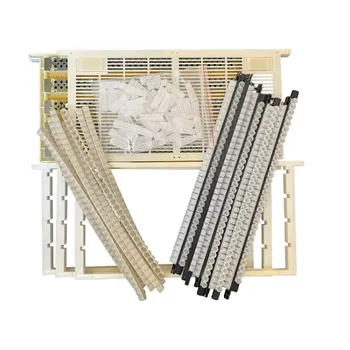
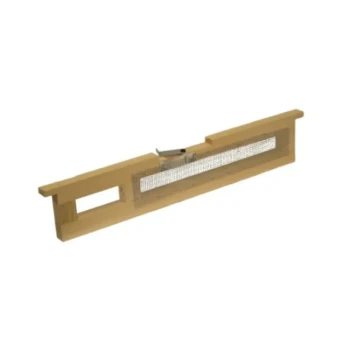
Specialized queen-rearing equipment turns queen production into a controlled, scalable operation. Queen cell cups, grafting tools, mating nucleus hives, isolation cages, and artificial insemination instruments help commercial apiaries produce and distribute young, fertilized queens with selected traits. These queens support faster brood production, stronger workforce populations, and better colony readiness when major nectar flows begin.
The equipment does not increase honey yield directly; it improves the biological quality, timing, and consistency of the colonies that produce honey. By maintaining a reliable supply of vigorous queens, commercial apiaries can reduce productivity declines caused by aging queens, weak genetics, and uncontrolled colony replacement.
Why Queen Quality Determines Commercial Honey Output
Young queens accelerate colony population growth
A productive queen lays eggs consistently, allowing a colony to build the worker population needed for foraging, brood care, and hive maintenance.
Specialized rearing equipment helps breeders produce queens in sufficient numbers and on a predictable schedule. This makes it easier to prepare colonies before a major nectar flow rather than reacting after colony strength has already declined.
Queen replacement prevents productivity gaps
Older or poorly performing queens can reduce brood production and weaken colony development. A planned replacement program helps commercial apiaries maintain more uniform colony performance across the operation.
Queen-rearing equipment supports a stable supply of replacement queens, reducing dependence on opportunistic purchases or naturally produced queens of uncertain quality. Replacement timing should still be based on queen performance, colony condition, local climate, and management objectives rather than a rigid calendar.
Strong queens help maintain colony cohesion
A vigorous queen produces pheromonal signals that support colony organization and stability. Better colony cohesion can help maintain productive worker activity and reduce the disruption associated with queen failure or prolonged queenlessness.
Equipment such as queen isolation cages and mating nucs helps breeders manage queen introduction and mating more systematically, although successful colony acceptance still depends on correct handling and field conditions.
How Specialized Equipment Supports Higher Yields
Grafting tools increase production capacity
Grafting needles and related tools allow breeders to transfer young larvae into queen cell cups or cell bars for controlled queen rearing. This creates a repeatable process instead of relying only on emergency or naturally developed queen cells.
For commercial operations, standardized grafting procedures make it easier to produce larger batches of queens with consistent handling and scheduling.
Queen cell systems improve workflow control
Queen cell cups, cell bars, and queen cell frames organize developing queens and simplify movement between rearing colonies, mating units, and production colonies. This improves visibility over queen age, development stage, and intended destination.
Better organization also supports batch planning, which is important when dozens or hundreds of colonies must be requeened within a limited seasonal window.
Mating nucleus hives support fertilized queen supply
Mating nucs provide controlled, manageable units in which virgin queens can mate and begin establishing their laying patterns. Their smaller size allows breeders to use space and colony resources more efficiently than full-size production hives.
A reliable mating-nuc system helps apiaries maintain a pipeline of queens at different stages of development, reducing interruptions in the replacement program.
Artificial insemination enables directional breeding
Precision artificial insemination equipment allows experienced breeders to control mating more closely and propagate selected genetic lines. Potential selection objectives include high egg-laying capacity, disease resistance, foraging performance, stress tolerance, and lower swarming tendency.
This approach requires advanced technical skill and careful breeding records. It is therefore most valuable where genetic consistency and long-term stock improvement justify the added complexity.
Isolation cages support safe handling and introduction
Queen isolation cages help protect and manage queens during transport, introduction, and short-term colony control. They can reduce handling risk and make planned requeening more orderly.
They are a management aid, not a substitute for proper introduction protocols. Temperature, colony condition, queen acceptance, and timing remain critical.
The Commercial Value of a Reliable Queen Pipeline
More colonies can be prepared for nectar flows
Commercial honey production depends heavily on timing. Colonies must reach adequate population strength before the principal nectar flow, not weeks afterward.
Specialized equipment helps apiaries rear, mate, evaluate, and deploy queens according to a production calendar. This improves the likelihood that colonies will have sufficient young workers and foragers when forage becomes available.
Genetic selection can reduce performance variation
A breeding program can identify and propagate desirable traits rather than replacing queens without regard to their origin or performance. Over time, this can help create stock better suited to the apiary’s environment and management system.
Genetic improvement is cumulative and requires selection records. Equipment enables the process, but results depend on breeder expertise, mating control, evaluation, and environmental conditions.
Standardization reduces operational disruption
Consistent tools and equipment allow teams to follow repeatable procedures for grafting, queen handling, mating, and replacement. This is particularly important when multiple staff members or sites are involved.
Standardization can also make training, quality control, inventory planning, and troubleshooting more efficient across a commercial operation.
A stable supply supports apiary-wide uniformity
When replacement queens are available in sufficient numbers, managers can address weak or aging colonies before problems spread into broader production losses. This promotes more consistent colony strength across the apiary.
Uniformity does not mean every colony will perform identically. Weather, forage availability, disease pressure, and local genetics will continue to affect individual results.
Understanding the Trade-offs
Equipment investment must match production scale
Advanced queen-rearing equipment can improve capacity, but not every apiary needs artificial insemination or a large mating-nuc system. Purchasing beyond the operation’s labor capacity or queen demand can create unused inventory and unnecessary costs.
The right equipment package should reflect annual queen requirements, workforce skills, available breeder colonies, and seasonal production targets.
Equipment cannot correct weak management
Grafting tools and cell cups cannot compensate for poor nutrition, disease pressure, inadequate mating conditions, or improper colony introduction. Queens must be reared and installed within a complete colony-management program.
Honey yield also depends on forage, weather, pest control, colony health, and harvest practices. Queen quality is a major production input, but it is not the only one.
Genetic control has practical limits
Artificial insemination and controlled mating can improve breeding precision, but field mating conditions may still introduce genetic variability when queens are not inseminated under controlled conditions. Claims about superior performance should therefore be validated through apiary records rather than assumed from equipment specifications.
Labor and training affect the return
Queen rearing is detail-sensitive work. Poor grafting technique, incorrect timing, weak mating units, or rough queen handling can reduce the benefits of otherwise high-quality equipment.
Commercial buyers should evaluate supplier support, operating guidance, replacement parts, and staff training alongside the initial product price.
Procurement reliability matters during narrow seasons
A missing cell bar, damaged grafting tool, or delayed batch of mating equipment can interrupt a time-sensitive rearing schedule. For commercial buyers, dependable availability and rapid order fulfillment are operational considerations, not merely purchasing conveniences.
Distributors and wholesalers can add value by offering a complete queen-rearing portfolio, responsive technical assistance, and coordinated delivery rather than treating each component as an isolated item.
How to Apply This to a Commercial Apiary
A practical equipment program should connect queen production capacity with the apiary’s requeening schedule, breeding objectives, and available labor.
- If your primary focus is maximizing honey yield before major nectar flows: Prioritize grafting tools, queen cell systems, and mating nucs that support a predictable supply of young, fertilized queens.
- If your primary focus is improving colony genetics: Add controlled mating or artificial insemination equipment, supported by selection records for traits such as productivity, disease resistance, foraging ability, and swarming tendency.
- If your primary focus is reducing colony-to-colony variation: Standardize queen-rearing and introduction equipment across sites, and use consistent procedures for queen evaluation and replacement.
- If your primary focus is procurement efficiency: Work with suppliers that can provide the full equipment range, fast responses, dependable stock, technical expertise, and consolidated order fulfillment.
The strongest honey yields come from combining specialized queen-rearing equipment with disciplined breeding, timely replacement, and complete colony management.
Summary Table:
| Equipment Type | Key Function | Impact on Honey Yield |
|---|---|---|
| Grafting Tools | Transfer larvae for controlled queen rearing | Enables large-scale queen production, reducing downtime |
| Queen Cell Systems | Organize developing queens | Streamlines queen management, ensures timely replacement |
| Mating Nucs | Mate virgin queens in small units | Provides fertilized queens for colony expansion |
| Artificial Insemination | Control mating for genetic selection | Enhances traits like productivity and resistance |
| Isolation Cages | Protect and introduce queens safely | Reduces queen loss, supports smooth transitions |
Upgrade your apiary's queen rearing with HONESTBEE's full range of specialized equipment. From grafting tools to artificial insemination kits, we supply everything you need to optimize colony health and maximize honey yields. For distributors and commercial beekeepers, we offer competitive margins, OEM/ODM support, and fast global delivery. Contact us today to discuss your requirements and get a tailored quote. Get in touch now!
Related Products
- HONESTBEE Improved No Grafting Queen Rearing Kit For Queen Rearing and Royal Jelly Production
- Retractable Chinese Queen Rearing Grafting Tools Equipment
- No Grafting Queen Rearing Kit: System for Royal Jelly Production and Queen Rearing
- Premium Nicot Style Queen Rearing Kit with Hair Roller Bee Cages
- Nicot Queen Rearing Kit for Beekeeping and Grafting in Nicot System
People Also Ask
- How can commercial queen rearers and royal jelly producers align their harvesting schedules and equipment with the biological timing of larval development? Master the 48-Hour Grafting Window and 72-Hour Harvest Cycle
- How do honeybee reproductive traits affect queen rearing and hive equipment?
- What biological principles govern honeybee queen rearing, and why should commercial beekeepers use controlled queen-rearing equipment rather than relying on natural queen cells?
- How does sex allele genetics cause shot brood patterns in honeybee colonies, and what management strategies and queen-rearing equipment are used to prevent this issue during line breeding?
- How does the importation of non-native queen bees impact disease risks in commercial apiaries, and how can localized queen-rearing equipment help mitigate these risks? Reduce biosecurity threats with controlled breeding