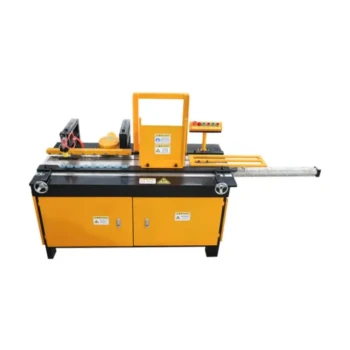
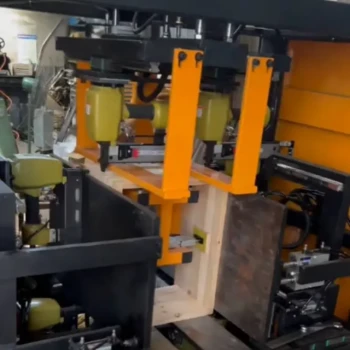
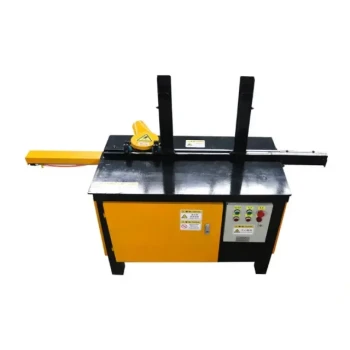
Standardized beehive manufacturing equipment provides the essential infrastructure for precise monitoring and scientific management of bee colonies. This uniform hardware ensures that components like frames and supers are interchangeable, facilitating mechanized honey harvesting and efficient logistics in large-scale operations. For both Apis mellifera and Apis cerana, these standardized structures stabilize populations against environmental stressors and pests, directly supporting the continuous delivery of pollination services and honey yields.
Central Takeaway: Standardization is the foundation of commercial beekeeping; it transforms apiary management from a manual craft into a scalable, mechanized industrial process by ensuring component interchangeability and optimal colony health.
Driving Operational Efficiency through Interchangeability
Modular Design and Logistics
Standardized manufacturing ensures that every hive component—from the bottom board to the outer cover—follows precise and uniform dimensions. This high degree of interchangeability is fundamental to modern beekeeping, allowing distributors to provide clients with modular systems that simplify inventory and field repairs.
Mechanized Harvesting and Inspection
Uniform frames allow beekeepers to independently extract, inspect, or replace any single comb without disrupting the overall colony structure. This modular technical foundation is essential for implementing graded honey harvesting and large-scale disease monitoring protocols.
Streamlining Supply Chain Fulfillment
For wholesalers and B2B resellers, standardized equipment reduces SKU complexity and allows for ultra-fast delivery and efficient order fulfillment. A "one-stop sourcing" model becomes possible when all components are guaranteed to fit, regardless of the production batch.
Enhancing Colony Health and Resilience
Scientific Control of Bee Space
Standardized equipment is engineered to maintain "bee space," the specific gap bees need to move freely without filling it with propolis or burr comb. Scientific spatial design prevents the accidental crushing of bees and allows for non-disruptive human interventions.
Natural Enemy and Disease Defense
Precision manufacturing creates a physical barrier against natural enemies such as wax moths and mites. By eliminating irregular gaps, standardized hives help prevent honeybee larval diseases and provide a controlled growth environment for both Apis mellifera and Apis cerana.
Thermoregulation and Climatic Stress
A uniform hive structure provides a stable physical environment that supports efficient thermoregulation. This stability helps colonies resist external climatic stress, ensuring population stability and consistent performance across diverse geographic regions.
Facilitating Commercial Migratory Beekeeping
Structural Integrity for Transport
Standardized hives are designed for the rigors of seasonal migration, featuring robust construction that withstands loading and transport. This durability is critical for commercial operations that move colonies thousands of miles to maximize nectar flow utilization.
Rapid Deployment and Scale
In large-scale apiaries, the ability to rapidly deploy thousands of identical units is a competitive necessity. Standardized manufacturing allows for rapid response times in supply chains, ensuring that apiarists have the hardware needed precisely when the nectar flow begins.
Population Monitoring and Management
Unified specifications allow for the implementation of precise colony monitoring and supplementary feeding. These standardized protocols are essential for managing bee labor distribution and optimizing total honey yield across thousands of managed populations.
Understanding the Trade-offs and Technical Nuances
Species-Specific Dimensional Requirements
While the process of manufacturing is standardized, the dimensions must be tailored to the species; Apis cerana typically requires different spacing than Apis mellifera. A "one size fits all" approach without species-specific calibration can lead to colony stress or poor yield.
Precision vs. Production Cost
High-precision manufacturing equipment requires significant initial investment compared to traditional methods. However, the trade-off is a long-term reduction in labor costs and a significant increase in honey production efficiency and colony survival rates.
Maintenance of Manufacturing Standards
The benefits of standardization vanish if quality control fluctuates. Distributors must ensure their suppliers maintain deep professional industry expertise to avoid dimensional drift, which can render entire batches of equipment incompatible with existing stocks.
How to Apply This to Your Portfolio
Strategic Recommendations for Distributors
- If your primary focus is maximizing client ROI: Prioritize a full-spectrum portfolio of standardized frames and supers that are compatible with mechanized extraction lines.
- If your primary focus is migratory beekeeping clients: Source heavy-duty, standardized hive bodies with reinforced joints and unified dimensions for secure stacking during transport.
- If your primary focus is specialized species management: Offer specialized standardized lines for Apis cerana that respect their unique biological requirements while maintaining the benefits of modularity.
Standardization transforms beehive equipment from simple wooden boxes into a sophisticated technical system that ensures both biological health and commercial profitability.
Summary Table:
| Feature | Impact on Colony Management | Commercial Advantage for Distributors |
|---|---|---|
| Modular Design | Interchangeable components simplify field repairs and inspections. | Reduces SKU complexity and simplifies inventory management. |
| Scientific Bee Space | Minimizes propolis buildup and protects bees from accidental crushing. | Ensures high-precision quality that builds long-term client trust. |
| Uniform Dimensions | Facilitates mechanized honey harvesting and migratory transport. | Enables rapid response times and one-stop sourcing for large-scale ops. |
| Pest Defense | Precision manufacturing eliminates gaps where moths and mites hide. | Provides a premium product line focused on colony survival and ROI. |
Scale Your Success with HONESTBEE’s One-Stop Sourcing
At HONESTBEE, we empower commercial apiaries and B2B distributors with a comprehensive, full-spectrum product portfolio designed for industrial-scale efficiency. From high-precision hive-making and honey-filling machinery to essential industry consumables and cultural merchandise, we provide the standardized infrastructure you need to dominate the market.
Why Partner with Us?
- Unmatched Efficiency: Benefit from our deep professional industry expertise and ultra-fast delivery.
- Reliable Supply Chain: Our premium trading services ensure rapid response times and consistent order fulfillment.
- Distributor Growth: We prioritize your profit margins with durable, standardized equipment that meets the highest certifications.
Contact HONESTBEE today to streamline your supply chain and maximize your operational scale!
References
- Tania Tania. An insight into the global decrement of honey bee population: causes and its imposing effects. DOI: 10.36948/ijfmr.2025.v07i03.48301
This article is also based on technical information from HonestBee Knowledge Base .
Related Products
- High-Efficiency Pneumatic Bee Hive Making Machine for Rapid Box Assembly
- Mini Desktop Bee Hive Frame Forming Making Machine
- Beehive Handle and Frame Rest Cutting Machine: Your Specialized Hive Machine
- Automatic High-Speed Bee Hive Box Stapling Machine
- Professional Bee Frame Machine for Side Bar Shaping
People Also Ask
- How does the introduction of professional beehive-making machinery benefit sustainable beekeeping? Scale Your Apiary
- Why is specialized beehive-making machinery critical for low-defense breeding? Enhance Selection with Precision Tools
- How does the introduction of specialized beehive making machinery contribute to increasing the scale of regional beekeeping industries?
- What is the importance of specialized beehive making machinery in a circular bio-economy? Build Local Sustainability
- Why is specialized beehive-making machinery essential? Scale Your Apiary with Precision Industrial Standards