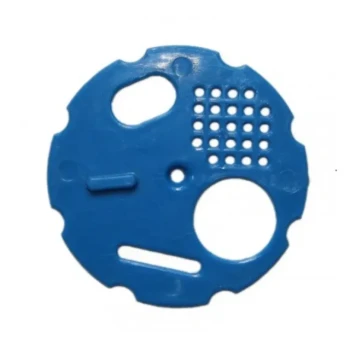
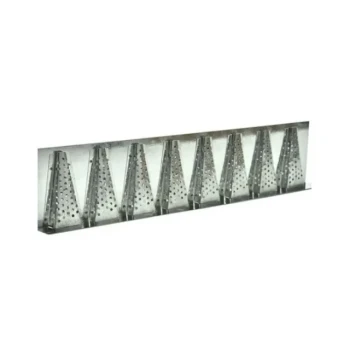
The addition of an upper entrance acts as a critical release valve for internal hive heat, leveraging the natural tendency of hot air to rise. By providing an exit point at the top of the structure, you allow excess heat to vent immediately rather than becoming trapped against the inner cover, thereby reducing the thermal load on the colony.
By enabling rising heat to escape, an upper entrance facilitates a vertical current known as the "chimney effect," which draws cooler air in through the bottom and exhausts hot air out the top for superior cooling efficiency.
The Mechanics of Vertical Airflow
Facilitating Heat Escape
The primary function of an upper entrance is to address the physics of heat accumulation. Because hot air rises, it naturally gathers at the highest point of the hive.
Without an upper opening, this heat is trapped, forcing bees to expend significant energy fanning to circulate air. An upper entrance provides a path of least resistance for this thermal buildup to exit the colony.
Creating the Chimney Effect
An upper entrance does not work in isolation; it functions most effectively as part of a system. When combined with a lower entrance, it creates a continuous draft.
This vertical airflow, or chimney effect, naturally pulls fresh, cooler air in through the bottom while simultaneously pushing hot, stale air out through the top. This passive ventilation reduces the active energy the colony must use for temperature regulation.
Common Pitfalls and Misconceptions
The Screened Bottom Board Error
It is a common mistake to assume that opening the bottom of the hive fully will aid in cooling. However, evidence suggests that using an open screened bottom board without a trap or insert can actually hinder cooling.
Beekeepers compare this setup to running "central air conditioning with all the windows open." Instead of creating a directed flow of air (like the chimney effect), a fully open bottom dissipates pressure and disrupts the controlled airflow the bees attempt to establish.
The Role of the Inner Cover
While upper entrances provide venting, the inner cover remains a critical component for managing the internal environment. Placed directly beneath the top cover, it provides necessary insulation and helps regulate humidity.
The inner cover aids in air circulation within the hive but serves a different purpose than a direct upper vent. It is essential for stabilizing the microclimate, whereas the upper entrance is the mechanism for venting excess heat.
Making the Right Choice for Your Goal
To manage hive temperature effectively, you must balance ventilation with airflow control.
- If your primary focus is maximizing cooling efficiency: Utilize an upper entrance to establish a chimney effect, allowing rising heat to escape naturally.
- If your primary focus is maintaining airflow control: Avoid leaving screened bottom boards fully open, as this effectively "breaks the seal" and reduces the colony's ability to regulate their environment.
By aligning your hive setup with the physics of airflow, you transform ventilation from a struggle against heat into a passive, energy-efficient system.
Summary Table:
| Feature | Cooling Mechanism | Impact on Colony |
|---|---|---|
| Upper Entrance | Enables rising hot air to escape via the "chimney effect" | Reduces thermal load and energy spent on fanning |
| Lower Entrance | Acts as an intake for fresh, cooler air | Facilitates constant vertical airflow circulation |
| Inner Cover | Provides thermal insulation and stabilizes humidity | Maintains a consistent microclimate for the brood |
| Screened Bottom | Must be used with an insert for directed flow | Prevents pressure loss and maintains airflow control |
Maximize Your Apiary Productivity with HONESTBEE
Efficient temperature regulation is the cornerstone of a thriving commercial apiary. At HONESTBEE, we specialize in supporting commercial beekeepers and distributors by providing the high-performance tools necessary to optimize colony health. From precision-engineered hives that facilitate natural ventilation to advanced honey-filling machinery and specialized beekeeping hardware, our comprehensive wholesale catalog is designed to scale your operations.
Why partner with HONESTBEE?
- Full-Spectrum Supply: Access everything from essential industry consumables to specialized hive-making machinery.
- Commercial Expertise: We cater specifically to large-scale operations and distributors seeking reliable, high-quality equipment.
- Cultural Merchandise: Expand your brand with our unique range of honey-themed cultural goods.
Ready to enhance your efficiency and scale your business? Contact us today to explore our wholesale solutions!
Related Products
- Multi-Functional Sliding Hive Entrance for Beekeeping
- Beehive Entrance Discs Plastic Bee Entrance Disc for Bee Hives
- Professional Reversible Beehive Hive Entrance
- Multi-Functional Rotary Hive Entrance Disc for Beekeeping
- Professional Hive Front Entrance Bee Feeder
People Also Ask
- What roles does the hive entrance (piquera) play in beehive management and colony health? Essential Guide for Pro Apiaries
- Where is the hive entrance typically located? Optimize Your Hive's Health and Honey Production
- What role does the size of the entrance play in hive ventilation? Master Beehive Climate Control
- What is the best entrance for a bee hive? Maximize Colony Health & Honey Production
- What happens if you block the entrance to a bee hive? Avoid This Dangerous Mistake