The application of molten beeswax serves as a functional, hermetic seal that physically isolates the bottled product from the external environment. By creating a completely airtight barrier, this process prevents gas exchange and moisture transfer, which are the primary drivers of spoilage and degradation in artisanal honey and vinegar.
The beeswax sealing process creates a physical shield against oxidation and evaporation, preserving the delicate bioactive components of high-activity bee products and significantly extending their shelf life.
The Mechanics of Preservation
Creating an Airtight Barrier
When molten beeswax is applied to the bottleneck, it conforms perfectly to the surface before hardening. This eliminates microscopic gaps that often exist with standard mechanical closures.
According to technical specifications, this barrier effectively isolates the internal product from external air. This isolation is the fundamental mechanism that safeguards quality.
Preventing Oxidative Spoilage
Oxygen is the enemy of bioactive compounds. Exposure to air leads to oxidation, which degrades the medicinal properties and flavor profiles of bee products.
By cutting off the oxygen supply, beeswax sealing arrests these chemical reactions. This is particularly critical for medicinal honey products where potency must be maintained over time.
Controlling Moisture Dynamics
Bee products are sensitive to humidity; they can either absorb atmospheric moisture (leading to fermentation) or suffer from moisture evaporation (altering texture).
The beeswax seal locks the internal moisture content at the desired level. This ensures the product retains its intended viscosity and stability from the moment of bottling until consumption.
The Role of Wax Purity in Sealing
The Necessity of Filtration
For a seal to be effective and hygienic, the wax itself must be free of contaminants. Raw comb residue contains impurities that can compromise the structural integrity of the seal.
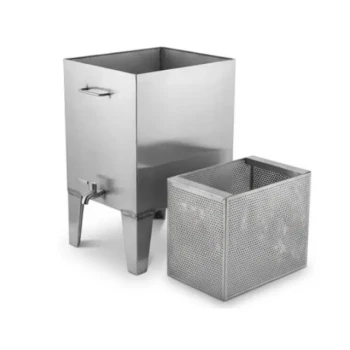
Advanced processing uses fine filtration systems to remove these impurities. This ensures the wax used for sealing is of high-purity, often reaching industrial or cosmetic-grade standards.
Thermal Consistency
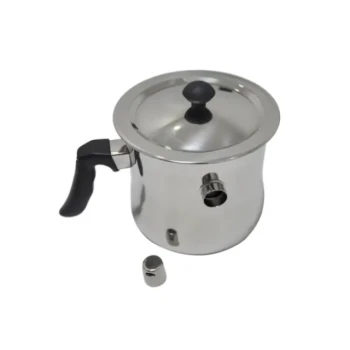
The effectiveness of the seal relies on the wax behaving predictably during application. Constant-temperature wax melting kettles are used to maintain precise heat control.
This thermal regulation preserves the natural characteristics of the beeswax. It ensures the material flows correctly to form a seal without overheating, which could damage the wax structure or the product inside.
Operational Considerations and Trade-offs
Equipment Requirements
Unlike simple screw-top capping, beeswax sealing requires specialized machinery. Producers must invest in melting kettles and filtration units to prepare the material.
Process Precision
The quality of the wax application depends on consistency. Equipment that regulates thickness consistency (often used for making wax sheets) demonstrates the level of mechanical precision required to handle beeswax effectively.
If the wax is not processed or applied with high dimensional accuracy, the aesthetic appeal and the integrity of the airtight barrier may be compromised.
Making the Right Choice for Your Product
## Strategic Application for Product Lines
To determine if beeswax sealing is appropriate for your operations, consider your primary preservation goals:
- If your primary focus is Bioactive Potency: Prioritize beeswax sealing to prevent oxidation and preserve the medicinal activity of high-value honey.
- If your primary focus is Shelf Life Extension: Use this method to stop moisture evaporation and stabilize the product for long-term storage.
Beeswax sealing is not merely an aesthetic choice; it is a functional engineering solution that locks in quality by physically eliminating the environmental factors that cause decay.
Summary Table:
| Preservation Factor | Benefit of Beeswax Sealing | Impact on Product Quality |
|---|---|---|
| Oxygen Exposure | Forms a hermetic, airtight barrier | Prevents oxidation of bioactive compounds |
| Moisture Control | Blocks gas and moisture exchange | Prevents fermentation and maintains viscosity |
| Sealing Gaps | Conforms to bottle surface | Eliminates microscopic gaps found in mechanical caps |
| Stability | Locks in internal environment | Extends shelf life and preserves medicinal potency |
Elevate Your Bee Product Quality with HONESTBEE Professional Equipment
At HONESTBEE, we understand that premium honey and bee products require superior preservation to maintain their value. As a dedicated partner to commercial apiaries and distributors, we provide the specialized tools and machinery necessary to implement high-grade beeswax sealing and honey processing.
From constant-temperature wax melting kettles and fine filtration systems to complete honey-filling machines and hive-making hardware, our comprehensive wholesale offering ensures your operation achieves industrial precision and aesthetic excellence. Whether you are looking for high-purity consumables or advanced machinery to scale your production, we help you protect the bioactive integrity of your products.
Ready to upgrade your bottling process and safeguard your brand's quality?
Contact HONESTBEE Today for a Wholesale Consultation
References
- Erkan Topal, Rodica Mărgăoan. Traces of Honeybees, Api-Tourism and Beekeeping: From Past to Present. DOI: 10.3390/su132111659
This article is also based on technical information from HonestBee Knowledge Base .
Related Products
- Colorful Silicone Beeswax Foundation Mold Mould for Beekeeping
- Beeswax Foundation Sheets Beehive Foundation for Wholesale
- Manual Beeswax Flat Sheet Machine for Beeswax Processing
- Fully Automatic Beeswax Embossing Machine Foundation Mill
- Beeswax Machine Press Embosser Wax Foundation Mold Printer Bee Hive Equipment Making Sheet
People Also Ask
- How do beeswax foundation molds facilitate the construction of standardized honeycombs? Optimize Your Apiary Efficiency
- How do you use the Foundation Mold to create beeswax foundation? Master DIY Beekeeping with Precision
- How can beeswax value-addition processes be utilized to increase beekeeping revenue? Boost Your Apiary Profitability
- What is the first tip for pouring beeswax into a silicone mold? Ensure a Perfect Release
- Why are specific wax foundation molds used to downsize brood cells? Master Mechanical Pest Inhibition