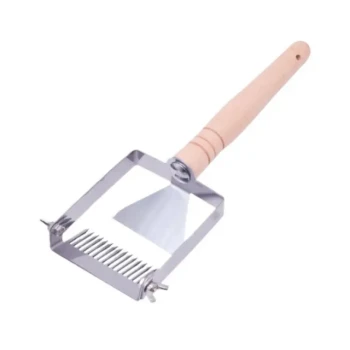
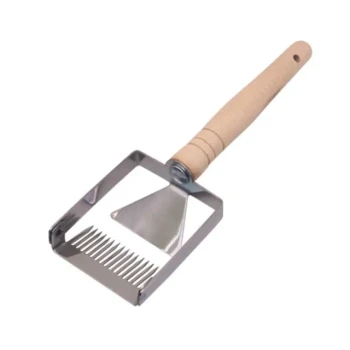
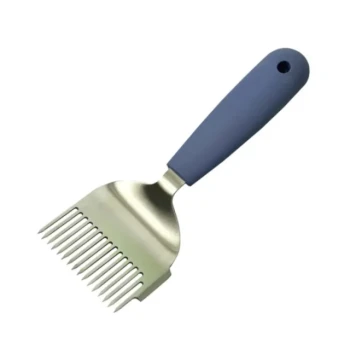
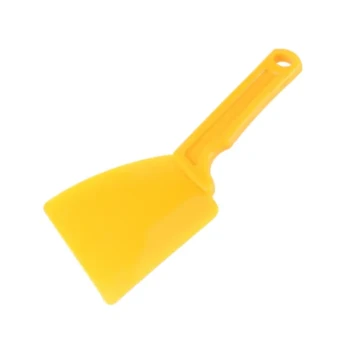
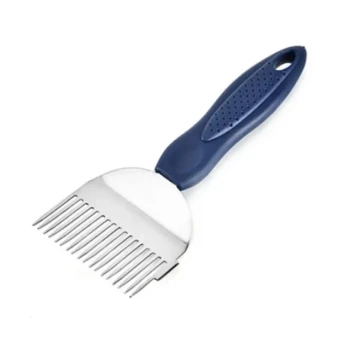
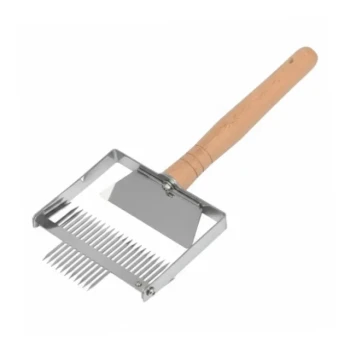
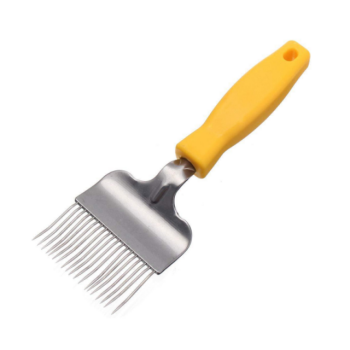
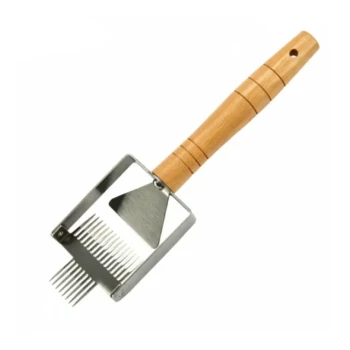
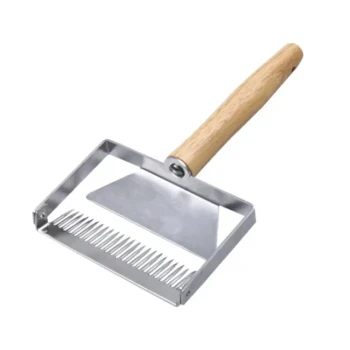
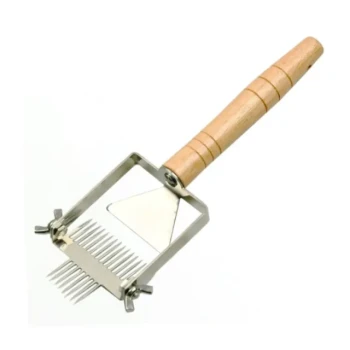
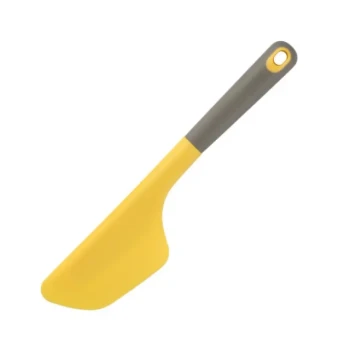
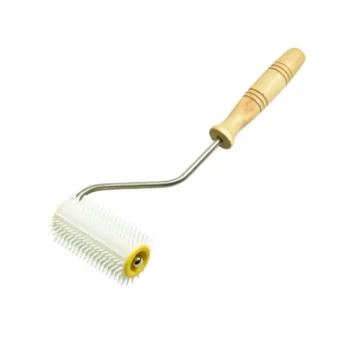
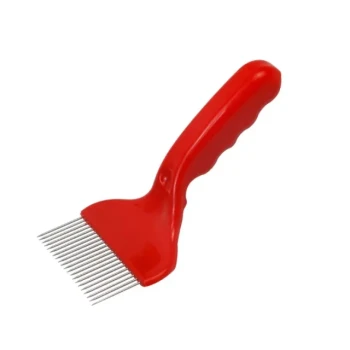
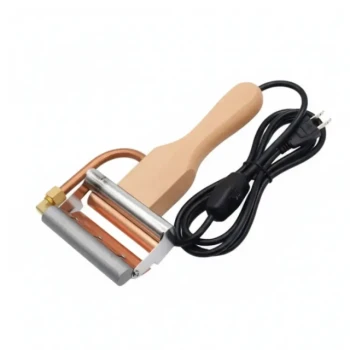
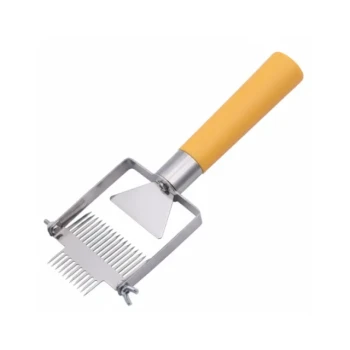
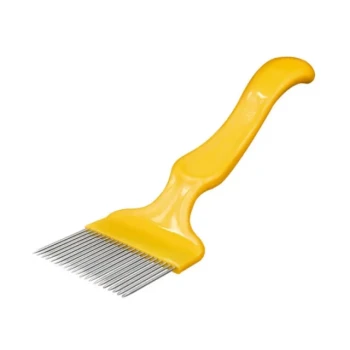
The primary role of a capping scratcher is to serve as a precision finishing tool. During the honey extraction process, it is specifically designed to open wax cappings that primary uncapping tools, such as electric knives, have failed to remove due to uneven comb surfaces.
While capable of uncapping an entire frame, the capping scratcher is best utilized as a secondary instrument to target missed spots, ensuring maximum honey extraction without the inefficiency of using it for the bulk of the work.
The Function of the Scratcher in Workflow
Handling Irregular Surfaces
Most primary uncapping tools, like electric knives, operate on a relatively flat plane. However, honeycomb is rarely perfectly even.
The capping scratcher allows you to reach into "low spots" or depressions in the comb that a knife passes over. By scratching open these specific cells, you ensure the honey stored in them can be spun out during extraction.
Acting as a Backup Tool
In a standard workflow, the scratcher follows the main uncapping pass.
After the initial cut is made to remove the bulk of the wax cap, the beekeeper inspects the frame. The scratcher is then used to manually open any remaining sealed cells before the frame is placed in the extractor.
Understanding the Trade-offs
Efficiency vs. Precision
While it is technically possible to use a capping scratcher to uncap an entire frame of honey, this approach is generally discouraged for larger operations.
Using a scratcher as your sole tool is significantly more time-consuming than using a heated knife or plane. It requires manual agitation of every cell rather than a single, clean slice.
Managing Workflow Cleanliness
Reliance on a capping scratcher for the entire process often results in a messier workspace.
Because the tool rips and lifts the wax rather than slicing it cleanly, it creates more loose wax debris and honey drips compared to the cauterizing action of a hot knife.
Making the Right Choice for Your Goal
To optimize your honey harvesting workflow, consider how you integrate this tool:
- If your primary focus is speed and efficiency: Use an electric knife for the bulk of the work and reserve the scratcher strictly for the few cells the knife misses.
- If your primary focus is budget or minimal equipment: You can use the scratcher for the entire process, but be prepared for a slower workflow and increased cleanup time.
The capping scratcher is the essential "quality control" step that ensures no honey is left trapped behind wax during extraction.
Summary Table:
| Feature | Primary Uncapping (Electric Knife) | Capping Scratcher |
|---|---|---|
| Main Role | Bulk wax removal | Precision finishing & low spots |
| Speed | High efficiency | Lower (Manual) |
| Surface Type | Best for flat/even comb | Ideal for irregular/sunken cells |
| Waste Profile | Clean slices, less debris | More wax fragments/dripping |
| Recommended Use | Primary tool for speed | Secondary tool for quality control |
Maximize Your Honey Production with HONESTBEE
Efficiency in the extraction room is the difference between a successful harvest and a wasted day. At HONESTBEE, we support commercial apiaries and distributors with a comprehensive range of professional-grade beekeeping equipment.
Whether you need precision manual tools like capping scratchers for quality control, high-speed honey-filling machines, or custom hive-making machinery, we provide the hardware and consumables required to scale your operation.
Ready to upgrade your wholesale supply? Contact us today to discover how our end-to-end equipment solutions can streamline your workflow and boost your bottom line.
Related Products
- Adjustable Stainless Steel Honey Uncapping Fork with Scraper for Beekeeping
- Professional Stainless Steel Uncapping Fork with Wooden Handle
- Professional Multi-Function Uncapping Fork with Ergonomic Rubber Grip
- Professional Honey Scraper for Efficient Apiary Maintenance
- Professional Multi-Function Uncapping Fork with Integrated Blade for Beekeeping
People Also Ask
- How does a honey uncapping fork supplement the use of an uncapping knife? Boost Your Honey Yield and Extraction Efficiency
- What is the design purpose of honey uncapping forks and honey uncapping tanks? Maximize Your Harvest Efficiency
- What are the essential tools for uncapping honey frames? Choose the Right Tool for Your Apiary
- What are the tools used for uncapping honeycombs? Expert Guide to Tools & Functions for Maximum Yield
- What tools are used for honey uncapping? Choose the Right Knife for Your Harvest