Centrifugal extraction is the foundational preparation technique that makes melissopalynology (the study of pollen in honey) possible. By utilizing high-speed rotation to separate solid particles from the liquid honey matrix, this process concentrates trace pollen grains into a dense sediment, allowing for the accurate microscopic identification required to determine the honey’s botanical and geographical origin.
Core Takeaway: Without centrifugal extraction, honey is too viscous and the pollen too sparse for accurate study. This process acts as an "enrichment" step, separating interfering sugars from botanical markers to facilitate the quantitative statistical analysis necessary for classifying honey grades and medicinal value.
The Mechanics of Pollen Enrichment
Overcoming the Liquid Matrix
Honey is a dense, viscous solution containing a relatively low concentration of suspended particles. Centrifugation provides the necessary force to separate these solids from the liquid sugars. By diluting the honey in water and subjecting it to high-speed rotation (often around 4500 rpm), the process overcomes the natural buoyancy and viscosity that keeps pollen suspended.
Formation of the Sediment Pellet
The primary goal is to create a concentrated "pellet" or sediment at the bottom of the test tube. This transforms a dilute solution into a high-density sample rich in pollen grains, fungal spores, and honeydew elements. This concentration is a prerequisite for ensuring enough biological material is present on a microscope slide to make a statistically valid assessment.
Improving Sample Purity
Centrifugation is not just about collection; it is also a cleaning process. Through multiple cycles of spinning and washing with water, interfering substances like dissolved sugars and bubbles are removed. This ensures that the final sample consists primarily of the solid botanical markers needed for clear optical observation.
Enhancing Analytical Precision
Enabling Quantitative Evaluation
Once the pollen is concentrated, analysts can count and categorize the grains to determine the relative proportions of nectar sources. This allows for the specific identification of plant families, such as Brassicaceae, Polygonaceae, Fabaceae, and Asteraceae. These ratios are the scientific basis for labeling honey as "monofloral" (derived mostly from one plant) or "multifloral."
Determining Commercial and Medicinal Value
The data derived from centrifuged samples directly impacts the market value of the product. By accurately mapping the pollen spectrum, producers can certify the geographical origin and botanical purity of the honey. This verification is essential for grading honey for commercial sale and validating claims regarding specific medicinal properties associated with certain plants.
Understanding the Operational Trade-offs
Standardization vs. Variability
While centrifugation is powerful, the parameters must be strictly standardized to ensure uniformity. Variations in rotation speed or duration can alter the settlement time and the density of the sediment, potentially skewing the count if lighter pollen grains are not fully precipitated. Reliable quantitative statistics depend on consistent physical assurance provided by the equipment settings.
Production vs. Analytical Extraction
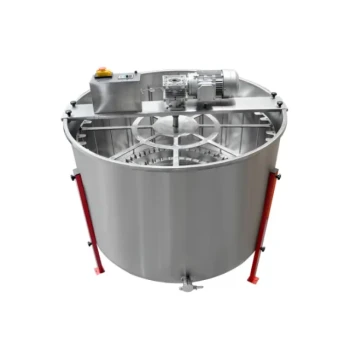
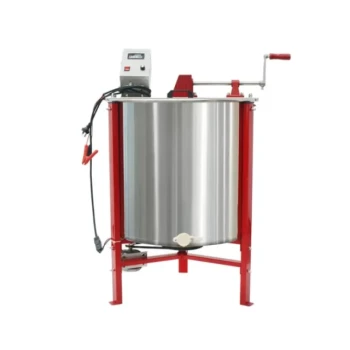
It is important to distinguish between centrifugation for harvesting and for analysis. Production centrifuges extract honey from the comb to avoid heat damage and impurities like beeswax or larval remains. Analytical centrifuges, discussed here, take that finished honey and separate the pollen back out of it for testing; confusing these two distinct applications is a common pitfall.
Making the Right Choice for Your Goal
To effectively utilize centrifugal extraction data, align your analysis with your specific objectives:
- If your primary focus is Botanical Certification: Ensure the extraction process includes thorough washing cycles to remove sugar "noise," allowing for a clear count of specific plant families like Fabaceae or Asteraceae.
- If your primary focus is Geographic Origin: Prioritize a high-speed concentration (e.g., 4500 rpm) to capture all sediment types, including trace fungal spores and dust, which act as unique regional fingerprints.
- If your primary focus is Commercial Grading: Use standardized centrifugation parameters to ensure your pollen density counts are consistent and legally defensible for labeling.
Centrifugal extraction is the critical bridge that converts raw honey into actionable scientific data, validating the product's quality, origin, and value.
Summary Table:
| Feature | Role in Melissopalynology | Key Benefit |
|---|---|---|
| Pollen Enrichment | Concentrates sparse grains into a dense sediment pellet | Enables statistically valid microscopic study |
| Matrix Separation | Uses high-speed rotation (4500 rpm) to overcome viscosity | Isolates solids from thick liquid sugars |
| Sample Purity | Washing cycles remove bubbles and dissolved sugars | Provides clear optical observation of markers |
| Origin Mapping | Captures trace spores and regional botanical fingerprints | Certifies geographical and botanical authenticity |
Elevate Your Beekeeping Standards with HONESTBEE
At HONESTBEE, we understand that precision in honey analysis is key to commercial success. Whether you are a large-scale commercial apiary or a global distributor, our comprehensive wholesale offering provides the specialized tools you need to excel. From high-performance honey-filling and hive-making machines to a full spectrum of beekeeping hardware and essential consumables, we empower you to validate the quality and origin of your product.
Ready to scale your operation and enhance your honey's market value?
Contact us today to explore our professional equipment solutions!
References
- L.A. Meshcheryakova. HONEY POLLEN ANALYSIS AND POPULATION CHARACTERISTICS OF HONEY BEES LIVING IN THE TOWN OF NAUCHNIY GORODOK OF THE ALTAI REGION. DOI: 10.53083/1996-4277-2021-206-12-66-71
This article is also based on technical information from HonestBee Knowledge Base .
Related Products
- electric honey extractor honey centrifuge 3 frame honey extractor stainless steel honey frame extractor
- Manual Hand Crank 4 Frame Honey Extractor Centrifuge for Beekeeping
- Professional 4 Frame Self Reversing Electric Honey Extractor for Beekeeping
- Stainless Steel Manual 8 Frame Radial Honey Extractor Machine for Beehives
- Electric 4 Frame Tangential Honey Extractor
People Also Ask
- What are the characteristics of electric honey extractors? Boost Your Apiary Efficiency with Automated Technology
- What are the disadvantages of using an electric honey extractor? Weighing Cost, Power, and Comb Safety
- What are the advantages of an electric honey extractor? Boost Efficiency and Scale Your Honey Production
- What are the technical advantages of electric honey extractors? Maximize Yield and Protect Your Bee Colony
- How does an electric honey extractor affect the quality of honey? Preserve Flavor & Purity with Precision Extraction