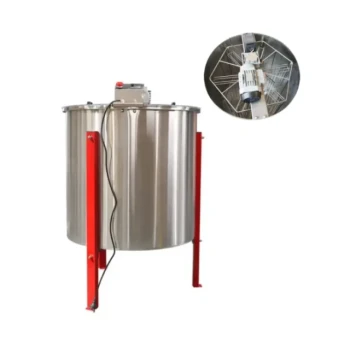
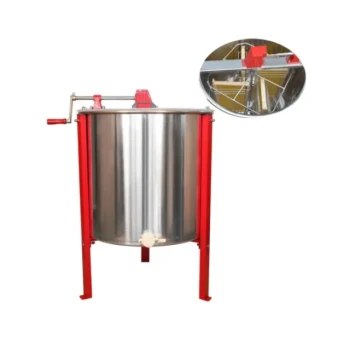
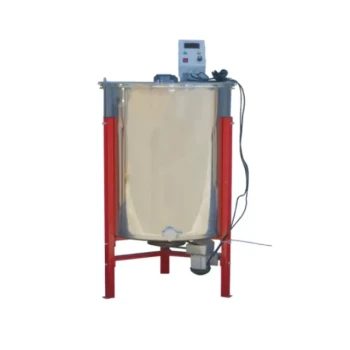
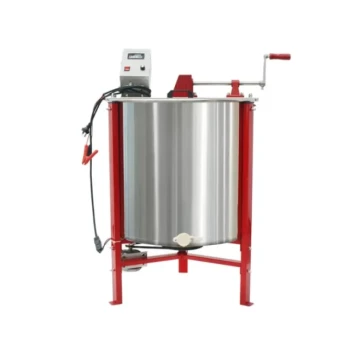
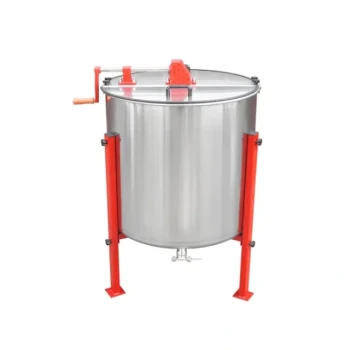
Electric extractors offer superior speed and convenience by utilizing motor-driven automation to eliminate physical labor, though they require a larger financial investment. Manual extractors are the budget-friendly alternative, ideal for small-scale operations where the beekeeper is willing to trade significant time and physical effort for a lower upfront cost.
Core Takeaway The choice between electric and manual extraction is a trade-off between capital and "sweat equity." Manual units are cost-effective for hobbyists with fewer than eight hives, while electric models are a productivity requirement for anyone scaling up, offering consistent results and multitasking capabilities that justify the higher price tag.
Analyzing the Labor Difference
The most immediate distinction between these tools is the physical demand placed on the beekeeper.
The Manual "Hands-On" Experience
Manual extractors rely entirely on a hand crank. You must physically spin the mechanism for the duration of the extraction.
This process is physically demanding and can be exhausting, particularly during larger harvests. However, it offers a tactile experience often appreciated by hobbyists who enjoy a fully manual process.
The Electric Advantage
Electric extractors replace the hand crank with an electric motor. This significantly reduces physical effort, making them the premier choice for beekeepers with physical limitations.
Because the machine does the work, the operator is free to perform other tasks, such as uncapping the next set of frames, while the honey spins.
Time and Efficiency
When measuring time, you must look at both the speed of extraction and the volume of frames processed.
Speed of Operations
Electric extractors are generally faster. The consistent speed of the motor extracts honey more thoroughly and quickly than a human arm typically can.
Manual extraction is slower and requires your full attention, meaning the total time to harvest increases linearly with every frame you add.
Capacity for Scaling
Manual extractors typically hold between 2 and 8 frames. This creates a bottleneck if you have many hives.
Electric extractors can handle anywhere from 2 up to 100 frames simultaneously. This high capacity allows commercial or growing apiaries to streamline operations and process massive volumes of honey in a fraction of the time.
Cost and Material Considerations
Your budget will often dictate which category you start with.
Upfront Investment
Manual extractors are the lower-cost option. They are often made from food-grade plastic or lighter stainless steel, keeping the price accessible for beginners.
Electric extractors are usually more expensive. The cost includes the motor, speed controls, and typically a heavier-gauge stainless steel construction designed for durability.
Infrastructure Requirements
Manual extractors are portable and self-sufficient. They are excellent for off-grid setups or remote apiaries where electricity is unavailable.
Electric extractors require a power source. This limits where you can perform the extraction and adds a layer of complexity to your setup.
Understanding the Trade-offs
Before purchasing, it is vital to recognize the limitations of each system beyond simple cost and speed.
Control vs. Consistency
Manual extractors offer "very good" control because you can feel the resistance of the basket. You can instantly slow down if a comb feels like it might break.
However, electric extractors provide superior consistency. Modern electric units offer precise speed controls that prevent comb damage while utilizing centrifugal force to extract honey more efficiently than hand-cranking usually achieves.
Maintenance Complexity
Manual extractors are mechanically simple. There are fewer parts to break, and maintenance is straightforward.
Electric extractors involve motors and wiring. While they are built for productivity, a motor failure can halt your operation until repairs are made.
Making the Right Choice for Your Goal
The decision ultimately relies on the scale of your apiary and your future growth plans.
- If your primary focus is keeping costs low for a small hobby (under 8 hives): Choose a manual extractor, as the lower price point outweighs the labor required for small harvests.
- If your primary focus is scaling production or minimizing physical strain: Choose an electric extractor, as the efficiency and ability to multitask will quickly pay for the higher upfront cost.
- If your primary focus is off-grid flexibility: Choose a manual extractor, as it allows you to harvest anywhere without relying on generators or power outlets.
Ideally, match the tool to your harvest size: start manual for the experience, but upgrade to electric once the physical labor limits your enjoyment or efficiency.
Summary Table:
| Feature | Manual Honey Extractor | Electric Honey Extractor |
|---|---|---|
| Best For | Hobbyists (1-8 hives) / Off-grid | Commercial / Scaling Apiaries |
| Labor Level | High (Hand-cranking required) | Low (Automated motor) |
| Speed | Slower; dependent on physical effort | Faster; consistent high speeds |
| Capacity | Typically 2-8 frames | 2-100+ frames |
| Cost | Budget-friendly / Lower entry cost | Higher investment / Infrastructure needed |
| Maintenance | Simple; few moving parts | Higher; involves motor/wiring |
Scale Your Honey Production with HONESTBEE
Whether you are a growing commercial apiary or a distributor looking for high-quality wholesale solutions, HONESTBEE provides the professional-grade tools you need to maximize efficiency. From durable manual units for niche enthusiasts to high-capacity electric honey-filling and extracting machinery, our comprehensive portfolio covers the full spectrum of beekeeping hardware and essential consumables.
Why partner with HONESTBEE?
- Wholesale Excellence: Competitive pricing on bulk orders for tools and equipment.
- End-to-End Solutions: We supply everything from hive-making machines to honey-themed cultural merchandise.
- Industry Expertise: We understand the technical demands of commercial honey production.
Contact HONESTBEE Today to streamline your operations and secure the best equipment for your business!
Related Products
- HONESTBEE 72 Frame Industrial Electric Honey Extractor for Beekeeping
- Commercial Electric 12 Frame Honey Extractor Spinner Motorized Honey Extractor
- HONESTBEE 6 Frame Self Reversing Electric Honey Extractor for Beekeeping
- HONESTBEE 3-Frame Manual Acrylic Honey Extractor
- Stainless Steel Manual 8 Frame Radial Honey Extractor Machine for Beehives
People Also Ask
- What is the importance of balancing honeycomb frames within a honey extractor? Ensure Stability and Protect Machinery
- How is honey separated from the frames after they are uncapped? Efficient Extraction Methods for High Yields
- What are the main benefits of using a honey extractor? Maximize Yields and Protect Your Honeycomb
- What are the recommended methods for removing honey from the honeycomb? Top Extraction Techniques for Maximum Efficiency
- How do manual honey extractors compare to electric honey extractors? Choosing the Right Tool for Your Apiary Growth