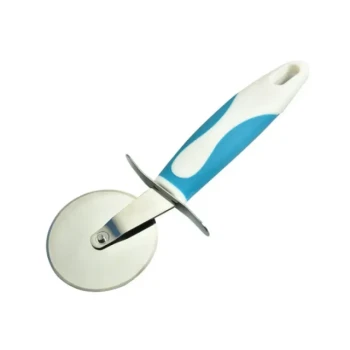
Precise mechanical synchronization is the key to automation. The cutting cylinder operates by linking directly to the main equipment via a transmission system, ensuring it rotates in perfect lock-step with the moving foundation ribbon. By utilizing the cylinder's set circumference to determine the cutting interval, the system automatically segments the continuous embossed ribbon into fixed-length sheets, eliminating the need for manual measurement or cutting.
The system replaces manual labor with mechanical geometry, using the fixed circumference of a rotating cylinder to ensure every beeswax sheet is cut to the exact same length at high speeds.
The Mechanics of Synchronized Cutting
The Role of the Transmission System
The foundation of this automation is a physical transmission link. The cutting cylinder is not an independent unit; it is driven by the same system moving the beeswax ribbon.
This mechanical coupling ensures that the cutter's rotation speed automatically adjusts if the production line speeds up or slows down.
Circumference-Based Timing
The "timed" cut-off function is determined by the circumference of the cylinder. One full rotation of the cylinder equals one specific length of beeswax foundation.
Instead of using complex sensors to measure length, the machine relies on the simple physical property of rotation to dictate the cut interval.
Continuous to Discrete Transformation
The primary function of this component is transforming a continuous input into a discrete output. The embossing stage produces an endless ribbon of beeswax.
The cutting cylinder segments this endless ribbon into usable, stackable units without stopping the flow of material.
Why This Enables Large-Scale Production
Eliminating Production Bottlenecks
Manual cutting is slow, prone to error, and requires stopping the material flow. By automating this step, the machine allows for uninterrupted operation.
The beeswax can move from raw material to finished, embossed, and cut product in a single non-stop pass.
Ensuring Product Uniformity
In large-scale apiary supply production, consistency is critical. Because the cut is based on a fixed mechanical rotation, deviation is virtually eliminated.
Every sheet produced matches the exact specifications of the cylinder, ensuring high-quality control standards are met automatically.
Understanding the Trade-offs
Rigidity of Dimensions
The reliance on a set circumference for cutting creates a flexibility trade-off. To change the length of the produced sheets, you generally must change the physical cutting cylinder or modify the transmission ratio.
This makes the system highly efficient for mass production of a single size, but less agile for custom, varying batch sizes.
Mechanical Maintenance Dependencies
Because the system relies on physical synchronization, wear and tear on the transmission can affect accuracy. Loose belts, worn gears, or slipping chains can cause the cut to drift, requiring regular mechanical inspection to maintain precision.
Making the Right Choice for Your Goal
To maximize the benefits of this automated system, align your operational goals with the machine's capabilities:
- If your primary focus is High Volume: Ensure the transmission system is robust enough to handle high-speed rotation without vibration, as this is your key to throughput.
- If your primary focus is Product Consistency: Regularly calibrate the tension in the transmission system to ensure the "set circumference" translates to an exact cut every time.
True automation in beeswax processing comes from mechanically locking the finishing step to the production speed, creating a seamless flow from raw wax to finished foundation.
Summary Table:
| Feature | Mechanical Impact | Automation Benefit |
|---|---|---|
| Transmission Link | Direct synchronization with main drive | Eliminates manual speed adjustment |
| Cylinder Circumference | Fixed rotation-to-length ratio | Ensures exact sheet length every time |
| Continuous Flow | Discrete segments from endless ribbon | Enables uninterrupted, high-speed output |
| Physical Geometry | Replaces electronic sensor reliance | Reduces complexity and maintenance downtime |
Scale Your Foundation Production with HONESTBEE
As a dedicated partner to commercial apiaries and global distributors, HONESTBEE understands that precision is the backbone of your business. Our advanced beeswax foundation machinery—including high-performance cutting systems—is designed to eliminate bottlenecks and deliver the uniformity your customers demand.
From automated hive-making and honey-filling machines to a full spectrum of beekeeping tools and essential consumables, we provide the hardware and expertise to optimize your entire operation.
Ready to elevate your production efficiency?
Contact HONESTBEE Today to explore our wholesale equipment solutions and see how our industrial-grade machinery can transform your output.
References
- Cristiano Ziegler, Ademar Michels. DESENVOLVIMENTO DE UM EQUIPAMENTO PARA A PRODUÇÃO DE CERA ALVEOLADA. DOI: 10.15628/holos.2016.3742
This article is also based on technical information from HonestBee Knowledge Base .
Related Products
- Professional Rolling Wax Cutter with Ergonomic Handle
- Electric Flatting and Embossing Machine with Tray for Beekeeping
- Electric Beeswax Foundation Machine With Operating Tray and Wax Foundation Roller
- Electric Beeswax Flat Sheet Machine with Operating Tray for Wax Processing
- Fully Automatic Beeswax Embossing Machine Foundation Mill
People Also Ask
- What tools are used to cut wax foundations? The Essential Guide for a Perfect Fit
- How should cut foundation be stored? Protect Your Investment from Pests and Damage
- What is the function of a beekeeping knife? Master the Art of Honey Uncapping and Extraction
- What is the process for cutting milled wax foundation to a specific size? Master Precision Beekeeping Techniques
- How is a comb cutter used to produce cut comb honey? Master the Art of Precision Harvesting