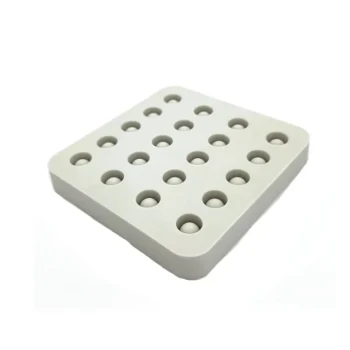
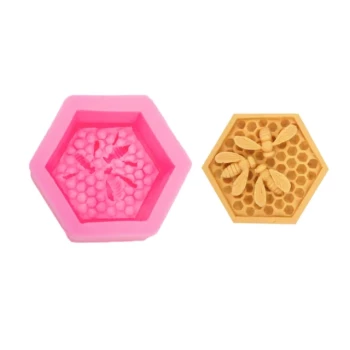
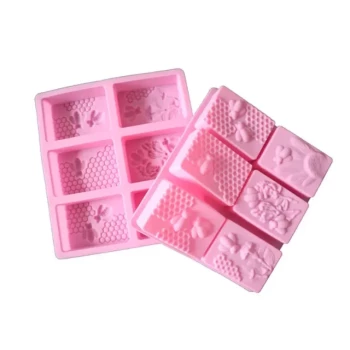
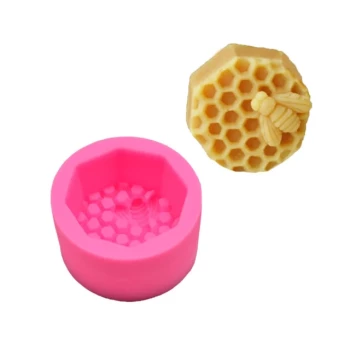
A casting mould serves as the architectural blueprint for modern beekeeping. Its primary role is to process beeswax into standardized foundation sheets by pressing the wax into a specific, uniform honeycomb pattern. These sheets are subsequently installed into moveable frames, providing the structural guide necessary for bees to construct organized and stable combs.
The casting mould acts as the critical interface between raw materials and efficient hive management. By ensuring the production of uniform foundation sheets, it allows for the creation of straight combs that are compatible with centrifugal honey extractors.
The Mechanics of Hive Standardization
Creating the Foundation Sheet
The casting mould functions as a precision press. It transforms processed beeswax into thin, durable sheets.
During this process, the mould embosses the wax with a consistent honeycomb pattern. This embossed geometry is essential, as it dictates the size and shape of the cells the bees will build.
Guiding Comb Construction
Once produced, these foundation sheets are installed directly into the frames of moveable frame hives.
The pattern impressed by the mould guides the natural building instinct of the bees. Instead of building irregular structures, the bees follow the template to construct straight, uniform honeycombs centered within the frame.
Strategic Benefits for the Apiarist
Ensuring Structural Stability
The use of a casting mould is not merely aesthetic; it is structural.
By starting with a pressed foundation sheet, the resulting comb is significantly more stable. This stability is required to withstand the physical manipulation involved in regular hive inspections.
Facilitating Centrifugal Extraction
One of the most critical roles of the casting mould is ensuring compatibility with harvesting equipment.
Centrifugal honey extractors require combs to be flat and uniform to spin properly without breaking. The mould ensures every frame produced fits these mechanical requirements, standardizing the extraction process.
Critical Considerations and Trade-offs
The Necessity of Wax Processing
The casting mould relies heavily on the quality of the input material.
As noted in the reference, the wax must be "processed" before it is pressed. Attempting to cast foundations with raw, unprocessed wax can lead to poor pattern definition or structural failure of the sheet.
Standardization vs. Natural Comb
The primary goal of the casting mould is standardization.
While this allows for moveable frames and machine extraction, it imposes a specific cell size and structure on the colony. The trade-off is a rigid hive management system, which is efficient for the beekeeper but requires precise adherence to the dimensions set by the mould.
Optimizing Your Hive Setup
To effectively utilize a casting mould for your apiary, consider your specific management goals:
- If your primary focus is efficient harvesting: Ensure your casting mould produces sheets that result in combs rigid enough to withstand the force of your specific centrifugal extractor.
- If your primary focus is hive health and management: Prioritize the use of the mould to create straight combs, which minimizes the risk of injuring bees during routine frame inspections.
The casting mould is the fundamental tool that transforms beeswax from a raw byproduct into a functional asset for sustainable apiary management.
Summary Table:
| Feature | Function & Role in Production | Benefit for Apiarists |
|---|---|---|
| Pattern Embossing | Presses a uniform honeycomb geometry onto wax sheets | Guides bees to build straight, organized combs |
| Structural Support | Transforms processed wax into durable foundation sheets | Increases comb stability for frequent hive inspections |
| Standardization | Ensures all sheets meet specific frame dimensions | Enables the use of mechanical centrifugal extractors |
| Material Processing | Acts as a precision press for refined beeswax | Minimizes waste and optimizes raw material utility |
Elevate Your Beekeeping Operation with HONESTBEE
At HONESTBEE, we understand that precision is the backbone of a productive apiary. Whether you are a commercial beekeeping operation or a large-scale distributor, our comprehensive wholesale solutions are designed to scale your success.
We provide the industry's most reliable beekeeping machinery, including professional-grade casting moulds, hive-making equipment, and honey-filling systems, alongside a full spectrum of high-quality tools and consumables. From structural hardware to honey-themed cultural merchandise, we empower you to deliver excellence at every stage of production.
Ready to optimize your yield and streamline your management?
Contact HONESTBEE today to explore our wholesale catalog and discover how our expertise can drive your business forward.
References
- Gidey Yirga, Mekonen Teferi. Participatory Technology and Constraints Assessment to Improve the Livelihood of Beekeepers in Tigray Region, northern Ethiopia. DOI: 10.4314/mejs.v2i1.49654
This article is also based on technical information from HonestBee Knowledge Base .
Related Products
- Colorful Silicone Beeswax Foundation Mold Mould for Beekeeping
- Notebook Style Beeswax Foundation Mould Wax Foundation Mold
- High-Efficiency 20-Cell Silicone Mold for Beeswax Bee Queen Cup Production
- Beeswax Machine Press Embosser Wax Foundation Mold Printer Bee Hive Equipment Making Sheet
- 3D Square Honeycomb Pillar Silicone Candle Molds for Making Beeswax Candles
People Also Ask
- How do beeswax foundation molds facilitate the construction of standardized honeycombs? Optimize Your Apiary Efficiency
- How do you use the Foundation Mold to create beeswax foundation? Master DIY Beekeeping with Precision
- How can beeswax value-addition processes be utilized to increase beekeeping revenue? Boost Your Apiary Profitability
- What is the first tip for pouring beeswax into a silicone mold? Ensure a Perfect Release
- Why are specific wax foundation molds used to downsize brood cells? Master Mechanical Pest Inhibition