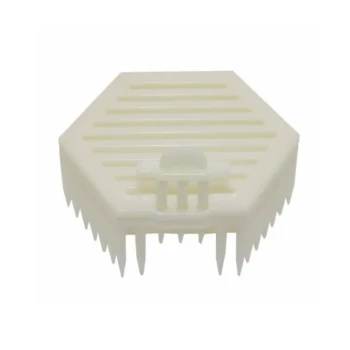
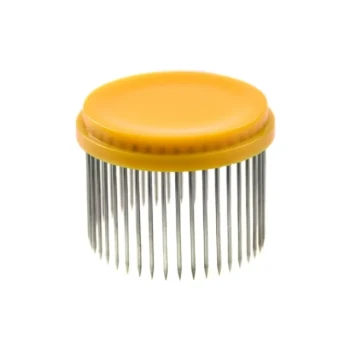
Specialized queen bee cages serve as engineered isolation chambers designed to manage the delicate transition of a queen into a new environment. By creating a physical barrier that permits airflow, these cages prevent immediate lethal aggression from worker bees while simultaneously facilitating the gradual chemical integration necessary for colony acceptance.
The core function of the cage is to decouple physical access from chemical exposure. It protects the queen from "balling" (suffocation by hostile workers) while allowing her pheromones to slowly permeate the hive, converting the colony's aggression into acceptance.
The Mechanics of Protective Isolation
The Physical Barrier Against Aggression
The primary danger to a introduced queen is the existing colony's worker bees, who view her as a foreign invader. The cage—often constructed of wood or metal mesh—acts as a robust exclusion device.
It physically separates the queen from the workers, preventing them from stinging or killing her during the initial high-risk period. This isolation is critical during reciprocal transplant experiments or standard re-queening, where rejection rates are highest.
Facilitating Pheromone Integration
While the cage blocks physical attacks, its design actively promotes chemical communication. The mesh or ventilated structure allows the queen’s specific pheromones to circulate throughout the hive.
This slow-release mechanism enables the colony to gradually habituate to the new queen's scent without direct contact. Over time, this chemical signaling shifts the colony's behavior from hostility to nurturing acceptance.
Physiological Support via Attendants
High-quality cages are designed to house not just the queen, but also a small retinue of worker bee attendants.
These attendants are essential for maintaining the queen's health during transport and isolation. They perform critical tasks such as feeding, cleaning, and thermal regulation, ensuring the queen remains physiologically active and less stressed before her release.
Nutritional Sustenance
Designated compartments within the cage hold food, typically sugar candy.
This provision ensures the queen and her attendants do not starve during transit or the acclimatization period. Furthermore, the candy often acts as a timing mechanism; as the hive bees eat through the candy plug from the outside, it delays the release until the pheromone integration process is complete.
Operational Safety and Handling
Mitigating Human Error
Beyond biological protection, the cage serves as a safety device for the beekeeper.
Confining the queen in a secure, visible mesh structure protects her from accidental crushing during frame manipulation or routine inspections. This is particularly valuable in poor lighting conditions or when handling heavy brood frames where a loose queen might be easily injured.
Understanding the Trade-offs
While queen cages are vital safety tools, they introduce specific management variables that must be respected.
The Limitation of Isolation
The cage is a temporary measure, not a permanent habitat. While it protects the queen, it also prevents her from laying eggs, which can temporarily stall colony growth. Prolonged confinement without release can stress the queen and weaken her reproductive potential.
placement Sensitivity
The protective benefits of the cage are nullified if placed incorrectly. A cage placed at the perimeter of the hive may leave the queen too cold or ignored by the nurse bees.
Making the Right Choice for Your Goal
To maximize the survival rate of your queen, apply the following protocols based on your specific objective:
- If your primary focus is Colony Acceptance: Position the cage between center frames (4-5 in 8-frame hives; 5-6 in 10-frame hives) to ensure maximum pheromone distribution among active nurse bees.
- If your primary focus is Safe Transport: distinct utilize cages with ample space for attendant bees and food stores to minimize transport stress and regulate the queen's temperature.
By controlling the pace of interaction, the queen cage transforms a potential conflict into a successful biological merger.
Summary Table:
| Feature | Protective Function | Key Benefit |
|---|---|---|
| Physical Mesh | Prevents direct worker contact | Stops "balling" and lethal aggression |
| Ventilation | Facilitates pheromone circulation | Gradual chemical acceptance by the colony |
| Attendant Space | Houses worker retinue | Maintains queen health, feeding, and grooming |
| Candy Compartment | Provides food and timing | Ensures survival and controls release timing |
| Durable Structure | Protective casing | Prevents accidental crushing during handling |
Maximize Your Apiary’s Success with HONESTBEE
At HONESTBEE, we understand that a successful queen introduction is the backbone of a productive colony. Whether you are managing a large-scale commercial apiary or supplying the next generation of beekeepers, our comprehensive wholesale range is designed for you.
We provide everything from precision-engineered queen cages and hive-making machinery to honey-themed cultural merchandise and essential consumables. Partner with us to access high-quality beekeeping tools that safeguard your livestock and streamline your operations.
Ready to scale your production? Contact us today to discuss your wholesale needs!
References
- Kathleen V. Lee, Marla Spivak. Is the Brood Pattern within a Honey Bee Colony a Reliable Indicator of Queen Quality?. DOI: 10.3390/insects10010012
This article is also based on technical information from HonestBee Knowledge Base .
Related Products
- Durable Galvanized Steel Spring Queen Bee Cage
- Professional Queen Cage with Sliding Gate and Feeder Plug
- Professional Queen Bee Introduction and Transport Cage
- Professional Bamboo Queen Isolation Cage
- Professional Multi-Functional Queen Bee Cage
People Also Ask
- Why are specialized queen bee cages used for the banking of mated queen bees? Maximize Commercial Apiary Storage Efficiency
- What is the mechanism of action for using temporary queen bee cages? Master Successful Queen Introduction
- What is the step-by-step process for installing a queen bee's cage onto a frame? Ensure Hive Acceptance Safely
- What is the optimal placement for a queen bee cage? Essential Strategies for Successful Re-queening
- What are the advantages and disadvantages of introducing a queen bee by embedding the cage? Boost Your Queen Acceptance