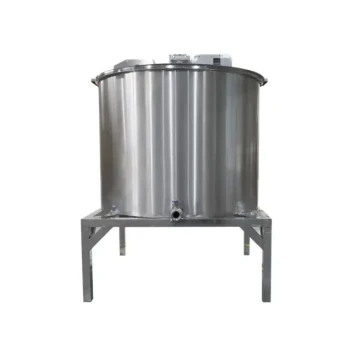
Standardized honey extraction facilities fundamentally transform sector competitiveness by establishing a controlled environment that rigorously adheres to food safety standards. These facilities enable the use of large-scale extraction machinery while preventing contamination, ensuring the product meets the strict hygiene requirements necessary for international trade and premium retail placement.
By shifting extraction from informal settings to standardized facilities, producers move beyond simple agriculture into a regulated, industrial-grade operation. This transition is the prerequisite for establishing product traceability, securing high-value market placement, and maximizing operational efficiency.
Securing Market Access Through Hygiene
The Foundation of Food Safety
The primary competitive advantage of a standardized facility is the creation of a controlled physical space. Unlike traditional or field-based extraction, these facilities are specifically designed to prevent external contaminants from entering the processing phase.
Unlocking High-End Retail
Premium retailers and international markets enforce stringent hygiene regulations. A standardized facility allows producers to meet these non-negotiable standards, removing the barriers to entry for high-value commercial contracts.
Establishing Product Traceability
Modern consumers and regulators demand to know the origin and journey of their food. Standardization provides the infrastructure required to implement traceability systems, giving buyers confidence in the product’s safety and authenticity.
Operational Efficiency and Yield Maximization
Preserving Honeycomb Integrity
Modern facilities utilize equipment based on centrifugal force. This efficiently separates honey without destroying the physical structure of the honeycomb, a critical advantage over crushing methods.
Increasing Annual Yields
Because the honeycomb remains intact, it can be returned to the hive for reuse. This allows bees to redirect energy—otherwise spent rebuilding wax combs—toward gathering nectar, substantially increasing the annual honey yield per hive.
Scientific Colony Management
Standardized equipment extends beyond the extraction room to the hives themselves. Using standardized beehives and collection tools creates a controlled growth environment, allowing for scientific colony management that reduces disease risk and optimizes collection workflows.
Expanding Revenue Streams
Beyond Agricultural Production
Competitiveness is not just about selling raw honey; it is about diversifying income. Standardized operations often integrate honey culture display equipment and merchandise.
The Shift to Agritourism
Investments in display and educational tools allow operations to transition into agritourism. By educating the public on the ecological importance of bees, producers can build brand loyalty and generate revenue through exhibitions and tours, insulating the business from price fluctuations in the raw honey market.
Understanding the Trade-offs
The Necessity of Rigorous Protocol
Building the facility is only the first step; maintaining it requires a shift in operational culture. The competitive advantage is lost if the standardized protocols for hygiene and machine maintenance are not strictly followed by staff.
Balancing Volume with Quality
While large-scale machinery increases speed, it introduces the risk of processing too quickly. Producers must ensure that the drive for efficiency via centrifugal extraction does not compromise the specific quality parameters (such as moisture content) required by high-end buyers.
Making the Right Choice for Your Goal
To maximize competitiveness, align your facility investment with your specific business objective:
- If your primary focus is Export and Retail Distribution: Prioritize the "controlled physical space" and hygiene certifications to ensure compliance with international traceability and safety regulations.
- If your primary focus is Volume and Efficiency: Invest heavily in centrifugal extraction machinery to preserve honeycombs, allowing bees to focus energy on nectar production rather than wax rebuilding.
- If your primary focus is Brand Visibility and Local Revenue: Allocate resources to culture display equipment and educational tools to diversify into high-margin agritourism.
True competitiveness involves leveraging physical infrastructure to turn honey production from a commodity activity into a scalable, traceable, and diversified business.
Summary Table:
| Competitive Driver | Key Benefit of Standardization | Impact on Growth |
|---|---|---|
| Food Safety | Controlled environments & contamination prevention | Unlocks high-value international & retail markets |
| Operational Yield | Centrifugal extraction preserves honeycomb integrity | Higher annual yields by reducing bee energy on wax building |
| Market Trust | Implementation of robust traceability systems | Enhances brand authenticity and consumer confidence |
| Revenue Diversity | Integration of honey culture & display equipment | Enables agritourism and higher-margin retail opportunities |
Elevate Your Apiary with HONESTBEE Industry Solutions
Transitioning to a standardized extraction facility is the key to moving from local production to global competitiveness. At HONESTBEE, we empower commercial apiaries and distributors with the professional-grade infrastructure needed to scale.
Our Value to Your Business:
- Precision Machinery: High-efficiency centrifugal honey extractors and honey-filling machines that preserve comb integrity.
- Advanced Hardware: Durable hive-making equipment and standardized beekeeping tools for scientific colony management.
- Brand Diversification: Unique honey-themed cultural merchandise to expand your revenue into agritourism and premium retail.
Ready to modernize your operations and secure high-value contracts?
Contact HONESTBEE Today for Wholesale Solutions
References
- Génesis Payró-García, Manuela de Jesús MONTEJO-ZAMUDIO. The productivity in the beekeeping sector of Comalcalco, Tabasco, for the design of an improvement proposal. DOI: 10.35429/ejrn.2021.13.7.28.32
This article is also based on technical information from HonestBee Knowledge Base .
Related Products
- 32 Frame Commercial Electric Honey Extractor for Beekeeping and Honey Production
- HONESTBEE 72 Frame Industrial Electric Honey Extractor for Beekeeping
- Stainless Steel Manual 8 Frame Radial Honey Extractor Machine for Beehives
- HONESTBEE 3-Frame Manual Acrylic Honey Extractor
- Manual Hand Crank 4 Frame Honey Extractor Centrifuge for Beekeeping
People Also Ask
- What are commercial honey extractors used for? Boost Your Apiary's Efficiency & Profitability
- What is a commercial honey extractor? The Essential High-Volume Solution for Large Apiaries
- Who are commercial honey extractors designed for? Scaling Your Industrial Beekeeping Success
- How is honey extracted commercially? Maximize Your Apiary's Efficiency and Honey Yield
- What are commercial honey extractors and for what scale of beekeeping are they intended? Scale Your 200+ Colony Apiary