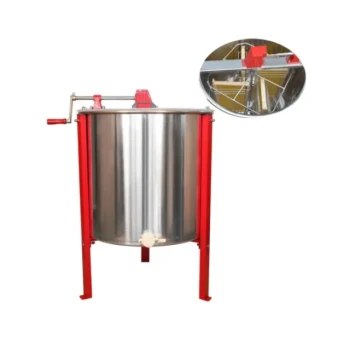
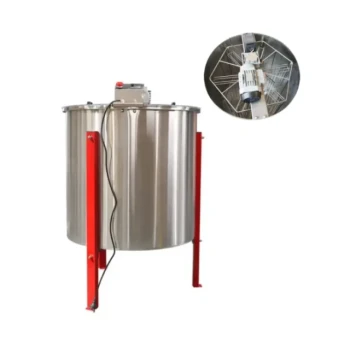
Modern honey extraction systems drive economic efficiency by utilizing centrifugal force to separate honey while preserving the structural integrity of the honeycomb. This non-destructive process eliminates the need for bees to rebuild wax, significantly redirecting their energy toward honey production. Consequently, this technology increases annual yield per hive, accelerates harvesting cycles, and maximizes the return on biological assets.
By preserving honeycombs for reuse, modern equipment shifts colony energy from reconstruction to production, fundamentally altering the economics of the apiary. This transition enables a shift from survival-based models to high-yield, industrialized operations.
Maximizing Biological Output
The Mechanism of Centrifugal Force
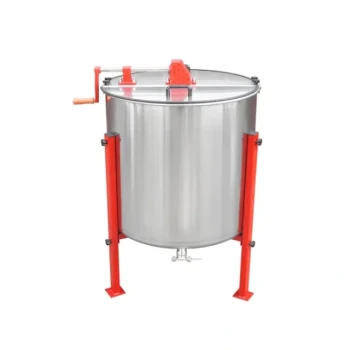
Modern extractors rely on physical principles to optimize the harvest. By spinning frames at high speeds, centrifugal force draws liquid honey out of the cells.
Crucially, this process leaves the delicate wax structure of the honeycomb intact. Unlike traditional crushing methods, the frame remains a functional storage unit after extraction.
Energy Redirection
The preservation of the comb is the primary driver of increased yield. Bees expend significant metabolic energy and resources to secrete wax and build combs.
When beekeepers return intact, empty combs to the hive, bees are spared this labor. They can immediately focus their energy on foraging and nectar processing. This direct energy saving translates into a substantially higher annual honey yield per hive.
Industrialization and Labor Optimization
Accelerating Production Cycles
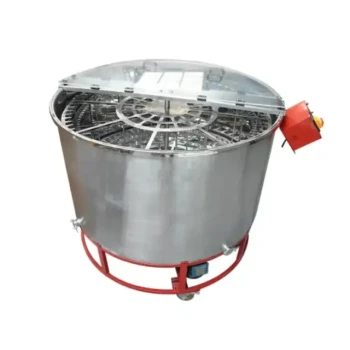
Mechanized and automated centrifugation systems drastically shorten the harvesting timeline. This speed allows for more frequent harvests during peak nectar flows.
By reducing the time frames spend out of the hive, operations minimize disruption to the colony. This continuity is essential for maintaining consistent production levels.
Scaling Labor Productivity
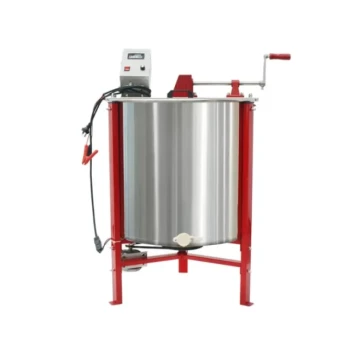
Automated equipment increases the total volume of honey produced per unit of human labor. This is a critical metric for economic scalability.
By moving away from manual extraction, operations improve their cash flow and overall profitability. This technology facilitates the transition from small-scale management to industrialized business models capable of handling complex pollination cycles.
Quality Assurance and Market Value
Material Standards and Purity
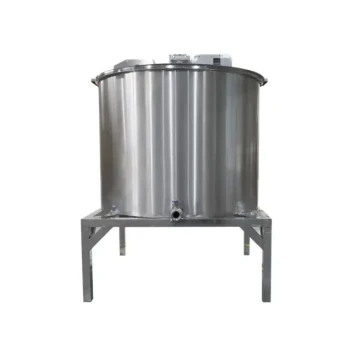
Modern processing relies on food-grade materials, typically stainless steel, to replace traditional containers made of clay or straw.
These non-porous materials prevent environmental impurities and metal oxidation. This ensures biological safety during extraction, filtration, and bottling.
Market Competitiveness
Efficient filtration and standardized processing minimize honey loss and ensure a uniform product.
Producing honey that meets specific bulk agricultural specifications enhances market competitiveness. High-purity output allows operations to qualify for organic or high-level quality certifications, opening access to premium markets.
Understanding the Trade-offs
The Experience Factor
Possessing advanced equipment does not automatically guarantee efficiency. Statistical evidence suggests that beekeeping experience is highly correlated with the effective utilization of hives.
Experienced beekeepers are better equipped to handle the complex management details required by industrial gear. Without proficient management to respond to environmental changes, the equipment may fail to reach its optimal output potential.
Capital vs. Operational Gain
While automated systems improve cash flow, they represent a shift toward a capital-intensive model. The return on investment relies heavily on the volume of production.
For smaller operations, the efficiency gains must be weighed against the initial cost of industrial-grade machinery. The equipment is a multiplier of efficiency, not a substitute for fundamental colony health.
Making the Right Choice for Your Goal
To maximize the economic impact of your equipment, align your technology with your specific operational targets.
- If your primary focus is maximizing volume: Prioritize centrifugal extractors that preserve comb structure to minimize bee energy expenditure on wax reconstruction.
- If your primary focus is market access: Invest in food-grade stainless steel filtration systems to ensure your product meets strict commercial purity and safety standards.
By leveraging technology to conserve biological energy and standardize output, you turn the hive into a scalable, highly efficient production unit.
Summary Table:
| Feature | Economic Impact | Efficiency Benefit |
|---|---|---|
| Centrifugal Extraction | Preserves comb for reuse | Redirects bee energy from wax building to honey production |
| Stainless Steel Material | Ensures food-grade purity | Enhances market value and meets safety certifications |
| Automated Filtration | Reduces product waste | Standardizes output for bulk agricultural markets |
| Mechanized Systems | Lowers labor cost per unit | Scales operations from manual to industrial levels |
Elevate Your Apiary's Profitability with HONESTBEE
Transitioning to industrialized honey production requires more than just tools—it requires high-performance machinery. HONESTBEE empowers commercial apiaries and distributors with the full spectrum of beekeeping technology.
From high-capacity centrifugal honey extractors that preserve your biological assets to precision honey-filling machines and specialized hive-making hardware, we provide the infrastructure needed for high-yield operations. We also supply essential industry consumables and honey-themed cultural merchandise to help you capture every segment of the market.
Ready to scale your production? Contact our expert team today to discuss our wholesale offerings and find the right equipment to maximize your economic efficiency.
References
- Radivoj Prodanović, Jelena Vapa–Tankosić. Beekeeping as a Tool for Sustainable Rural Development. DOI: 10.55817/ixvm2800
This article is also based on technical information from HonestBee Knowledge Base .
Related Products
- Electric 8 Frame Honey Spinner Extractor Equipment for Beekeeping
- HONESTBEE 2 Frame Manual Acrylic Honey Extractor Beekeeping Equipment
- 6 Frame Manual Stainless Steel Honey Extractor Beekeeping Equipment
- 32 Frame Commercial Electric Honey Extractor for Beekeeping and Honey Production
- HONESTBEE 72 Frame Industrial Electric Honey Extractor for Beekeeping
People Also Ask
- What are the advantages of an electric honey extractor? Boost Efficiency and Scale Your Honey Production
- What are the characteristics of electric honey extractors? Boost Your Apiary Efficiency with Automated Technology
- What are the disadvantages of using an electric honey extractor? Weighing Cost, Power, and Comb Safety
- What are the features of an electric honey extractor? Boost Your Apiary's Productivity with Motorized Efficiency
- What are the technical advantages of electric honey extractors? Maximize Yield and Protect Your Bee Colony