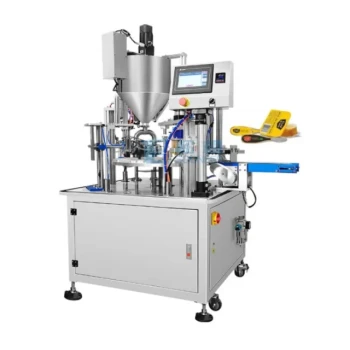
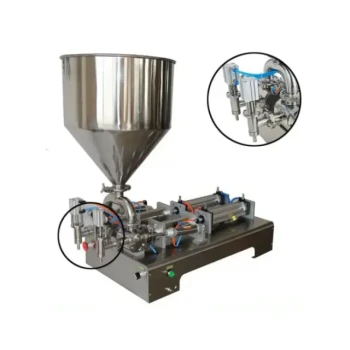
The health of nectar-source plant communities is the critical upstream variable determining the utilization rate of industrial honey-filling machinery. When plant health is compromised—such as by parasitic infections—raw honey yields drop, causing supply chain interruptions that force processing lines to run below capacity.
Core Insight: The efficiency of industrial processing is inextricably linked to biological health. You cannot maximize the Return on Investment (ROI) of high-capacity machinery without securing a continuous, abundant supply of raw material through rigorous forestry management.
The Biological Foundation of Industrial Efficiency
The Supply Chain Dependency
Industrial honey-filling machinery relies entirely on a continuous upstream supply of raw honey. The operational efficiency of these systems is not defined by their mechanical speed, but by the availability of input material. If the nectar source fails, the machinery sits idle, drastically reducing its utilization rate.
The Impact of Parasitic Threats
The primary threat to utilization rates often lies in the forest, not the factory. Parasitic plants, such as European Mistletoe, compromise the health of nectar-source trees. This biological stress reduces nectar secretion and overall honey yield, creating a bottleneck that starves the industrial processing line of necessary raw materials.
Strategies for Maximizing Asset Utilization
Prioritizing High-Efficiency Species
To ensure machinery operates at full capacity, the upstream ecosystem must be optimized for volume. Naturalized tree species like Robinia pseudoacacia offer exceptional nectar value (rated at Level 4). Integrating these high-yield species into afforestation efforts maximizes honey production per unit of land.
Protecting Fixed Asset ROI
Large-scale processing and extraction equipment represent significant fixed assets. To justify this capital expenditure, the equipment must operate at its maximum intended capacity. Maintaining healthy, high-output plant communities is the only way to generate the volume required to optimize the return on this equipment investment.
Understanding the Trade-offs
The Capacity Mismatch Risk
A common pitfall is investing heavily in industrial-grade machinery to improve product quality and standardization without assessing the stability of the nectar source. While these machines reduce impurities and increase market competitiveness, they become financial liabilities if the local plant community cannot sustain the throughput required to run them efficiently.
Mitigating Environmental Volatility
While machinery helps produce stable revenue streams through value-added products like beeswax and propolis, it cannot fix upstream agricultural failure. Equipment mitigates processing risks, but it remains vulnerable to production risks caused by irregular rainfall or poor plant health.
Making the Right Choice for Your Goal
To align your industrial operations with your biological resources, consider the following:
- If your primary focus is maximizing machine uptime: Prioritize the health management of nectar-source trees and eradicate parasitic threats like Mistletoe to ensure consistent raw material flow.
- If your primary focus is Return on Investment (ROI): Plant high-nectar species like Robinia pseudoacacia to maximize the volume per acre, ensuring your fixed assets operate at full capacity.
True industrial efficiency begins in the forest, not on the factory floor.
Summary Table:
| Factor | Impact on Machinery Utilization | Strategic Solution |
|---|---|---|
| Plant Health | Low health reduces nectar yield, causing idle machinery and supply gaps. | Eradicate parasitic plants (e.g., Mistletoe) to stabilize supply. |
| Species Selection | Low-yield species create bottlenecks in high-capacity processing lines. | Plant high-nectar species like Robinia pseudoacacia (Level 4). |
| Supply Chain | Inconsistent raw material flow lowers the ROI of fixed assets. | Align factory capacity with upstream biological production potential. |
| Environmental Risk | Volatility in rainfall/health leads to under-utilization of equipment. | Implement forest management to mitigate raw material shortages. |
Maximize Your APIARY ROI with HONESTBEE
At HONESTBEE, we understand that industrial efficiency starts in the forest. As a dedicated partner to commercial apiaries and distributors, we provide the comprehensive wholesale solutions you need to bridge the gap between biological health and industrial output. From high-capacity honey-filling machines and hive-making hardware to a full spectrum of specialized beekeeping tools and consumables, our equipment is designed to maximize your productivity.
Don't let upstream supply gaps leave your machinery idle. Partner with HONESTBEE to equip your operation with the industry's most reliable machinery and essential merchandise.
Contact us today to optimize your honey processing line!
References
- Serhii Razanov, V. M. Nedashkivskyi. OVERSPREADING OF VISCUM ALBUM L. ON HONEY PLANTS IN THE CONDITIONS OF VINNYTSIA REGION. DOI: 10.37128/2707-5826-2019-3-4-16
This article is also based on technical information from HonestBee Knowledge Base .
Related Products
- Precision Durable Efficient HONESTBEE Rotary Honey Filling Machine
- Commercial Rotary Honey Filling Machine for Production
- Fully Automatic Honey Filling Packaging Machine for Processing Line
- Economy Small Honey Filling Machine Honey Bottle Filler Packaging Machine
- Small Honey Filling Machine Sachet Packing Equipment Single Nozzle
People Also Ask
- What are the common types of bottling machines used for honey? Choosing the Right Solution for Your Apiary
- What quality control role does professional honey filling equipment perform? Ensure Consistency and Product Stability
- How do high-precision honey filling machines ensure quality? Optimize Your Commercial Production with HONESTBEE
- How do honey filling and processing machines aid native bee product conservation? Boost Value with HONESTBEE Technology
- How do honey filling machines work? Achieve Precision & Speed for Your Apiary