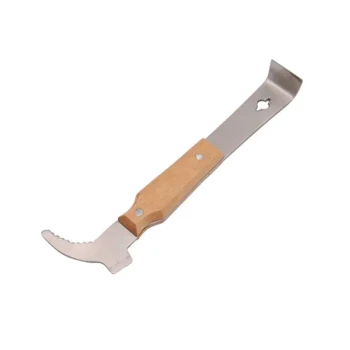
Modern beekeeping acts as a catalyst for Shea tree productivity by artificially boosting and stabilizing pollinator populations. By introducing advanced equipment and scientific colony management, forest managers create secure habitats for honeybees. This directly addresses the Shea tree's biological dependency on cross-pollination, resulting in higher fertilization rates and increased overall yields.
The introduction of modern beekeeping is not merely about honey production; it is a strategic biological intervention. By securing high densities of pollinators through managed hives, you bridge the gap between the Shea tree's need for cross-pollination and natural environmental variability, ensuring sustainable forest yields.
The Biological Mechanism of Yield Enhancement
The Role of Modern Equipment
Modern beekeeping equipment serves as a foundational infrastructure for ecosystem support. It provides protected habitats and controlled breeding environments that wild conditions often fail to offer.
By creating these secure shelters, you reduce the environmental stressors on bee colonies. This allows for steady population growth and higher survival rates compared to unmanaged, wild pollinators.
Addressing the Shea Tree's Dependency
Shea trees have a strict biological requirement for reproduction: they rely heavily on cross-pollination.
Wind or self-pollination mechanisms are generally insufficient for these trees. Consequently, the presence of active insect vectors is the single most critical factor in converting flowers into fruit.
Increasing Pollinator Density
The strategic deployment of beehives places the pollinators exactly where they are needed most. This intervention significantly increases the density of pollinator populations within the forest boundaries.
Scientific management techniques further ensure that these populations are robust and active. This prevents the fluctuations in pollinator numbers that often occur in unmanaged forests.
Enhancing Pollination Efficiency
With higher population densities, the efficiency of natural pollination services improves drastically. More bees translate to more frequent visits to Shea blossoms.
This heightened activity serves as a vital biological method for yield improvement. It ensures a higher percentage of flowers are successfully fertilized, leading to a tangible increase in Shea nut production.
Understanding the Operational Requirements
The Necessity of Active Management
While equipment provides the habitat, scientific management is the engine of success. Simply placing hives is not enough; colonies require active monitoring to maintain health and productivity.
Failure to manage these colonies scientifically can lead to population collapse, neutralizing the pollination benefits intended for the forest.
Sustainability as a Process
This approach is a long-term biological investment. It is not a one-time fix but a method for sustainable yield increases.
The goal is to integrate the bees into the forest ecosystem permanently. This creates a self-reinforcing cycle where the forest supports the bees, and the bees support the forest's yield year after year.
Optimizing Your Agro-Forestry Strategy
To effectively leverage beekeeping for Shea forest yields, you must align your management practices with your specific goals.
- If your primary focus is maximizing Shea nut yield: Prioritize high-density hive placement to ensure maximum flower coverage and cross-pollination during the blooming season.
- If your primary focus is sustainable forest management: Focus on the "protected habitat" aspect of modern equipment to build a resilient, long-term pollinator population that supports the forest's natural regeneration.
Integrating modern beekeeping transforms pollination from a passive natural occurrence into a managed asset for sustainable forest productivity.
Summary Table:
| Key Factor | Impact of Modern Beekeeping | Resulting Benefit to Shea Forest |
|---|---|---|
| Habitat Security | Modern hives provide protected, stable environments | Higher bee survival rates and population growth |
| Pollinator Density | Strategic hive placement within the forest | Increased flower-to-fruit conversion rates |
| Pollination Type | Facilitates essential cross-pollination | Overcomes limitations of wind/self-pollination |
| Management | Scientific monitoring and health checks | Prevention of colony collapse and yield stability |
| Efficiency | Higher frequency of blossom visits | Maximum fertilization during peak blooming seasons |
Maximize Your Shea Forest Productivity with HONESTBEE
At HONESTBEE, we understand that for commercial apiaries and distributors, the right tools are the foundation of forest productivity. We provide a comprehensive wholesale range of beekeeping equipment—from high-performance hives and honey-filling machines to advanced beekeeping machinery and specialized consumables—designed to support large-scale pollination efforts.
Whether you are looking to equip a commercial project or supply local forest managers, our professional-grade hardware ensures robust colony health and sustainable yield increases. Partner with us to transform your beekeeping operations into a precision asset for Shea tree conservation and harvest optimization.
Ready to scale your impact? Contact us today to discuss your wholesale needs.
References
- Issa Nombré, Joseph Issaka Boussim. Shea Parklands Pollination in Burkina Faso, Some Techniques to Improve the Production. DOI: 10.4236/oje.2023.139036
This article is also based on technical information from HonestBee Knowledge Base .
Related Products
- HONESTBEE 15-in-1 Beekeeper Multi-Tool with Hammer and Pliers for Beekeeping
- Stainless Steel J Hook Hive Tool for Beekeeping
- Stainless Steel Queen Grafting Tool for Beekeeping and Bee Queen Grafting
- Multi-Function Plier-Style Frame Grip Hive Tool
- HONESTBEE Professional Mini J-Hook Hive Tool for Beekeeping
People Also Ask
- What is the recommended method for storing beekeeping tools? Expert Vertical Storage Solutions for Your Apiary
- How does a favorable microclimate interact with beekeeping tools? Boost Overwintering Success and Equipment Longevity
- Why is the treatment of beekeeping tools with high-concentration chemical disinfectants necessary for preventing AFB?
- Why are specialized beekeeping tools and consumables essential? Enhance Colony Management and Honey Yield Today
- How does the stable local supply of beekeeping tools affect technology adoption? Building Sustainable Apiaries