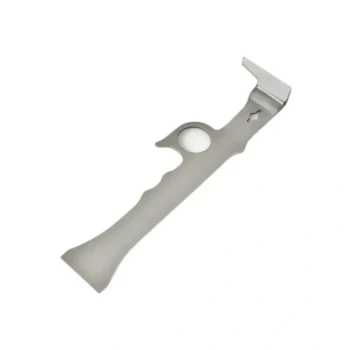
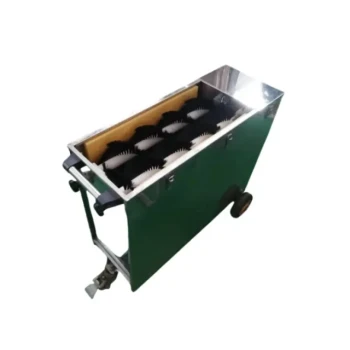
High-concentration chemical disinfection is a critical barrier against the spread of American Foulbrood (AFB) in apiaries. Because tools like hive tools and bee brushes move frequently between colonies, they act as primary mechanical vectors for transmitting resilient bacterial spores. Simple cleaning is insufficient; strong chemical agents are required to destroy trace larval remains and neutralize spores on metal and plastic surfaces to prevent cross-infection.
The causative agent of AFB produces endospores that can survive for decades. Chemical disinfection is not merely about hygiene; it is a biosecurity necessity to break the cycle of cross-infection caused by routine manual operations.
The Mechanics of Cross-Contamination
Tools as Mechanical Vectors
In a busy apiary, specialized equipment such as hive tools and uncapping knives are used sequentially across multiple colonies.
Without intervention, a tool used in an infected hive immediately carries pathogens to the next healthy colony.
This makes the beekeeper's own equipment the primary vehicle for horizontal transmission of disease.
The Problem of Spore Resilience
The bacteria responsible for AFB, Paenibacillus larvae, produce highly durable endospores.
These spores are not eliminated by standard cleaning methods and can remain infectious for decades.
Consequently, a tool that looks clean to the naked eye can still harbor a lethal reservoir of spores capable of collapsing a healthy colony.
The Function of Chemical Disinfectants
Destroying Organic Residue
Tools often collect trace amounts of wax, propolis, and larval remains during use.
High-concentration chemical disinfectants are necessary to penetrate this organic matter.
They ensure that the disinfectant reaches the surface of the tool and destroys any spores hiding within the debris.
Sterilizing Non-Porous Surfaces
Metal and plastic tools are ideal candidates for chemical soaking or spraying.
Unlike porous materials, these surfaces allow the chemical agents to make full contact with the pathogens.
Regular application creates a "firewall" between hives, ensuring that spores from one inspection are killed before the tool touches the next frame.
Limitations and Trade-offs
Effectiveness on Porous Materials
While chemicals work well on metal tools, they are often insufficient for wooden structures like hive bodies and frames.
Wood is porous, allowing spores to embed deep within the grain where liquid disinfectants cannot reach.
For wooden equipment, combustion (scorching or burning) remains the most effective method for total spore elimination.
Operational Efficiency vs. Safety
High-concentration chemicals are effective, but they require careful handling to avoid injury to the beekeeper or contamination of honey.
There is also a time cost; for chemicals to work, tools often require a specific contact time (soaking).
Speed often compromises biosecurity, so beekeepers must balance inspection speed with adequate sterilization time.
Ensuring Colony Health
Implementing Biosecurity Protocols
To protect your apiary, you must treat disinfection as a standard operating procedure, not an emergency measure.
- If your primary focus is Routine Inspection: Utilize a rotation of multiple hive tools soaked in a high-concentration solution, allowing one to sterilize while you use the other.
- If your primary focus is Disease Management: Do not rely on chemicals alone for woodenware; burn or scorch infected wooden equipment to permanently remove the spore reservoir.
By rigorously disinfecting high-contact tools, you transform your equipment from a vector of disease into a tool for preservation.
Summary Table:
| Aspect | Chemical Disinfection | Manual Cleaning | Scorching/Burning |
|---|---|---|---|
| Target | Metal & Plastic Tools | Surface Dirt/Wax | Wooden Hive Bodies |
| Effectiveness | Kills AFB Endospores | Removes Debris Only | Total Sterilization |
| Residue Risk | Requires Rinsing | Low | None |
| Best Use | Hive tools, brushes | General Maintenance | Infected woodenware |
Secure Your Apiary’s Future with Professional Equipment
Protecting your colonies from American Foulbrood requires both rigorous biosecurity protocols and high-quality, durable equipment. At HONESTBEE, we specialize in supporting commercial apiaries and distributors by providing a comprehensive range of professional beekeeping tools, honey-filling machinery, and hive-making equipment designed to withstand rigorous sterilization.
Whether you need bulk consumables for routine maintenance or specialized hardware to scale your operations, our wholesale solutions are tailored to your industry needs. Contact us today to learn how our portfolio of professional tools and industry expertise can help you maintain a disease-free, productive apiary.
References
- Yordan Hristov. Американският гнилец познат и все още непознат. DOI: 10.61308/ithf2702
This article is also based on technical information from HonestBee Knowledge Base .
Related Products
- HONESTBEE 15-in-1 Beekeeper Multi-Tool with Hammer and Pliers for Beekeeping
- HONESTBEE Advanced Ergonomic Stainless Steel Hive Tool for Beekeeping
- Stainless Steel Queen Grafting Tool for Beekeeping and Bee Queen Grafting
- Stainless Steel J Hook Hive Tool for Beekeeping
- HONESTBEE Professional Mini J-Hook Hive Tool for Beekeeping
People Also Ask
- What is the recommended method for storing beekeeping tools? Expert Vertical Storage Solutions for Your Apiary
- How does a favorable microclimate interact with beekeeping tools? Boost Overwintering Success and Equipment Longevity
- How does the stable local supply of beekeeping tools affect technology adoption? Building Sustainable Apiaries
- Why design beekeeping tools with ergonomics in mind? Empowering All Beekeepers with Inclusive Equipment
- Why are specialized beekeeping tools and consumables essential? Enhance Colony Management and Honey Yield Today