The optimal spatial positioning of beehives improves industrial processing efficiency by ensuring a stable, predictable, and high-quality flow of raw honey into the production line. This yield stability eliminates extreme fluctuations in harvest volumes, allowing distributors and processors to plan production cycles scientifically, minimize equipment idle time, and maximize the automation potential of honey filling and bottling systems.
Strategic apiary management acts as a stabilizer for the entire supply chain. By using algorithmic modeling to place hives, operators move from volatile "catch-as-catch-can" harvesting to a reliable industrial feedstock model that optimizes machinery ROI.
The Link Between Apiary Layout and Yield Predictability
Algorithmic Modeling for Uniform Pollination
Optimal spatial positioning ensures that honeybees have uniform access to nectar-producing vegetation, leading to balanced yields across all hives.
When hives are placed strategically, the risk of "over-foraging" certain areas while neglecting others is eliminated, resulting in a consistent harvest volume that matches the capacity of your processing equipment.
Minimizing Equipment Idle Time
Industrial honey filling lines are most efficient when they run continuously at a steady pace.
By stabilizing the raw material supply through professional hive placement, businesses avoid the high costs associated with starting and stopping machinery due to unexpected shortages or "gluts" in the harvest.
Enhancing Raw Material Quality for Industrial Processing
Achieving Physicochemical Stability
The density of nectar-producing vegetation near hive locations directly dictates the sugar concentration and moisture content of the raw honey.
Scientific placement ensures high nectar concentration, which reduces the energy and time required by industrial evaporators and filters to bring the honey to a shelf-stable state.
Vertical Layout and Moisture Control
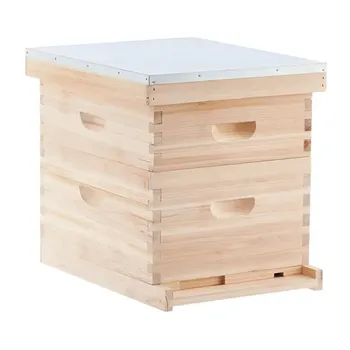
Strategic vertical partitioning within the hive—using deep and shallow supers—optimizes internal thermal dynamics and moisture evaporation.
This pre-processing "in the hive" ensures that the honey arriving at the processing plant is of a uniform viscosity, preventing clogs in automated filling nozzles and ensuring consistent flow rates.
Standardized Equipment as an Efficiency Multiplier
The Role of Technified Beekeeping Systems
Distributors who source from apiaries using standardized, high-standard beehives benefit from significantly higher yields (averaging 33 kg per hive compared to 24 kg in traditional systems).
Standardized frames and supers allow for non-destructive harvesting and rapid component replacement, ensuring the harvest reaches the processing facility faster and in higher volumes.
Purity and Commercial Value
Modern beehive structural designs and professional extractors work together to produce honey with higher purity and fewer impurities.
This high-quality input reduces the wear and tear on industrial filtration systems and allows for the production of high-value unifloral products with minimal processing overhead.
Understanding the Trade-offs
Technical Investment vs. Traditional Methods
While algorithmic positioning and standardized equipment require a higher initial capital investment, the "cost of inaction" is significant.
Traditional, non-optimized systems lead to volatile production spikes that can overwhelm equipment one week and leave it idle the next, destroying the profit margins of large-scale distributors.
Environmental Sensitivities
Even with optimal positioning, micro-climates and sunlight exposure impact foraging times.
Relying solely on hive placement without integrating professional shading and light-control devices can lead to energy distribution imbalances within the colony, slightly reducing the "reliability" of the supply chain.
How to Apply This to Your Distribution Strategy
To maximize the efficiency of your honey processing and filling operations, your sourcing and equipment strategy should focus on technological integration at the source.
- If your primary focus is operational uptime: Prioritize sourcing from apiaries that utilize algorithmic hive placement and standardized equipment to ensure a non-stop supply of raw material.
- If your primary focus is product premiumization: Invest in high-standard beehives that utilize optimized thermal partitioning to produce honey with superior sensory characteristics and higher purity.
- If your primary focus is rapid market response: Partner with suppliers who utilize interchangeable standardized components to facilitate faster harvests and ultra-fast delivery cycles.
By aligning apiary technology with industrial processing capabilities, distributors can transform honey production into a high-efficiency, predictable, and highly profitable industrial operation.
Summary Table:
| Key Factor | Impact on Industrial Processing | Benefit for Distributors/Processors |
|---|---|---|
| Yield Stability | Predictable feedstock flow | Maximizes machinery ROI & reduces downtime |
| Nectar Concentration | Lower moisture in raw honey | Reduces energy used in evaporation/filtering |
| Uniform Viscosity | Consistent flow rates | Prevents clogs in automated filling nozzles |
| Standardized Hives | 37% higher yield (33kg vs 24kg) | Faster order fulfillment & higher volumes |
| Purity Control | Fewer physical impurities | Extends the lifespan of filtration systems |
Scale Your Honey Production with HONESTBEE
Maximize your profit margins and operational reliability by partnering with HONESTBEE. We provide commercial apiaries and B2B distributors with a comprehensive, one-stop sourcing solution—from high-precision honey-filling machines and hive-making hardware to professional-grade consumables and cultural merchandise.
Why choose HONESTBEE?
- Deep Industry Expertise: Optimize your supply chain with our technified beekeeping systems.
- Rapid Fulfillment: Ultra-fast delivery and efficient order processing to meet market demand.
- Premium Trading Services: Dedicated customer support with flexible OEM/ODM capabilities for wholesalers.
Ready to enhance your industrial efficiency? Contact our expert team today to explore our full-spectrum product portfolio!
References
- Jiaming Zhu, Jun Zhang. Optimal Placement Algorithm for Beehives with Pollination Probability Model. DOI: 10.54097/6rfc4997
This article is also based on technical information from HonestBee Knowledge Base .
Related Products
- Wholesales Dadant Size Wooden Bee Hives for Beekeeping
- Stainless Steel Round Beehive Air Vents for Ventilation
- Metal Bee Hive Stand Bee Box Stand for Beekeeping
- Durable Plastic Hive Number Set for Beekeeping
- Wooden Bee Hive Frames for Beekeeping and Wholesale
People Also Ask
- What are the strategic benefits of installing beekeeping hives at an elevation of 1 to 6 meters? Protect Your Assets
- What are the key advantages of modern improved beekeeping hives? Scale Your Honey Yield and Production Efficiency
- What is the proper way to store unused bee hives? Expert Stacking Tips for Equipment Longevity
- What are the 2 types of bee hives? Langstroth vs. Top-Bar for Your Apiary
- How does the design of improved beekeeping hives contribute to maintaining honey quality and purity? Enhancing Purity