Large-scale reliance on European honeybees (Apis mellifera) makes standardized, modular equipment the practical choice. Because these colonies offer high yield potential and support migratory beekeeping, commercial apiaries generally use moveable-frame hives, interchangeable honey supers, queen excluders, mechanical uncapping tools, and high-capacity extractors rather than fixed log hives. The equipment must support frequent inspections, seasonal transport, rapid harvesting, and consistent processing across many colonies.
Apis mellifera production favors an integrated equipment system: standardized hives create uniform frames, and uniform frames make mechanical extraction, transport, maintenance, and downstream filling more efficient.
Why Apis mellifera Drives Equipment Standardization
Higher Output Requires Higher Throughput
Commercial Apis mellifera colonies can produce approximately 30 to 40 kg of honey per colony annually, creating substantially greater handling requirements than lower-yielding operations. At apiary scale, manual extraction and individually improvised hive components can become production bottlenecks.
Standardized frames allow operators to remove, uncap, extract, filter, and return combs through a repeatable workflow. This makes equipment compatibility as important as the performance of any individual hive or extractor.
Migratory Beekeeping Requires Durable Modularity
Apis mellifera is well suited to migratory beekeeping, where colonies are moved between seasonal floral sources. Hives therefore need secure boxes, stable frames, reliable covers, and hardware that can withstand repeated loading and transport.
Modular hive bodies also allow beekeepers to expand or reduce hive volume as colonies develop and flowering conditions change. This flexibility is difficult to achieve with traditional fixed-comb or log hives.
Routine Inspection Must Preserve the Nest Structure
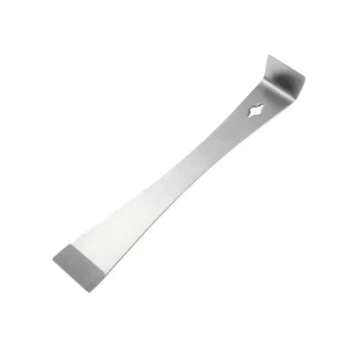
Moveable frames allow commercial beekeepers to inspect brood, assess food reserves, manage queen activity, and identify colony-health issues without destroying the comb structure. The same frames can then be returned to the colony or moved through the honey-processing workflow.
This improves labor efficiency and reduces unnecessary disruption during repeated inspections.
How Hive Selection Shapes the Equipment Portfolio
Standard Langstroth Hives Are the Commercial Benchmark
For honey production, modular Langstroth-style hives are generally the most practical foundation. Their standardized boxes and frames allow beekeepers to add honey supers during strong nectar flows and accommodate expanding colonies.
For distributors and B2B resellers, this creates demand for a complete compatible range rather than isolated hive boxes. The product portfolio should cover hive bodies, frames, foundation, covers, bottom boards, stands, queen excluders, and replacement hardware.
Hive Volume Must Adapt to Regional Conditions
Apis mellifera behavior varies across agroecological zones and ecotypes. Highland colonies may be more docile and productive in managed environments, while lowland strains can be more defensive and highly active during shorter flowering periods.
Adjustable hive volume helps operators respond to these differences. Modular equipment can provide additional space during rapid colony growth and allow tighter management when forage availability declines.
Frame Compatibility Simplifies Expansion
A commercial apiary benefits when nucs, production colonies, and replacement equipment use compatible frame dimensions. Nucleus hives can support queen rearing, colony splitting, and localized pollination, while full-size modular hives handle honey production.
Maintaining compatibility across these units reduces training requirements, simplifies inventory, and improves order fulfillment for growing operations.
How Honey Harvesting Equipment Must Scale
Mechanical Extractors Match Standard Frames
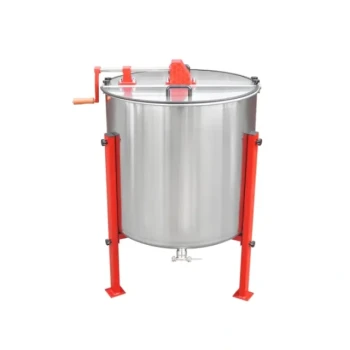
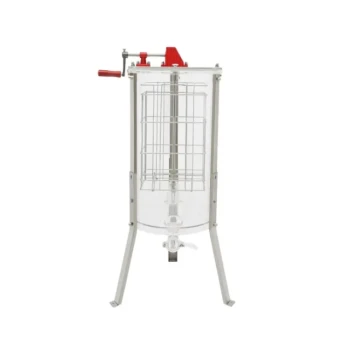
Standardized moveable frames make mechanical honey extractors practical. Extractors can process multiple frames in a consistent sequence, increasing throughput while leaving combs intact for reuse.
Extractor selection should reflect the apiary's frame format, colony count, harvest frequency, and expected honey volume. A mismatch between hive frames and extractor baskets can create unnecessary handling and reduce operational efficiency.
Uncapping Equipment Becomes a Core Requirement
Large-scale harvesting requires more than an extractor. Operators also need compatible uncapping knives, forks, trays, tanks, filters, and honey-transfer equipment to keep frames moving efficiently from the apiary to the processing area.
For commercial buyers, these components should be sourced as a coordinated system. Interoperability reduces delays and makes it easier to maintain a consistent processing standard.
Filling and Processing Need Industrial Capacity
As honey volume increases, commercial operations may require industrial honey-filling lines and more structured processing layouts. These systems help manage the transition from extracted honey to packaged product without making the extractor the sole capacity constraint.
A supplier serving large apiaries should therefore support the full workflow, including extraction, filtration, storage, filling, packaging, and replacement parts.
Equipment Priorities for Bee Management
Secure Hardware Supports Transport and Inspections
Apis mellifera actively uses propolis to seal gaps in the hive and generally remains calmer on combs during inspections than Apis cerana. Even so, commercial equipment must provide secure closures, stable frames, and durable components for repeated handling.
Reliable hardware is especially important for migratory operations, where loose covers, damaged frames, or weak joints can increase colony stress and labor requirements.
Queen Excluders Support Honey-Super Management
Queen excluders help separate brood areas from honey supers within a modular hive system. They are useful when the operational objective is to maintain harvestable honey in designated supers while preserving the brood nest below.
Their value depends on colony management practices, frame dimensions, and the specific hive configuration. They should be supplied as part of a compatible system rather than treated as universal accessories.
Monitoring Systems Become More Valuable at Scale
Large apiaries cannot rely solely on visual inspection for every operational decision. Automated Varroa monitoring systems and structured inspection tools can support earlier detection and more consistent management across many colonies.
These systems complement, rather than replace, trained beekeepers and appropriate protective equipment.
Understanding the Trade-offs
Standardization Improves Efficiency but Limits Flexibility
Standardized hives and frames make transport, inspections, extraction, and replacement easier. However, they require the apiary to commit to consistent dimensions and compatible suppliers.
Switching between incompatible frame formats can increase labor, complicate inventory, and force the purchase of additional extraction equipment.
High-Capacity Equipment Requires Capital
Mechanical extractors, uncapping systems, filling lines, and monitoring technology can significantly improve throughput. They also require higher upfront investment, maintenance planning, operator training, and adequate facility space.
The correct configuration should be based on expected colony numbers and harvest volume rather than maximum theoretical capacity alone.
Commercial Equipment Is Not Suitable for Every Objective
Moveable-frame systems are well suited to honey production, but observation hives, nucs, top-bar hives, and Warré hives serve different purposes. Observation hives support education, nucs support queen rearing and localized pollination, and top-bar or Warré systems support specialized natural-environment beekeeping.
Using a non-commercial hive format for a high-volume honey operation can restrict expansion and reduce harvesting efficiency. Conversely, installing industrial equipment for a small educational or hobby apiary can create unnecessary cost and complexity.
Regional Bee Behavior Still Matters
Apis mellifera is not behaviorally uniform across all regions. Defensiveness, swarming tendency, productivity, and seasonal development influence how much emphasis should be placed on adjustable hive space, secure closures, protective equipment, and inspection access.
Equipment should therefore be standardized where compatibility matters, while allowing enough configuration flexibility for local climate and colony behavior.
Making the Right Choice for Your Goal
Commercial apiaries and their suppliers should configure equipment around both bee biology and the intended production workflow.
- If your primary focus is high-volume honey production: Prioritize modular Langstroth-style hives, standardized frames, additional honey supers, queen excluders, mechanical uncapping equipment, and extractors sized to the expected harvest.
- If your primary focus is migratory beekeeping: Select durable, stackable hive components with secure closures, stable frames, transport-ready hardware, and modular volume control.
- If your primary focus is distributor or wholesale supply: Build a one-stop portfolio of compatible hive parts, extraction machinery, filling equipment, monitoring systems, and replacement components with rapid fulfillment support.
- If your primary focus is queen rearing or localized pollination: Include compatible five-frame nuc hives and compact handling equipment rather than relying exclusively on full-size production units.
- If your primary focus is education or natural-environment beekeeping: Use observation, top-bar, or Warré equipment according to the objective, recognizing that these formats are not optimized for maximum commercial extraction throughput.
For large-scale Apis mellifera operations, the right equipment strategy is a compatible, modular system that turns high colony productivity into efficient and repeatable production.
Summary Table:
| Equipment Type | Key Features | Purpose |
|---|---|---|
| Langstroth hives | Modular, standardized frames | Provide expandable space for high-yield colonies |
| Honey supers & queen excluders | Compatible with hive bodies | Separate brood and honey storage |
| Mechanical extractors | Fit standard frames | Increase honey extraction throughput |
| Uncapping knives/tanks | Interoperable with extractors | Prepare frames for extraction |
| Industrial filling lines | High-capacity processing | Package honey efficiently |
For commercial apiaries and distributors, HONESTBEE offers a comprehensive wholesale portfolio of beekeeping equipment. Our one-stop sourcing includes hive components, extraction machinery, filling lines, and consumables, all designed for compatibility with Apis mellifera operations. Benefit from rapid response, dedicated service, and ultra-fast delivery. Contact us today to streamline your supply chain and boost productivity—Get in touch.
Related Products
- All-Stainless Steel Pivoting Honey Uncapping Fork for Beekeeping
- Stainless Steel Pivoting Honey Uncapping Fork with Plastic Handle
- 6 Frame Manual Stainless Steel Honey Extractor Beekeeping Equipment
- Electric 8 Frame Honey Spinner Extractor Equipment for Beekeeping
- HONESTBEE 2 Frame Manual Acrylic Honey Extractor Beekeeping Equipment
People Also Ask
- How does a honey uncapping fork supplement the use of an uncapping knife? Boost Your Honey Yield and Extraction Efficiency
- What is the design purpose of honey uncapping forks and honey uncapping tanks? Maximize Your Harvest Efficiency
- What are the essential tools for uncapping honey frames? Choose the Right Tool for Your Apiary
- What tools are used for honey uncapping? Choose the Right Knife for Your Harvest
- What are the tools used for uncapping honeycombs? Expert Guide to Tools & Functions for Maximum Yield