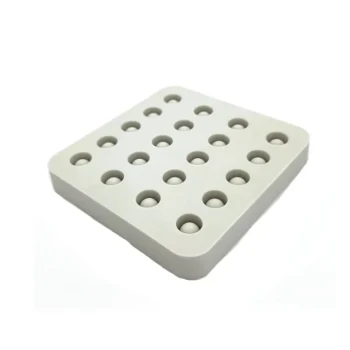
The physical dimensions of artificial wax cups are a critical determinant of honeybee queen quality, directly influencing the morphological development of grafted larvae. The size of the cup dictates the biological limits of the developing queen, specifically determining her final body weight and the number of ovarioles—the reproductive structures essential for egg-laying.
The volume of the wax cup creates the necessary "nutritional space" for the larva, ensuring it has sufficient room to consume royal jelly and reach maximum physiological maturity before the cell is capped.
The Biological Impact of Cup Dimensions
The artificial cup acts as the fundamental constraint for the queen's development. It is not merely a vessel; it is a growth environment that defines the upper limits of the queen's physical potential.
Influence on Body Weight
There is a direct correlation between the size of the wax cup and the mass of the newly emerged virgin queen.
Larvae reared in appropriately sized cups have the physical capacity to grow larger. Body weight is a primary indicator of a queen's overall vigor and robustness.
Reproductive Potential (Ovarioles)
The most critical internal measure of a queen's quality is her reproductive system.
The dimensions of the cup affect the development of ovarioles, the tubes within the ovaries where eggs are produced. A larger cup environment supports the development of a higher number of ovarioles, directly translating to higher fecundity (egg-laying potential).
The Concept of Nutritional Space
The mechanism behind these benefits is "nutritional space."
For a queen to develop superior morphological characteristics, she requires constant access to royal jelly. The cup must provide enough volume to hold this food store and the growing larva simultaneously without restricting movement or feeding prior to the capping stage.
Consistency and Standardization
Beyond individual size, the use of artificial cups introduces a level of control that natural cells often lack.
Mimicking Natural Conditions
Professional queen rearing frames utilize these cups to simulate the natural queen-rearing process.
However, unlike natural cells which can vary based on the comb structure, artificial cups ensure that the experimental queens develop under standardized conditions regarding age and nutrition.
Eliminating Developmental Variables
By using uniform artificial cups, breeders and researchers eliminate variations in individual development.
This technical consistency ensures that the background of every sample is highly consistent. In research contexts, such as studying virus transmission, this reliability is essential for accurate statistical analysis.
Understanding the Trade-offs
While optimizing cup size leads to better queens, failing to manage the spatial dynamics can lead to suboptimal results.
The Risk of Restricted Growth
If the wax cup is too small, the "nutritional space" is compromised.
The larva may run out of room or food stores prematurely. This physical restriction prevents the queen from reaching her full genetic potential regarding weight and ovariole count.
Premature Capping
Improper cup spacing or dimensions can trigger the worker bees to cap the cell too early.
Once the cell is capped, feeding stops. If this occurs before the larva has maximized its growth phase, the result is a queen with inferior morphological characteristics and reduced longevity.
Making the Right Choice for Your Goal
To maximize the success of your grafting process, you must align your equipment with your specific objectives.
- If your primary focus is Reproductive Quality: Prioritize larger cup dimensions that maximize nutritional space to ensure the highest possible body weight and ovariole count.
- If your primary focus is Scientific Research: Utilize standardized, professional-grade artificial cups to eliminate developmental variables and ensure statistical reliability across samples.
By controlling the dimensions of the wax cup, you effectively engineer the biological ceiling of your future queens.
Summary Table:
| Factor | Influence of Cup Size | Impact on Queen Quality |
|---|---|---|
| Body Weight | Larger cups allow for maximum physical expansion. | Higher vigor and overall colony robustness. |
| Ovariole Count | Provides space for complex reproductive development. | Increased egg-laying potential (fecundity). |
| Nutritional Space | Determines the volume of royal jelly stored. | Ensures larvae reach full physiological maturity. |
| Consistency | Standardized cups eliminate developmental variables. | Reliable outcomes for commercial and research use. |
Elevate Your Queen Rearing with HONESTBEE
High-quality queens start with precision-engineered tools. HONESTBEE specializes in supporting commercial apiaries and distributors by providing the industry's most reliable beekeeping equipment. From high-standard artificial wax cups and grafting tools to advanced hive-making and honey-filling machinery, our comprehensive wholesale offering ensures your operation reaches its full biological and economic potential.
Ready to scale your production and improve queen longevity? Contact us today to explore our full spectrum of beekeeping hardware and consumables!
References
- A. Mazeed, K.M. Mohanny. EFFECT OF ACCESS OF WORKER BEES TO SEALED QUEEN CELLS ON SOME MORPHOLOGICAL CHARACTERS OF THE PRODUCED VIRGIN QUEENS. DOI: 10.21608/jppp.2007.219697
This article is also based on technical information from HonestBee Knowledge Base .
Related Products
- High-Efficiency 20-Cell Silicone Mold for Beeswax Bee Queen Cup Production
- Clear Black Plain Polystyrene Queen Bee Grafting Cell Cups No Lug for Bee Queen Cup
- JZBZ Type Wide Base Plastic Queen Cell Cups for Base Mounting and Queen Rearing
People Also Ask
- What is the first tip for pouring beeswax into a silicone mold? Ensure a Perfect Release
- What are the technical advantages of using precision silicone molds for the manufacturing of beeswax queen cups? - Scale
- How do beeswax queen cell cups function? Optimize Queen Rearing with Biological Mimicry
- What is the biological function of beeswax queen cell cups? Boost Acceptance in Artificial Queen Rearing
- What are the advantages of using tapered wooden dowels for queen cups? Boost Rearing Consistency & Acceptance