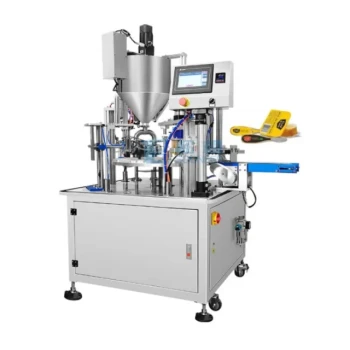
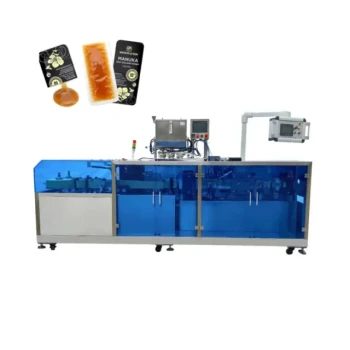
Precise temperature management is the single most critical variable in automated honey filling. It ensures the honey is fluid enough to flow through packaging machinery efficiently while strictly capping heat to prevent chemical degradation. This balance preserves the honey's original aroma, flavor, and nutritional compliance.
The Core Balance Temperature control acts as a safeguard, maintaining optimal fluidity for processing without triggering the formation of Hydroxymethylfurfural (HMF) or destroying sensitive enzymes. It bridges the gap between industrial efficiency and the preservation of natural sensory qualities.
The Delicate Balance of Viscosity and Chemistry
To understand how temperature systems affect quality, you must look at the tension between the physical need to move the product and the chemical need to preserve it.
Optimizing Fluidity for Packaging
Honey is naturally viscous and difficult to handle at ambient temperatures.
The primary function of the heating system is to increase fluidity. By warming the honey, the system ensures it flows consistently through the filling nozzles, ensuring accurate dosage and preventing mechanical strain on the equipment.
Preventing Chemical Degradation (HMF)
While heat aids flow, it is also the enemy of honey chemistry.
Excessive heat exposure causes a rapid rise in Hydroxymethylfurfural (HMF) levels. Because regulatory bodies use HMF levels as a key indicator of freshness and safety, the temperature control system must actively prevent the product from exceeding these safety standards.
Preserving Nutritional and Sensory Value
Beyond basic safety compliance, the temperature system determines the commercial value of the honey by protecting its premium characteristics.
Protecting Enzymatic Activity
Honey contains beneficial enzymes, such as diastase, which are indicators of nutritional quality.
These enzymes are highly heat-sensitive. If the processing temperature exceeds specific thresholds (often around 65°C), the diastase value can drop below international standards (typically 8 units), rendering the product "dead" or lower grade.
Retaining Aromas and Flavors
The market value of honey is often judged by its sensory profile.
Proper temperature management ensures that volatile aromatic compounds are not evaporated or destroyed. This retention allows the honey to keep its specific, origin-based aromas and flavors, which are essential for consumer acceptance.
Understanding the Trade-offs: The "Low-Temperature, Short-Time" Rule
Achieving high quality requires navigating specific trade-offs in the heating process. Industrial systems must adopt a "low-temperature, short-time" philosophy.
The Risk of Localized Overheating
A common pitfall in inferior systems is uneven heating.
Even if the average temperature is safe, localized overheating can occur near heating elements. A capable control system eliminates these "hot spots" to prevent portions of the batch from suffering enzyme inactivation or HMF spikes.
Balancing Shelf Stability vs. Nutrition
Heat treatment is often used to reduce moisture content, which prevents fermentation and crystallization.
However, this creates a conflict. While lower moisture improves shelf stability, the heat required to achieve it risks damaging the chemical profile. The control system must monitor physicochemical indicators to find the optimal window where stability is gained without sacrificing nutritional activity.
Making the Right Choice for Your Goal
The configuration of your temperature control system should depend on your specific product positioning.
- If your primary focus is Mass Market Efficiency: Prioritize systems that guarantee consistent fluidity to maximize filling speed and dosage accuracy while staying just under the maximum HMF safety limits.
- If your primary focus is Premium/Raw Quality: Prioritize systems with "low-temperature" precision safeguards to ensure temperatures never exceed 65°C, preserving diastase levels and delicate floral aromas.
Ultimately, the quality of encapsulated honey is defined by the machinery's ability to apply heat surgically—using just enough to facilitate the process, but never enough to alter the product's nature.
Summary Table:
| Quality Metric | Impact of Temperature Control | Recommended Practice |
|---|---|---|
| Viscosity & Flow | Reduces honey thickness for accurate, rapid dosage. | Maintain fluidity without exceeding heat thresholds. |
| HMF Levels | High heat raises HMF, signaling chemical degradation. | Strict capping to comply with safety standards. |
| Enzyme Activity | Prevents destruction of sensitive diastase (nutritional value). | Keep temperatures below 65°C to retain bioactivity. |
| Aroma & Flavor | Protects volatile compounds from evaporation. | Use "Low-Temperature, Short-Time" processing. |
| Shelf Stability | Manages moisture levels to prevent fermentation. | Balance heat for stability vs. nutritional integrity. |
Elevate Your Honey Production with HONESTBEE
At HONESTBEE, we specialize in empowering commercial apiaries and distributors with professional-grade beekeeping tools and advanced machinery. Our precision-engineered honey-filling machines are designed to maintain the delicate chemical balance of your honey, ensuring maximum nutritional value and shelf appeal.
Whether you are scaling up your wholesale operation or looking for high-efficiency specialized hardware, our comprehensive portfolio—from hive-making equipment to honey-themed cultural merchandise—has you covered.
Ready to optimize your production quality? Contact us today for a tailored quote!
References
- Murat Sayılı. Tokat İlinde Tüketicilerin Arı Ürünleri Tüketim Durumları Ve Alışkanlıkları. DOI: 10.31467/uluaricilik.162297
This article is also based on technical information from HonestBee Knowledge Base .
Related Products
- Fully Automatic Honey Filling Packaging Machine for Processing Line
- Commercial Rotary Honey Filling Machine for Production
- Precision Durable Efficient HONESTBEE Rotary Honey Filling Machine
- Economy Small Honey Filling Machine Honey Bottle Filler Packaging Machine
- Double Nozzle Small Honey Filling Machine Honey Sachet Packing Packaging Equipment
People Also Ask
- Why are fully automatic honey filling and packaging lines essential? Boost Your Honey's Market Value and Quality
- What is a fully-automatic honey filler? Streamline Your Production with High-Precision Automation
- How do automated honey filling and packaging machines affect profitability? Boost Margins with HONESTBEE Technology
- How do automated honey filling and packaging machines contribute to the market value of honey products? Maximize Your ROI
- How do industrial-grade automated honey filling and packaging machines mitigate the risk of physical contamination?