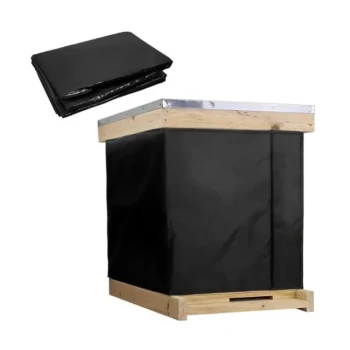
The transition from traditional log hives to improved beehives drives environmental sustainability by eliminating the destruction of forest resources and ensuring the survival of bee colonies during harvest. This shift replaces primitive, resource-heavy methods with standardized, durable systems that protect natural timber and foster healthier ecosystems. By stabilizing colony populations, these hives also enhance local pollination, creating a regenerative cycle that benefits both the environment and the global supply chain.
Core Takeaway: Transitioning to modern hive systems transforms beekeeping from an extractive practice into a sustainable industry. It protects forests and secures the long-term viability of bee populations, providing a stable foundation for high-quality honey production and professional trade.
Protecting Forest Ecosystems through Standardized Design
Eliminating Destructive Resource Harvesting
Traditional beekeeping often relies on log hives or bark hives, which require the felling of trees or the stripping of bark from living timber. These practices frequently lead to tree death and localized ecological degradation, compromising the integrity of the forest.
Improved beehives utilize standardized production and sustainable materials that eliminate the need for direct forest exploitation. By sourcing precision-engineered hives, distributors can provide products that actively prevent deforestation while supporting beekeeper livelihoods.
Utilizing Durable and Reusable Materials
Modern hives are constructed from heat-treated wood or advanced composite materials designed for longevity and repeated use. Unlike traditional clay pots or logs, which are vulnerable to decay and environmental stress, these durable designs reduce the overall consumption of natural resources over time.
A focus on reusable structural designs ensures that equipment does not need to be frequently replaced. This creates a more efficient lifecycle for beekeeping hardware, reducing the carbon footprint of the entire supply chain.
Maximizing Biodiversity and Colony Resilience
Non-Destructive Harvesting via Movable Frames
The most significant technical advancement is the movable frame system, found in Langstroth and top-bar hives. Traditional methods often require destroying the nest or the entire colony to extract honey, leading to massive colony loss.
Movable frames allow for precise management and honey extraction without damaging the honeycomb or the bees. This preserves the colony’s health, ensuring they remain productive throughout the pollination season and maintain high population densities.
Superior Thermal Regulation and Climate Adaptation
Improved hives offer advanced temperature and humidity regulation, which is critical for bee survival in extreme weather. Insulated beehives reduce the energy bees must expend to maintain hive warmth, lowering their need for supplemental sugar or honey consumption.
This increased resilience reduces bee mortality and optimizes resource utilization within the hive. For wholesalers, offering hives with superior thermal properties addresses the growing demand for climate-resilient agricultural solutions.
Understanding the Trade-offs
The transition to improved beehives requires a higher initial capital investment compared to free natural materials like logs. This can be a barrier for small-scale operations without access to financing or subsidized equipment.
Additionally, modern systems demand a higher level of technical expertise and training to manage effectively. Without proper education on movable frame management, the environmental and economic benefits of the transition may not be fully realized.
Standardization also introduces a dependency on manufacturing supply chains. While traditional hives are made on-site, modern hives require efficient order fulfillment and rapid delivery to ensure beekeepers have equipment ready for the peak nectar flow.
How to Apply This to Your Project
As a distributor or reseller, your goal is to bridge the gap between sustainable technology and field implementation through professional expertise and reliable sourcing.
- If your primary focus is maximizing ecological impact: Prioritize the distribution of Langstroth-style hives with movable frames to ensure non-destructive harvesting and colony longevity.
- If your primary focus is climate resilience in harsh environments: Focus on sourcing insulated and heat-treated hives that provide superior thermal regulation for bee survival.
- If your primary focus is rapid market expansion and fulfillment: Partner with a supplier offering a full-spectrum product portfolio and ultra-fast delivery to meet seasonal demand without delay.
- If your primary focus is low-cost transition for beginners: Recommend top-bar hives, which offer the benefits of movable management at a more accessible price point and safety level.
By aligning your inventory with these sustainable advancements, you position your business as a leader in the global effort to protect both honeybee populations and the environments they sustain.
Summary Table:
| Feature | Traditional Log Hives | Improved Beehives (Modern) | Sustainability Impact |
|---|---|---|---|
| Resource Sourcing | Forest felling/Bark stripping | Standardized sustainable timber/Composites | Prevents deforestation & habitat loss |
| Hive Management | Fixed comb (Destructive) | Movable frames (Non-destructive) | Ensures colony survival during harvest |
| Durability | Prone to decay & pests | Heat-treated & weather-resistant | Reduces waste & frequent replacements |
| Thermal Control | Poor insulation | Advanced climate regulation | Lower bee mortality & higher efficiency |
| Economic Value | Low initial cost; low yield | Higher ROI; scalable production | Stable supply chain for global trade |
Scale Your Sustainable Beekeeping Business with HONESTBEE
Transitioning to modern hive systems is a strategic move for the environment and your bottom line. HONESTBEE empowers commercial apiaries and B2B distributors with a one-stop sourcing solution for high-quality, sustainable beekeeping equipment. From precision hive-making machinery to honey-filling systems and cultural merchandise, our full-spectrum product portfolio is designed to meet the rigorous demands of the global market.
Why Partner with Us?
- Deep Industry Expertise: Professional guidance on OEM/ODM support and sustainable scaling.
- Unmatched Efficiency: Benefit from our rapid response times and ultra-fast delivery to keep your inventory ready for peak seasons.
- Reliable Supply Chain: High-durability hardware that ensures long-term profit margins and customer satisfaction.
Ready to lead the industry toward a greener future? Contact HONESTBEE today to access premium wholesale offerings and expert trading services!
References
- M. T. Kyando. Factors Affecting the Adoption and Adoption Intensity of Improved Beehives Techniques in Ikungi District of Singida Region, Tanzania. DOI: 10.4314/jasem.v29i10.66
This article is also based on technical information from HonestBee Knowledge Base .
Related Products
- Professional Insulated Plastic Bee Hives
- Wholesales Dadant Size Wooden Bee Hives for Beekeeping
- Inner Beehive Cover for Beekeeping Bee Hive Inner Cover
- Metal Hive Feet Bee Hive Stand for Ant Protection
- Plastic Bee Hive Stand for Beekeeping
People Also Ask
- What are the advantages of plastic bee hives? Boost Efficiency & Durability for Your Apiary
- Are plastic bee hives any good? Unlock Durability & Efficiency for Your Apiary
- How do plastic bee hives compare to wooden hives in handling? Reduce Strain & Boost Efficiency
- Are plastic bee hives good? Durable, Low-Maintenance Hives for Modern Apiaries
- What are the disadvantages of plastic beehives? Key Operational and Environmental Risks Exposed