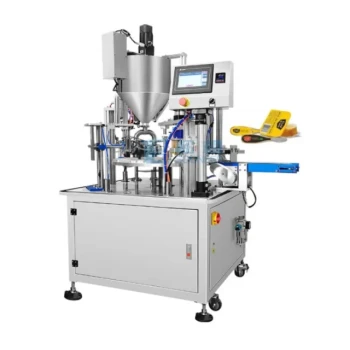
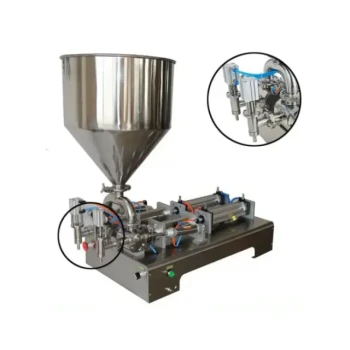
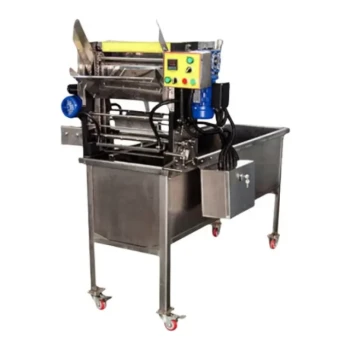
Automatic honey-filling equipment transforms the late-stage processing of honey by replacing manual variability with mechanical precision. It facilitates precise quantitative bottling and high-efficiency sealing, establishing the strict hygiene and accuracy standards necessary for large-scale commercial distribution.
While manual filling limits an apiary's potential, automated equipment standardizes production to meet high-end retail demands. By ensuring filling accuracy and hygiene compliance, this technology serves as the critical infrastructure for transitioning from small-scale production to a competitive commercial enterprise.
Operational Efficiency and Scalability
Achieving Precise Quantitative Control
Manual bottling often leads to inconsistencies, resulting in either product giveaway (overfilling) or regulatory issues (underfilling). Industrial honey filling machines utilize high-precision quantitative control systems to ensure every unit contains an exact, standardized volume. This consistency is essential for building consumer trust and meeting strict retail labeling requirements.
Accelerating Production Cycles
In regions facing logistical challenges or narrow market windows, speed is a competitive advantage. Automated devices significantly shorten production cycles by executing rapid, continuous filling that manual labor cannot match. This allows enterprises to process bulk harvests quickly, ensuring the product reaches the market while freshness and quality are at their peak.
Reducing Labor Dependencies
Scaling a commercial operation using manual labor creates a linear cost increase that eats into margins. Automated processing lines reduce labor costs and labor intensity by handling repetitive tasks mechanically. This shifts the workforce focus from tedious bottling to higher-value tasks, such as colony management or sales distribution.
Compliance and Market Competitiveness
Ensuring Strict Hygiene Standards
Food safety is the primary barrier to entry for high-end retail markets. Automated machinery minimizes human contact with the product, ensuring compliance with hygiene regulatory requirements. This capability is vital for large-scale operations that must withstand rigorous health inspections and safety audits.
Unlocking the Dual-Revenue Model
Efficiency in processing supports a broader economic strategy for beekeepers. By reducing the cost of goods sold through efficient packaging, operations can better afford the management investment required for pollination services. This creates a stable dual-revenue model—service fees plus value-added products—that incentivizes further expansion of scale.
Understanding the Trade-offs
Capital Investment vs. Production Volume
Industrial-grade filling machines represent a significant infrastructure investment. This expenditure is only justifiable if the apiary’s honey yield per hive is sufficient to keep the machinery running at capacity. Operations with low or inconsistent yields may find the ROI (Return on Investment) creates financial strain rather than relief.
Maintenance and Complexity
Transitioning to automation introduces technical complexity to the apiary. Unlike simple manual tools, these systems require regular calibration and maintenance to maintain their high-precision standards. Operators must possess or hire the technical skills to manage these systems, or risk production downtime during critical processing windows.
Aligning Equipment with Commercial Goals
To maximize the value of automatic filling equipment, align your investment with your specific operational targets:
- If your primary focus is Market Expansion: Prioritize machines with high-precision dosing to ensure the standardized packaging required by high-end retail chains.
- If your primary focus is Cost Reduction: Select automated lines that integrate sealing and filling to maximize labor savings and throughput speed.
- If your primary focus is Regulatory Compliance: Choose equipment specifically certified for food safety to meet the strict hygiene standards of large-scale distribution.
Automation is not merely a convenience; it is the strategic pivot point that allows a beekeeping operation to evolve from simple extraction to industrial-scale profitability.
Summary Table:
| Feature | Manual Filling | Automated Equipment | Impact on Business |
|---|---|---|---|
| Accuracy | High variability/errors | Precise quantitative control | Minimized waste & legal compliance |
| Speed | Slow, labor-intensive | Rapid, continuous cycles | Faster market entry & higher volume |
| Hygiene | Higher contamination risk | Food-grade, closed systems | Meets strict retail safety standards |
| Labor Cost | Linear increase with scale | Low long-term overhead | Higher profit margins per unit |
| Scalability | Limited by workforce | Highly scalable | Enables large-scale distribution |
Revolutionize Your Honey Processing with HONESTBEE
Transitioning from manual bottling to industrial automation is the key to unlocking global market competitiveness. At HONESTBEE, we specialize in supporting commercial apiaries and distributors by providing the high-precision machinery needed to scale operations efficiently.
Our value to your business includes:
- Automated Solutions: From high-speed honey-filling machines to integrated sealing systems.
- Specialized Hardware: Hive-making equipment and honey-processing machinery designed for durability.
- Full Spectrum Supply: A comprehensive wholesale offering of beekeeping tools and essential industry consumables.
- Market Expansion: High-end hardware and honey-themed cultural merchandise to enhance your brand's value.
Ready to eliminate production bottlenecks and meet international hygiene standards? Contact HONESTBEE today to discover how our wholesale equipment solutions can drive your commercial success.
References
- An-Sig Kim, Gye-Woong Kim. Analysis of Honeybee-Keeping Management Types and Skills Level in Korea. DOI: 10.5187/jast.2011.53.1.59
This article is also based on technical information from HonestBee Knowledge Base .
Related Products
- Fully Automatic Honey Filling Packaging Machine for Processing Line
- Automatic Honey Filling and Filtering Machine for Beekeeping Bottle Filling
- Precision Durable Efficient HONESTBEE Rotary Honey Filling Machine
- Automatic Single-Dose Snap & Squeeze Honey Sachets Packing Machine
- Semi Automatic Small Honey Bottle Filling Machine Honey Filler
People Also Ask
- Why are fully automatic honey filling and packaging lines essential? Boost Your Honey's Market Value and Quality
- What is a fully-automatic honey filler? Streamline Your Production with High-Precision Automation
- How do automated honey filling and packaging machines affect profitability? Boost Margins with HONESTBEE Technology
- How do automated honey filling and packaging machines contribute to the market value of honey products? Maximize Your ROI
- How do industrial-grade automated honey filling and packaging machines mitigate the risk of physical contamination?