Modern frame beehives can raise honey output substantially by making colonies easier to inspect, manage, and harvest without destroying their comb. Traditional hives often produce less than 10 kg of honey per hive annually, while improved frame-hive systems commonly approach 20 kg and can reach approximately 35 kg—or more in especially favorable regions—with strong management and forage conditions. Commercial apiaries also need more than the hive itself: they require standardized frames, foundation, production machinery, and harvesting equipment.
The main productivity gain comes from control and repeatability, not simply from changing the hive box. Movable frames enable inspection, swarm and disease management, comb reuse, and non-destructive extraction, while a complete equipment package allows commercial operators to standardize production across large apiaries.
Why Frame Hives Increase Honey Yields
Movable frames protect the comb
Traditional bamboo, clay, branch, or log hives generally contain fixed combs. Harvesting often damages the nest, forcing bees to spend valuable time and resources rebuilding wax instead of collecting nectar.
Modern frame hives allow honey-filled frames to be removed and extracted while leaving the comb structure intact. Bees can reuse that comb, which helps them redirect energy toward brood development and honey production.
Colony inspections become practical
A beekeeper can remove individual frames to evaluate brood patterns, food stores, queen performance, and colony strength. This level of visibility is difficult or impossible with fixed-comb hives.
Earlier intervention can improve swarm control, support stronger colonies, and reduce losses caused by unmanaged pests or disease.
Honey harvesting becomes repeatable
Traditional harvesting is often destructive and difficult to standardize. Frame hives support centrifugal extraction, allowing honey to be removed cleanly while preserving the wax foundation and comb.
This makes harvesting more consistent across colonies and supports the uniform, higher-volume production expected by commercial buyers.
Yield increases depend on management conditions
Reported yields should be treated as operating ranges rather than guarantees. Results vary with forage availability, climate, colony genetics, seasonal timing, beekeeper skill, pest pressure, and supplemental feeding practices.
The transition can produce steady multi-fold improvements over low-yield traditional systems, but the equipment creates the opportunity for higher productivity; it does not replace sound apiary management.
What Commercial Apiaries Need for the Transition
Standardized modern frame hives
The core requirement is a consistent supply of modern box hives, such as Langstroth-style or other locally adopted frame-hive designs. Standardization simplifies training, spare-parts purchasing, inspections, transport, and honey processing.
Commercial buyers should confirm hive dimensions, wood quality, frame compatibility, ventilation design, and availability of replacement components before selecting a system.
Frames and wax foundation
Each hive requires compatible brood and honey frames. Wax foundation sheets or foundation produced with casting molds guide bees to build straight, uniform comb.
Uniform comb improves frame inspection, extraction efficiency, and interchangeability between colonies. It also reduces the risk of irregular comb that complicates handling and harvesting.
Hive-making machinery
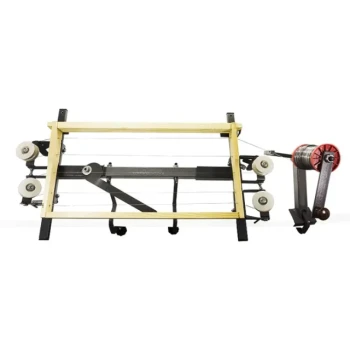
For large projects or local production, hive-making machinery can reduce unit costs and improve dimensional consistency. Relevant equipment may include woodworking and frame-assembly machinery, cutting tools, drilling equipment, and jigs for repeatable production.
Local manufacturing can improve supply continuity, but the machinery must be matched to expected production volume, available technical skills, spare parts, and maintenance capacity.
Foundation casting equipment
Wax foundation casting molds help produce consistent sheets that fit the selected frames. Standardized foundation encourages durable, properly aligned comb construction.
For commercial operations, the value lies in repeatability: foundation, frames, and hive bodies must work together without frequent manual adjustment.
Honey extractors
A honey extractor is central to non-destructive harvesting. It uses centrifugal force to remove honey from uncapped or capped frames while preserving the comb for reuse.
Extractor capacity should match the apiary’s harvest volume and labor model. Small manual units may suit pilot operations, while larger commercial apiaries may require higher-throughput or motorized equipment.
Uncapping and filtering tools
Commercial harvesting generally also requires tools for removing wax cappings, draining honey, and filtering debris. These may include uncapping knives or forks, uncapping trays, settling tanks, strainers, and food-grade storage containers.
These tools help protect honey quality and reduce bottlenecks during peak flowering seasons.
Transport and hive-management accessories
Scaling production requires equipment for moving colonies and frames safely. Depending on the operation, this may include hive stands, protective clothing, smokers, hive tools, frame carriers, feeders, and equipment for migratory beekeeping.
These accessories are operational necessities rather than optional add-ons when the apiary must manage many colonies efficiently.
How the Equipment Supports Commercial Scale
Standardization lowers operating costs
Interchangeable hives and frames reduce the number of custom parts and simplify staff training. They also make it easier to maintain a consistent workflow from inspection through extraction and packing.
For distributors and wholesalers, a full-spectrum product portfolio can therefore be more valuable than supplying hive boxes alone.
Peak-season capacity matters
Honey production is concentrated around flowering periods, so harvesting equipment must handle short periods of high demand. Insufficient extractor, uncapping, or storage capacity can cause delays, labor inefficiency, and quality problems.
Equipment planning should be based on the number of colonies, expected harvest windows, available labor, and required daily throughput.
Integrated sourcing improves project reliability
Commercial apiaries benefit when hives, frames, foundation, machinery, and harvesting tools are sourced as a compatible package. This reduces mismatched dimensions, procurement delays, and uncertainty over replacement parts.
For B2B suppliers, rapid quotation, technical product matching, responsive service, and efficient fulfillment can be as important as the equipment specifications themselves.
Product quality becomes more consistent
Modern frame systems support cleaner extraction and more controlled handling than many traditional harvesting methods. This can improve honey purity, presentation, and suitability for formal commercial or export channels.
Quality gains still depend on hygienic processing, food-grade contact surfaces, proper storage, and disciplined handling after extraction.
Understanding the Trade-offs
Initial investment is higher
Traditional hives may be inexpensive or locally available, while modern systems require manufactured hive bodies, frames, foundation, protective equipment, and extraction tools. Commercial operators must therefore evaluate the transition as a capital investment rather than a simple hive replacement.
The return depends on improved yields, lower comb losses, better labor productivity, and the ability to sell standardized honey products.
Training is essential
Movable-frame hives expose more management options, but they also require technical knowledge. Poor frame handling, incorrect inspections, weak swarm control, or unsuitable hive placement can reduce the expected benefits.
Equipment suppliers should support the sale with user guidance, compatibility information, and practical training resources where possible.
Maintenance and supply chains matter
Modern equipment depends on dimensional compatibility and replacement availability. Broken frames, damaged hive parts, missing foundation, or unavailable extractor components can interrupt production.
A dependable supplier should provide spare parts, clear specifications, quality control, and responsive after-sales support.
Higher yields are not automatic
A frame hive cannot compensate for poor forage, weak colonies, disease, unfavorable weather, or inadequate seasonal management. Yield comparisons must account for the full production system rather than attributing every improvement to hive design alone.
Operators should measure results by hive, season, location, and management method before expanding the investment.
Making the Right Choice for Your Goal
A phased transition is usually more practical than replacing every traditional hive at once, especially when training, capital, or equipment availability is limited.
- If your primary focus is increasing honey yield: Prioritize standardized movable-frame hives, compatible foundation, regular colony inspections, and non-destructive extraction.
- If your primary focus is lowering unit costs: Evaluate hive-making machinery and frame-assembly systems for local production, while maintaining strict dimensional standards.
- If your primary focus is commercial honey quality: Invest in extractors, uncapping equipment, filtration, settling, and food-grade storage systems.
- If your primary focus is scaling an apiary: Build a complete package around interchangeable hive components, transport tools, protective equipment, spare parts, and seasonal harvesting capacity.
- If your primary focus is supplying B2B customers: Offer a compatible one-stop portfolio with rapid response, technical expertise, dependable fulfillment, and after-sales support.
With the right equipment package and management practices, modern frame hives provide the foundation for higher yields, cleaner harvesting, and commercially scalable beekeeping.
Summary Table:
| Aspect | Traditional Hives | Modern Frame Hives |
|---|---|---|
| Honey Yield | <10 kg/hive/year | 20-35+ kg/hive/year |
| Comb Integrity | Damaged during harvest | Preserved for reuse |
| Inspection & Management | Difficult | Routine, practical |
| Harvesting Method | Destructive | Non-destructive extraction |
| Equipment Needed | Minimal (local materials) | Standardized hives, frames, foundation, extractors, and more |
Ready to maximize your honey yields and streamline operations? HONESTBEE offers a complete range of modern frame hives, foundation, extraction equipment, and hive-making machinery. As a one-stop supplier for commercial apiaries and distributors, we provide high-quality products, fast delivery, and expert support. Our full-spectrum portfolio ensures you get compatible components that boost efficiency and profitability. Contact us today for a tailored solution—and take the first step toward higher productivity and business growth. Get in touch with HONESTBEE now!
Related Products
- Wooden Bee Hive Frames for Beekeeping and Wholesale
- Professional Galvanized Steel Frame Rest for Beehives
- Assembled Wooden Bee Frames with Plastic Foundation for Durability and Convenience by HONESTBEE
- Plastic Bee Frame Beekeeping Hive Frames for Wholesale
- HONESTBEE Wired and Assembled Wooden Bee Frames Foundation for a Thriving Hive
People Also Ask
- How does balancing the number of frames impact hive productivity? Optimize Your Apiary's Biological Output
- How do wooden and plastic hive frames compare in terms of durability? Wood vs. Plastic Longevity & Repairability
- What are the main considerations when choosing between wooden and plastic bee hive frames? Optimize Your Apiary's Efficiency
- How should beehive frames be maintained to prolong their lifespan? 5 Pro Tips for Durable Beekeeping Equipment
- Can I reuse old beehive frames? Save Money and Boost Hive Productivity