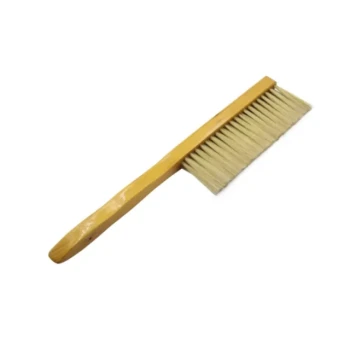
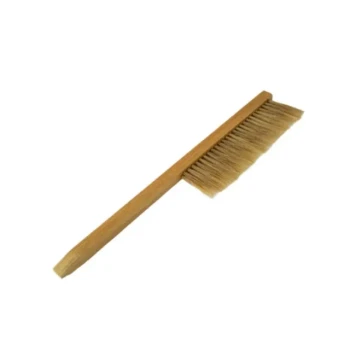
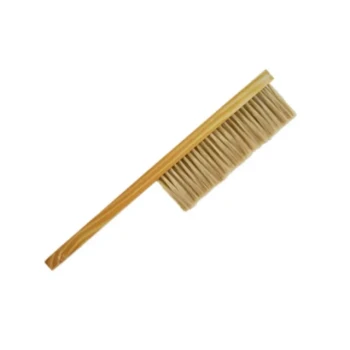
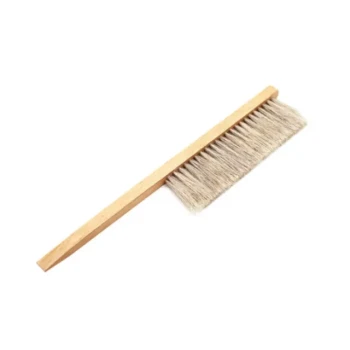
The bee brush is a fundamental instrument utilized to manually and gently separate bees from honey frames during the harvesting process. By employing soft bristles and a specific sweeping technique, it allows the beekeeper to clear the comb for extraction while ensuring the physical safety of the colony.
The bee brush serves a dual purpose during harvest: it prepares the frame for extraction by physically removing the bees, and it does so with a soft touch that maintains colony hygiene and minimizes stress.
The Mechanics of Manual Removal
Retrieving the Frame
The harvesting process begins by removing a frame filled with capped honey from the super.
At this stage, the frame is typically covered in bees protecting their stores.
The Sweeping Technique
Once the frame is lifted, the beekeeper uses the brush to sweep the bees off the comb.
The motion must be gentle but firm, ensuring bees are dislodged without being crushed.
Crucially, the stroke should be a downward sweep. This works with the bees' natural orientation and prevents them from becoming tangled in the bristles or rolled across the comb surface.
Securing the Harvest
Immediately after the bees are cleared, the frame must be protected.
The beekeeper places the clean frame into an empty, covered super box.
This step is vital to prevent "robbing," where bees from the hive or neighboring colonies attempt to reclaim the exposed honey before it can be transported to the processing area.
Design Principles and Bee Welfare
Specialized Construction
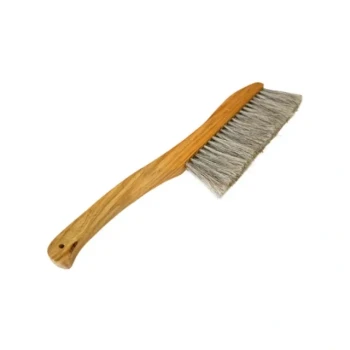
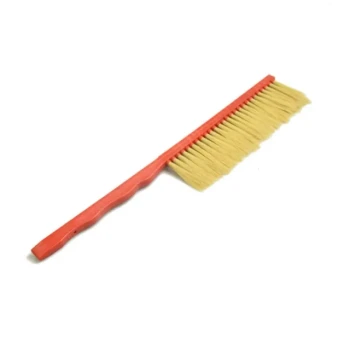
A standard bee brush is typically around 14 inches long and features long, soft bristles (often yellow).
These soft bristles are specifically designed to be non-abrasive, distinguishing them from standard stiff cleaning brushes which could injure the insects.
Reducing Colony Stress
Using a brush allows for a more detailed, careful removal compared to rough shaking alone.
By minimizing physical injury to the bees, the beekeeper reduces the release of alarm pheromones.
This keeps the colony calmer and reduces aggressive behavior during the harvest, making the environment safer for the beekeeper.
Understanding the Trade-offs
Operational Speed
While effective, using a bee brush is a manual, frame-by-frame process.
For large commercial operations, this method may be too time-consuming compared to industrial blowers or fume boards.
Risk of Agitation
Despite the soft bristles, incorrect technique can still irritate the colony.
Brushing upwards (against the grain of the bees) or brushing too vigorously can roll the bees, causing injury and inciting stinging.
Hygiene Considerations
Brushes can accumulate propolis, wax, and honey over time.
If not cleaned regularly, a sticky brush can harm bees rather than help them, defeating the purpose of the tool.
Making the Right Choice for Your Goal
- If your primary focus is small-scale or hobbyist beekeeping: The bee brush is the ideal, low-cost solution for clearing frames gently without needing heavy equipment.
- If your primary focus is minimizing bee mortality: Use a combination of gentle vibration (shaking the frame) to dislodge the bulk of bees, followed by the brush to remove the stragglers.
- If your primary focus is hygiene and queen rearing: Utilize a professional-grade brush to ensure frames are 100% free of worker bees before moving them into sensitive environments like clean rooms.
Mastering the downward sweep of the bee brush ensures you harvest the honey without sacrificing the health of the hive that produced it.
Summary Table:
| Feature | Description |
|---|---|
| Primary Function | Gently removing bees from honey frames before extraction |
| Bristle Type | Long, soft, and non-abrasive (typically synthetic or natural) |
| Key Technique | Single, firm downward sweeps to prevent rolling or injury |
| Best For | Hobbyists, small-scale apiaries, and precision queen rearing |
| Main Advantage | Minimizes bee mortality and reduces colony alarm pheromones |
Elevate Your Beekeeping Operation with HONESTBEE
At HONESTBEE, we understand that the right tools are the foundation of a healthy and productive apiary. Whether you are a commercial distributor or a professional beekeeper, our comprehensive wholesale range provides everything you need—from specialized bee brushes and manual tools to advanced honey-filling and hive-making machinery.
Why partner with HONESTBEE?
- Complete Equipment Spectrum: One-stop sourcing for all beekeeping hardware and machinery.
- Industry Consumables: A reliable supply of essential items to keep your operations running smoothly.
- Commercial Expertise: Tailored solutions for distributors and large-scale commercial apiaries.
Ready to scale your business with premium beekeeping equipment? Contact us today to discuss your wholesale needs!
Related Products
- Wooden Bee Brush with Triple Row Artificial Fiber for Beekeeping
- Classic Wooden Bee Brush with Double-Row Boar Bristles
- Double Row Artificial Fiber Bee Brush for Beekeeping
- Wooden Bee Brush with Double-Row Horsehair Bristles
- Premium Triple-Row Horsehair Bee Brush
People Also Ask
- What is the specific function of a bee brush? Ensure Pure Harvests and Colony Welfare During Honey Extraction
- What are the key characteristics of the bristles on a bee brush? Master Gentle and Efficient Bee Removal
- What is the purpose of using a bee brush during the inspection of hive components? Safe & Precise Hive Management
- What problem does a bee brush solve? Protect Your Colony with Gentle Precision Tools
- Why is a bee brush necessary when extracting honeybee hive frames that contain larvae? Protect Your Brood and Colony