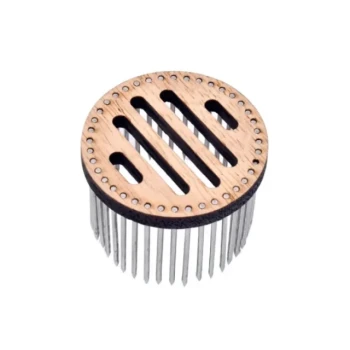
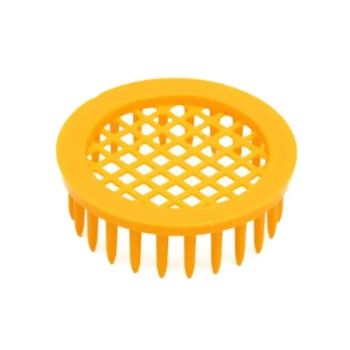
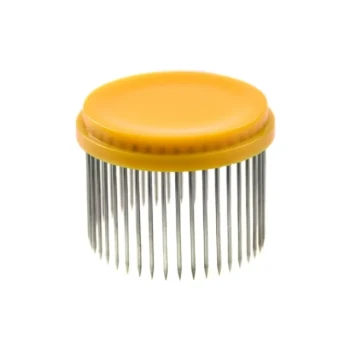
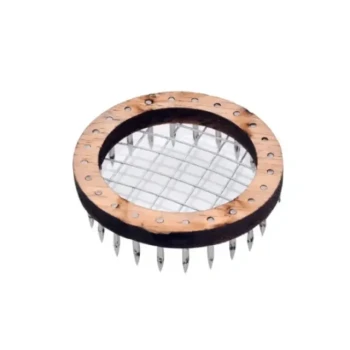
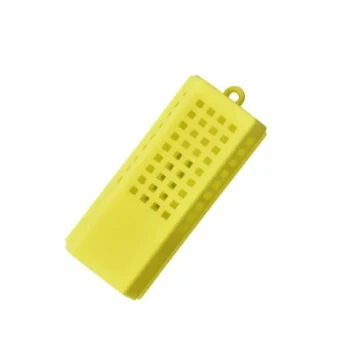
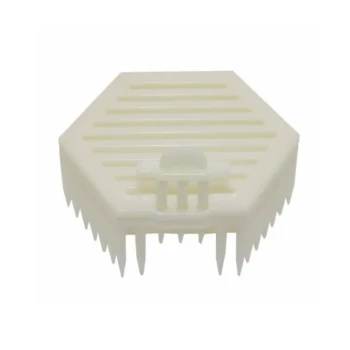
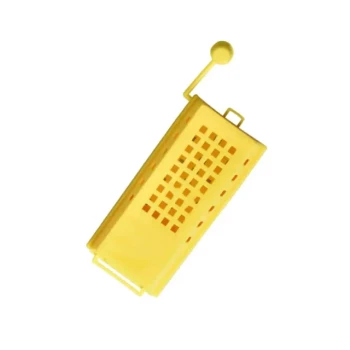
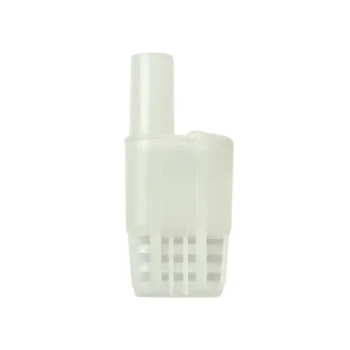
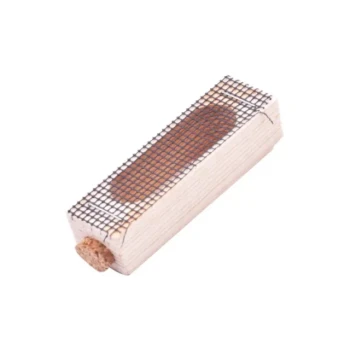
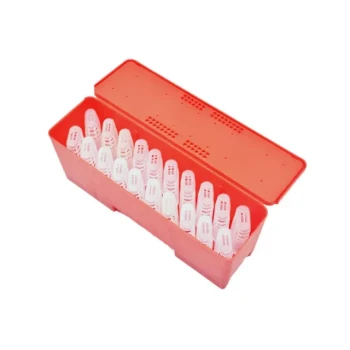
A push-in cage creates a protected "nursery" directly on the honeycomb. To use it, you select a specific area of comb containing emerging brood, honey, and open cells. You place the new queen—along with three to six young attendant bees—onto this patch and firmly press the mesh cage into the wax to seal them inside.
The Core Takeaway The push-in cage is superior to standard introduction methods because it allows the queen to begin laying eggs immediately while still protected. This biological signal (egg laying) convinces the colony to accept her more readily than pheromones alone.
The Mechanics of Introduction
Selecting the Right Real Estate
The success of this method relies entirely on where you place the cage. You must find a section of comb that offers three specific resources.
First, it needs open cells so the queen can begin laying eggs immediately.
Second, it must contain nectar or honey to sustain the queen and her attendants during confinement.
Third, and most critically, it should include emerging brood (capped cells that are about to hatch).
Introducing the Queen and Attendants
Once the ideal location is identified, the queen is placed under the cage.
According to the primary procedure, you should also introduce three to six young attendant bees inside the cage with her.
These attendants provide immediate care, feeding and grooming the queen while she remains isolated from the rest of the colony.
The Role of "New" Bees
The presence of emerging brood is the secret weapon of the push-in cage.
As new bees hatch from the capped brood under the mesh, they emerge into a contained environment with the new queen.
Because these young bees have never known another queen, they have no allegiance to the old colony structure. They accept her instantly and become her first cohort of loyal nurses.
Acclimation and Release
While the queen lays eggs and bonds with the newly hatched workers, the colony outside the mesh becomes accustomed to her scent.
This process typically spans several days. The cage acts as a screen, allowing pheromone exchange without physical contact.
Once the queen has established a pattern of egg-laying—proving her value to the hive—the cage is removed to fully release her.
Common Pitfalls and Trade-offs
The Risk of Comb Imperfections
You must place the cage over a section of comb that is flat and free of holes.
If the comb surface is uneven or has tunnels, outside bees may find a way to burrow in. This premature entry can lead to the queen being balled and killed by aggressive workers before she is accepted.
Managing Attendant Bees
While including attendants is standard practice, you must be selective.
Ensure the 3-6 bees you include are young nurse bees, not older foragers. Older bees are more likely to be aggressive toward a new queen or trigger stress within the small enclosure.
Making the Right Choice for Your Goal
To determine if the push-in cage is the right tool for your specific situation, consider your priorities:
- If your primary focus is acceptance success: This is the gold standard method, especially for valuable queens, as it establishes her egg-laying dominance before release.
- If your primary focus is speed: This method requires more manipulation and time than a standard candy-plug cage and may not be suitable for quick inspections.
The push-in cage trades speed for security, leveraging the biology of hatching bees to guarantee a smoother transition for high-value queens.
Summary Table:
| Feature | Requirement / Benefit |
|---|---|
| Ideal Location | Flat comb with honey, open cells, and emerging brood |
| Attendant Bees | 3 to 6 young nurse bees for grooming and feeding |
| Primary Advantage | Queen begins laying eggs immediately, signaling her value |
| Risk Mitigation | Protects queen from aggressive workers during pheromone bonding |
| Success Factor | New hatching bees accept the queen instantly without prior allegiance |
Secure Your Apiary’s Success with HONESTBEE
At HONESTBEE, we understand that high-value queens are the heart of your operation. Whether you are a commercial apiary or a regional distributor, we provide the professional-grade tools—from precision-engineered push-in cages and hive-making machinery to honey-processing equipment—needed to ensure colony productivity and health.
Partner with HONESTBEE today for comprehensive wholesale solutions and industry-leading beekeeping hardware.
Contact Our Expert Team to Scale Your Operation
Related Products
- Premium Wood and Steel Push In Queen Cage
- Durable Plastic Push In Queen Bee Cage
- Professional Round Push-In Queen Cage with Metal Tines
- Wood and Mesh Push-In Queen Cage
- JZBZ Style Push-In Cell Protector for Professional Queen Rearing Kits
People Also Ask
- What advantages do push-in queen cages offer? Boost Acceptance Rates for Artificially Inseminated Queens
- What is a push-in queen cage and how does it differ from a standard queen cage? Boosting Your Queen Acceptance Rates
- What is a push-in queen cage and how does it differ from standard cages? Achieve Higher Queen Acceptance Rates
- How can a beekeeper obtain a push-in queen cage? DIY vs. Professional Sourcing Guide
- When is a queen introduced with a push-in cage ready for full release? Key Signs for Maximum Colony Acceptance