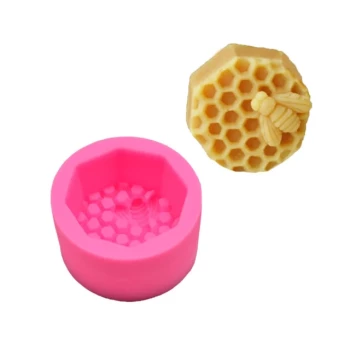
Honeycomb residue acts as a valuable raw material rather than waste. After extraction, leftover wax is recycled to manufacture secondary products, most notably candles. This process converts a byproduct into a distinct revenue stream, enhancing the overall profitability of the beekeeping operation.
The utilization of honeycomb residue is critical for the full-value development of bee resources. By recycling waste wax into marketable goods, producers diversify their economic portfolio and maximize the return on investment for every hive.
Transforming Waste into Economic Assets
Manufacturing Secondary Products
The primary application for honeycomb residue—specifically waste beeswax—is the manufacturing of secondary goods.
Instead of discarding the wax cappings or damaged comb removed during extraction, producers render this material down.
This recycled wax serves as the foundational ingredient for value-added products, such as beeswax candles.
Diversifying the Product Portfolio
Relying solely on honey sales can limit the financial stability of an operation.
By processing residue, beekeepers introduce a completely different product line to their offering.
This diversification mitigates risk and captures value from the entire biological output of the hive, not just the honey.
Operational Efficiency and Hive Health
The Role of Wet Frames
It is important to distinguish between "waste residue" (wax cappings) and the structural comb (frames).
Frames that remain intact after extraction are usually returned to the hive while still wet with honey residue.
Bees are eager to clean these frames, removing the remaining honey and repairing the comb for the next cycle.
Resetting the Production Mechanism
In modern systems like the Flow Hive, the "residue" management is mechanical rather than chemical.
After draining, the mechanism is reset to close the split cells, restoring the comb structure immediately.
Worker bees then uncap the cells, clean them, and begin the refilling process without the need for the beekeeper to render wax or rebuild frames.
Understanding the Trade-offs
Labor vs. Revenue
While converting residue into candles increases revenue, it introduces significant labor requirements.
Rendering wax, filtering impurities, and molding products requires time and equipment distinct from honey processing.
You must weigh the potential profit of wax products against the operational costs of manufacturing them.
Resource Allocation for Bees
If you harvest too much wax (by melting down full combs rather than just cappings), you force bees to expend energy rebuilding.
Bees consume significant amounts of honey to produce new wax.
Therefore, aggressive wax harvesting can inadvertently lower your future honey yields.
Making the Right Choice for Your Goal
To optimize your operation, you must balance the reuse of infrastructure with the processing of byproducts.
- If your primary focus is maximizing immediate revenue: Invest in rendering equipment to process all waste cappings into high-margin secondary products like candles.
- If your primary focus is operational efficiency: Prioritize returning wet, intact frames to the hive immediately to minimize the energy bees spend on rebuilding comb.
True efficiency lies in wasting nothing: return the structure to the bees, and process the inevitable byproduct into profit.
Summary Table:
| Residue Type | Primary Utilization | Economic Benefit | Impact on Hive |
|---|---|---|---|
| Wax Cappings | Rendering for candles/crafts | New revenue stream | Low (byproduct) |
| Wet Frames | Returned to hive for cleaning | Reduced labor costs | High efficiency |
| Broken Comb | Melted for secondary products | Resource recovery | Requires bee energy to rebuild |
| Flow Hive Residue | Mechanical reset & bee cleaning | Operational speed | Minimal disruption |
Maximize Your Apiary's ROI with HONESTBEE
At HONESTBEE, we understand that true profitability in beekeeping comes from utilizing every resource. Whether you are a commercial apiary looking to process wax into high-margin products or a distributor sourcing the latest technology, we provide the tools to make it happen.
Our comprehensive wholesale offering includes:
- Industrial Machinery: Honey-filling and hive-making machines to scale your production.
- Specialized Equipment: High-efficiency rendering tools and beekeeping hardware.
- Consumables & Merchandise: A wide array of essential supplies and honey-themed cultural goods.
Ready to transform your honeycomb residue into a distinct revenue stream? Contact our expert team today to explore our wholesale solutions.
References
- Daud Malamassam. Development of model for honey bee management in hasanuddin university educational forest. DOI: 10.1088/1755-1315/486/1/012027
This article is also based on technical information from HonestBee Knowledge Base .
Related Products
- Hexagonal Bee Honeycomb Silicone Soap Mold by HONESTBEE
- Plastic Honey Comb Frames Cassette Box for Honey
- Professional Wide Blade Honey Scraper for Beekeeping and Honey Processing
- Honey Bee Lifecycle Model: A Detailed Honeycomb Display of Bee Development
People Also Ask
- What are the advantages of silicone molds for queen cell cups? Upgrade Your Queen Rearing Precision
- What should be considered when selecting combs of honey for extraction? | Key Steps for Quality Honey
- What do bees use combs for? The Hive's Essential Pantry and Nursery
- How are Honeycombs utilized as a standardized testing platform in the assessment of honeybee hygienic cleaning? Guide
- How does removing entire honeycombs impact Varroa mites? Master Mechanical Mite Control for Healthier Hives