Maintaining a long-term queen bank requires a strict regimen of resource management and population control. To keep the queens viable, you must continuously feed the colony syrup, rigorously inspect for and destroy natural queen cells, and regularly replenish the hive with fresh frames of brood.
Success relies on maintaining a perpetual state of induced queenlessness while maximizing the population of caretakers. By suppressing natural queen creation and ensuring a steady stream of young nurse bees, you guarantee the banked queens receive the attention required for survival.
Managing Colony Biology
To sustain a queen bank, you must actively manage the demographics and behavior of the bees.
The Critical Role of Nurse Bees
The most vital component of a queen bank is the presence of young nurse bees. These are the specific bees responsible for feeding and grooming the caged queens through the mesh.
To ensure a steady supply of nurses, you must continually add frames of brood to the bank. As this brood emerges, it replenishes the population of young caretakers, preventing the colony from aging out of its caretaking ability.
Nutritional Support
A queen bank cannot be left to forage for its own resources alone. The colony requires continuous feeding of syrup.
This constant food source ensures the nurse bees are well-fed and capable of producing the royal jelly and nutrition needed to sustain the banked queens.
Suppressing Natural Replacement
The colony will naturally attempt to correct its "queenless" state by building its own queen cells.
You must regularly inspect the hive to identify and remove any natural queen cells. If the colony manages to raise and hatch its own virgin queen, their focus will shift to her, and they may neglect or act aggressively toward the banked queens.
Optimizing the Physical Setup
Proper physical arrangement of the cages ensures the nurse bees can do their job effectively.
Accessibility for Caretakers
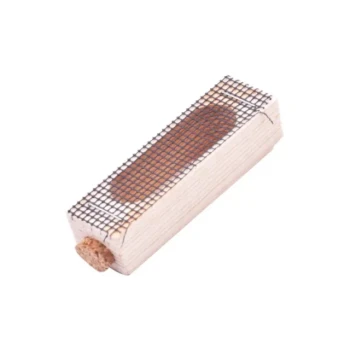
Nurse bees must have unobstructed access to the screen of the queen cages. Without this, the queens inside cannot be fed.
You can achieve this by using a specialized banking frame designed to hold cages. Alternatively, you can remove two standard frames to create a gap and suspend groups of cages (often held together by rubber bands) within that space.
Thermal Regulation and Placement
Temperature control is critical for long-term survival.
Position the queen cages toward the center of the colony. This ensures they are in the heart of the cluster where the temperature is stable, avoiding the excessive heat often found near the lid of the hive.
Common Pitfalls to Avoid
Even with good equipment, a bank can fail if the biological principles are ignored.
The Aging Population
A common mistake is failing to rotate in new brood frames.
If the population creates a "gap" in nurse bees because no new brood was added, the older bees will not care for the queens effectively. This leads to higher mortality rates in the bank.
Incomplete Inspections
Rushing through the removal of natural queen cells is a significant risk.
If even one natural cell is missed and allows a queen to emerge, the chemical signal of the bank changes. The colony will often stop caring for the caged queens, resulting in the loss of the entire bank.
Ensuring Long-Term Success
The stability of your queen bank depends on your specific management goals.
- If your primary focus is maximizing queen survival: Prioritize the weekly addition of capped brood frames to ensure a dense, continuous population of young nurse bees.
- If your primary focus is operational efficiency: Invest in specialized banking frames to standardize spacing and ensure rapid, safe access during inspections.
Active, consistent intervention is the only way to maintain a queen bank; if you neglect the nurse population or food supply, the colony's support system will collapse.
Summary Table:
| Maintenance Factor | Action Required | Frequency |
|---|---|---|
| Nurse Bee Population | Add frames of capped brood to replenish young caretakers | Weekly |
| Resource Supply | Provide continuous syrup feeding | Continuous |
| Queen Cell Control | Inspect and destroy all natural emergency queen cells | Every 7-10 days |
| Thermal Stability | Position queen cages in the center of the bee cluster | At setup/adjustment |
| Physical Access | Use specialized banking frames for unobstructed cage access | Constant |
Maximize Your Apiary’s Success with HONESTBEE
Maintaining a healthy queen bank is critical for commercial apiaries and distributors. At HONESTBEE, we specialize in providing the professional-grade tools you need to scale your operations. From specialized banking frames and queen cages to advanced beekeeping machinery and essential consumables, we offer a comprehensive wholesale portfolio designed for industry leaders.
Ready to optimize your hive management? Our team is dedicated to supplying high-quality hardware—including honey-filling machines and specialized hive-making equipment—that brings real value to your business.
Contact us today to explore our wholesale solutions!
Related Products
- Professional Dual Action Queen Excluder Scraper for Beekeeping
- Modern Flat-Mount Hive Number Set for Beekeeping
- Heavy-Duty Ergonomic Grip Galvanized Pollen Shovel
- Premium Nicot Style Cell Bar Holder and Queen Cell Cup Holder System
- Professional Queen Catcher and Introduction Queen Cage
People Also Ask
- Why are standardized hive frames and queen excluders essential for maintaining honey purity and quality? Scale Your Purity
- What types of queen excluders are available for beekeepers? Choose the Right Tool for Your Hive
- What is the primary function of a queen excluder within a commercial beehive? Ensure Purity in Honey Production
- Why is it important to remove the queen excluder at the end of summer? Prevent Colony Loss This Winter
- What is the purpose of using an excluder in beekeeping? A Guide to Hive Management & Honey Purity