To properly clean a detachable beekeeping veil, you must always remove it from the suit and wash it by hand. The delicate mesh is highly susceptible to damage, and machine washing will almost certainly tear the fabric, compromising its protective function. Use cool water and a very mild detergent for the best results.
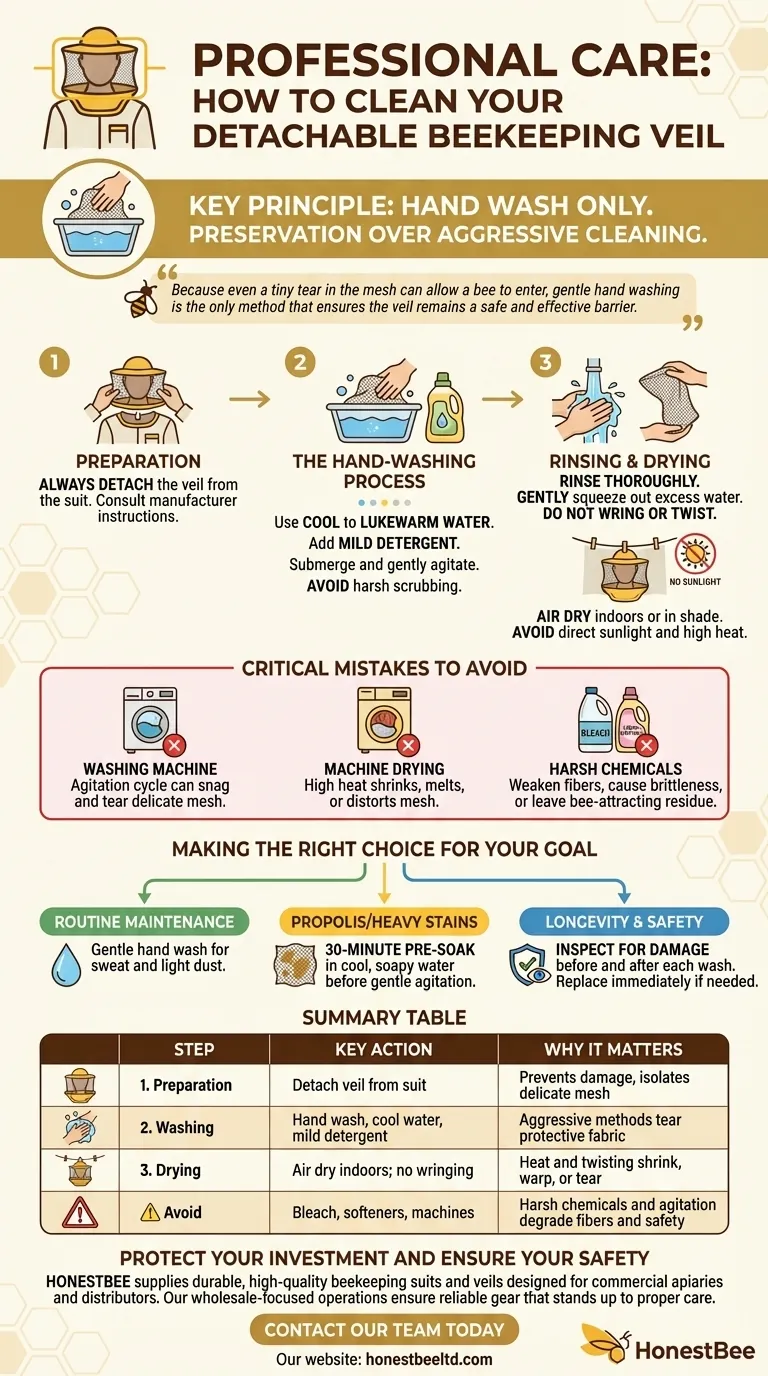
The central principle of veil maintenance is preservation over aggressive cleaning. Because even a tiny tear in the mesh can allow a bee to enter, gentle hand washing is the only method that ensures the veil remains a safe and effective barrier.
A Guide to Safe Veil Cleaning
Proper cleaning not only removes dirt and propolis but also extends the life of your equipment, ensuring your safety. The process is straightforward but requires a gentle approach.
Step 1: Preparation
Before you begin, always detach the veil from the hood or collar of your beekeeping suit. This isolates the delicate component and prevents damage to zippers or other parts of the suit.
It is also wise to consult the care instructions provided by the manufacturer, as materials can vary slightly.
Step 2: The Hand-Washing Process
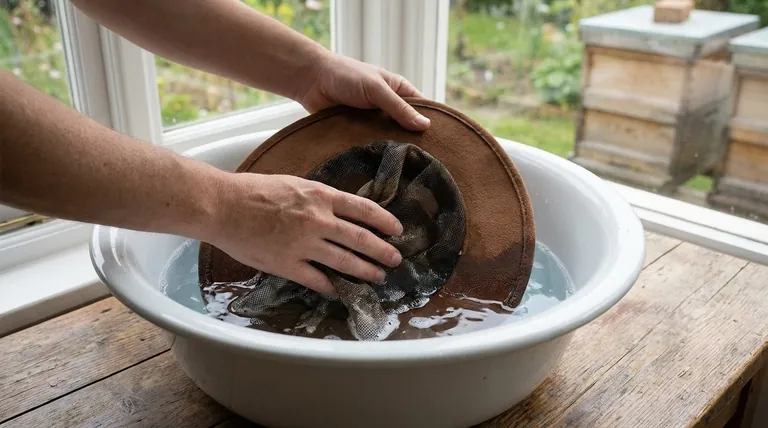
Fill a basin or sink with cool to lukewarm water. Hot water can potentially damage or shrink the synthetic mesh fibers over time.
Add a small amount of a mild laundry detergent. Avoid any products containing bleach or fabric softeners, as these harsh chemicals can degrade the material.
Submerge the veil and gently agitate it with your hands. For specific stains, you can gently rub the area with your fingers, but avoid aggressive scrubbing or using brushes.
Step 3: Rinsing and Drying
Drain the soapy water and rinse the veil thoroughly under cool, running water until all soap residue is gone.
Gently squeeze out the excess water. Do not wring or twist the veil, as this action can stretch, warp, or tear the mesh.
Hang the veil to air dry. The ideal location is indoors or in a shady spot outside, as direct sunlight can weaken the fibers over extended periods.
Critical Mistakes to Avoid
Understanding what not to do is just as important as knowing the correct procedure. These common errors can quickly ruin your equipment.
The Danger of the Washing Machine
The primary reason to avoid a washing machine is the physical stress of the agitation cycle. The fine mesh of the veil can easily snag on itself or other items, creating tears that render it unsafe for use.
The Problem with Machine Drying
Never place a beekeeping veil in a machine dryer. The high heat can shrink, melt, or deform the synthetic mesh, permanently distorting your field of view and potentially compromising the veil's fit and protective seal.
The Damage from Harsh Chemicals
Bleach will chemically weaken and break down the fibers of the veil, making it brittle and prone to tearing. Fabric softeners can leave a chemical residue that may irritate or attract bees.
Making the Right Choice for Your Goal
Your cleaning routine should align with your goal, whether it's a quick refresh or dealing with stubborn residue.
- If your primary focus is routine maintenance: A gentle hand wash in cool water with a drop of mild soap is sufficient to remove sweat and light dust.
- If your primary focus is removing propolis or heavy stains: A pre-soak in cool, soapy water for 30 minutes can help loosen residue before you gently agitate it by hand.
- If your primary focus is longevity and safety: Always inspect the veil for holes or weak spots before and after each wash, and replace it immediately if any damage is found.
Proper care is a direct investment in the long-term reliability of your equipment and your personal safety in the apiary.
Summary Table:
| Step | Key Action | Why It Matters |
|---|---|---|
| 1. Preparation | Detach the veil from the suit. | Prevents damage to zippers and isolates the delicate mesh. |
| 2. Washing | Hand wash in cool water with mild detergent. | Aggressive scrubbing or machines can tear the protective fabric. |
| 3. Drying | Air dry indoors; never wring or machine dry. | Heat and twisting can shrink, warp, or tear the mesh. |
| ⚠️ Avoid | Bleach, fabric softeners, and washing machines. | Harsh chemicals and agitation degrade fibers and create safety risks. |
Protect your investment and ensure your safety with the right equipment. HONESTBEE supplies durable, high-quality beekeeping suits and veils designed for commercial apiaries and distributors. Our wholesale-focused operations ensure you get reliable gear that stands up to proper care. Contact our team today to discuss your bulk supply needs and keep your operation safe and efficient.
Visual Guide
Related Products
- Professional Beekeeper Suit with Square Folding Cotton Veil
- Professional Cotton Beekeeper Suit with Round Veil Design for Commercial Apiaries
- White Cotton Beekeeping Jacket and Veil for Bee Keepers
- Beekeeping Jacket with Hood and Veil for Beekeepers
- Beekeeper Cowboy Hat and Veil for Beekeeping
People Also Ask
- What material and design specifications are recommended for a high-quality beekeeper suit? Top Gear Selection Guide
- Why is mobility crucial when wearing a beekeeping suit? Essential Fit Guide for Optimal Safety and Performance
- When is it recommended to wear a beekeeping suit? Essential Safety Guide for Every Beekeeper
- How does climate influence the choice of a beekeeping suit? Stay Safe and Comfortable in Any Weather
- What features are important in a high-quality beekeeping suit? Maximize Protection & Comfort