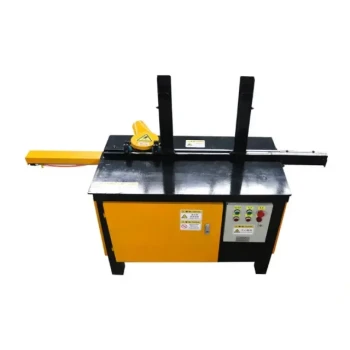
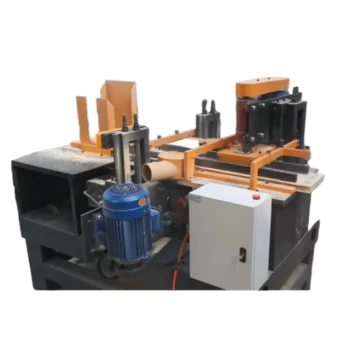
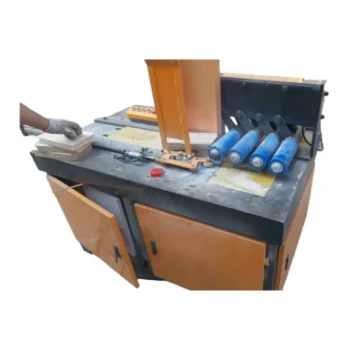
The manufacturing of frame bottom bars followed a streamlined industrial process that closely mirrored the techniques used for top bars. The workflow consisted of four primary steps: cutting boards to the specific required length, machining shoulder notches on the ends, gang ripping the lumber into individual strips, and finally passing the strips through a slotting machine.
Core Takeaway The production efficiency of bottom bars relied on performing detailed joinery (notching) on wide boards before they were ripped into individual strips. This "batch processing" approach ensured consistent dimensions and reduced handling time per unit.
The Manufacturing Sequence
Initial Sizing
The process began with raw lumber boards. These were first cut to the exact length required for the bottom bar. Unlike end bars which required planing down thick lumber, bottom bar stock was prepared primarily by length first.
Creating the Shoulders
Once cut to length, the boards were processed to create the joinery. The manufacturer used two blades separated by spacers to cut shoulder notches on each end of the board simultaneously.
These notches were cut to a depth of 3/8 inch. This step was critical for ensuring the bottom bar would fit correctly into the end bars during final frame assembly.
Gang Ripping
After the shoulders were notched into the wide board, the lumber was fed into a gang rip saw.
This machine contained multiple blades that sliced the wide board into narrow, individual strips in a single pass. This transformed the notched board into multiple semi-finished bars.
Final Slotting
The final mechanical step involved running the individual strips through a slotting machine. This created the necessary groove or gap to hold the beeswax foundation, a standard feature for many frame styles.
Understanding Variations and Constraints
Impact of Design on Manufacturing
While the standard process involved a slotting machine, it is important to note that bottom bars came in different configurations. The primary reference describes the process for slotted bottom bars.
However, variations included one-piece solid bars and two-piece bars. A solid bar would logically skip the final slotting machine step, whereas the two-piece design would require a full cut-through rather than a partial slot.
Material Consistency
The process relied on the stability of the wood during the gang ripping phase. Because the joinery (shoulders) was cut before the ripping, any movement or warping of the wood during the rip cut could potentially compromise the fit of the shoulders on the final individual strips.
How to Apply This to Your Project
If your primary focus is woodworking or reproduction:
- Adopt the industrial order of operations: cut your joinery (notches) on the wide board first before ripping it into thin strips to ensure safety and consistency.
If your primary focus is historical analysis:
- Recognize that the use of gang rips and chain-fed slotting machines indicates that beekeeping equipment was highly standardized and mass-produced rather than hand-crafted individually.
The key to replicating these components lies in processing the wood in the widest possible state for as long as possible.
Summary Table:
| Manufacturing Step | Process Description | Key Tooling / Specs |
|---|---|---|
| Initial Sizing | Raw lumber is cut to the precise final length. | Precision Crosscut Saws |
| Shoulder Notching | Cutting joinery notches on both ends of wide boards. | Dual Blades with Spacers (3/8" depth) |
| Gang Ripping | Slicing the wide, notched board into individual strips. | Multi-blade Gang Rip Saw |
| Final Slotting | Creating the groove or gap for the beeswax foundation. | Chain-fed Slotting Machine |
Elevate Your Beekeeping Operation with HONESTBEE
Are you looking to scale your commercial apiary or expand your distribution network? HONESTBEE is your premier partner for high-quality beekeeping infrastructure. We specialize in providing a comprehensive wholesale range, from precision-engineered hive-making and honey-filling machinery to essential consumables and professional-grade beekeeping tools.
Whether you need standardized frame components or advanced automated hardware, our portfolio is designed to maximize your production efficiency. Contact us today to discuss how our wholesale solutions and industry expertise can bring superior value to your business.
Related Products
- HONESTBEE Top Bar & Bottom Bar Forming Machine | Bee Frame Machine
- HONESTBEE Bee Frame Grooving Machine | Precision Slotting for Bee Frame Making
- Langstroth Screen Bottom Board for Beekeeping Wholesale
- Professional 3-Bar Frame Grip with Integrated Hive Tool
- Australian Pine Wood Langstroth Screen Bottom Board for Wholesale
People Also Ask
- What is the primary function of the Top Bar and Bottom Bar Forming Machine? Automate Hive Frame Production Excellence
- How does the Top Bar and Bottom Bar Forming Machine process wooden strips? High-Precision Frame Component Production
- What is the operational sequence of the Top Bar and Bottom Bar Forming Machine? Precision Beekeeping Frame Manufacturing
- What are the key benefits of investing in the Top Bar and Bottom Bar Forming Machine? Scale Your Hive Production Now
- What customization options are available for the Top Bar and Bottom Bar Forming Machine? Engineered for Any Hive Standard