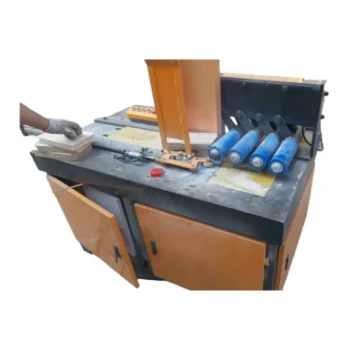
The finger joints were cut utilizing a dedicated machine powered by a 10 hp motor driving six 1-inch cutters. The process involved stacking nine boards on their ends within a carriage, securing them via an air ram, and advancing the carriage over the blades to profile the ends. To accommodate the specific geometry required for "super sides," operators bolted 1-inch spacer blocks to the carriage, creating the precise offset necessary for the joints to align correctly.
The efficiency of this process relied on high-powered batch processing and mechanical precision. By integrating spacer blocks into the carriage setup, the system ensured that the distinct offset requirements for super components were met without requiring complex machine recalibration.
The Machinery and Setup
Equipment Specifications
The primary cutting force was generated by a heavy-duty 10 hp motor.
This motor drove a specific configuration of six 1-inch cutters, providing the torque and cutting surface area necessary to process multiple hardwood boards simultaneously.
Securing the Workpiece
To ensure stability during the high-intensity cut, nine boards were stacked vertically on their ends inside a carriage.
An air ram was utilized to clamp this stack firmly in place. This pneumatic clamping prevented vibration or movement, which is critical for maintaining tight tolerances in finger joint geometry.
The Cutting Workflow
Processing the Batch
Once secured, the carriage holding the nine boards was advanced directly over the rotating blades.
After the initial pass, the carriage was retracted back to the starting position. This cycle completed the profile on one end of the entire batch in a single operation.
Machining the Second End
To profile the opposite ends, the entire stack of boards was removed and flipped.
The stack was then re-secured in the carriage and passed over the blades again, ensuring both ends of the components were machined to identical specifications.
Critical Adjustment for Super Sides
Creating the Offset
A standard cut would not suffice for the "super sides" due to assembly requirements.
To address this, 1-inch spacer blocks were bolted directly to the carriage.
The Function of the Spacer
These blocks shifted the position of the boards relative to the cutters.
This mechanical adjustment created a specific offset in the finger joints. This offset is essential for the "super components" to interlock correctly with corresponding parts during final assembly.
Operational Considerations and Trade-offs
Setup Rigidity
The reliance on bolted spacer blocks indicates a rigid, hardware-defined setup.
While this guarantees repeatability for the offset, it likely increases changeover time when switching between standard components and super sides, as the blocks must be physically installed or removed.
Batch Dependency
The machine is optimized for processing nine boards at a time.
This suggests that processing single replacements or small custom batches would be inefficient. The workflow is strictly designed for volume consistency rather than individual component flexibility.
Achieving Precision in Component Assembly
To replicate or understand the logic behind this manufacturing process, consider your specific production goals.
- If your primary focus is throughput: Utilize high-torque motors and pneumatic clamping to process multiple boards in a single carriage pass.
- If your primary focus is geometric fit: Implement fixed mechanical stops or spacer blocks to guarantee precise offsets for interlocking parts.
The success of the super component assembly relies on the mechanical guarantee of the 1-inch offset created during the cutting phase.
Summary Table:
| Component | Specification / Method | Purpose |
|---|---|---|
| Power Unit | 10 hp motor | Provides high torque for batch cutting |
| Cutting Tools | Six 1-inch cutters | Profiles ends of nine boards simultaneously |
| Clamping | Pneumatic air ram | Ensures stability and tight tolerances |
| Offset Method | 1-inch bolted spacer blocks | Creates the specific geometry for super sides |
| Batch Size | 9 boards per cycle | Optimizes throughput and volume consistency |
Scale Your Apiary Production with HONESTBEE
At HONESTBEE, we understand that precision in every finger joint determines the lifespan of your hives. As a premier partner for commercial apiaries and global distributors, we provide more than just equipment—we provide industrial-grade reliability.
From heavy-duty hive-making machinery and automated honey-filling systems to a complete catalog of wholesale beekeeping tools and consumables, our portfolio is designed to maximize your efficiency. Whether you are looking to optimize your manufacturing workflow or source premium honey-themed cultural merchandise, we are here to support your growth.
Ready to elevate your beekeeping operations? Contact our expert team today to discuss our wholesale solutions and customized machinery options.
Related Products
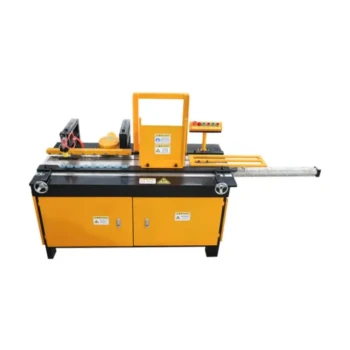
- Automatic Finger Joints Joint Making Machine for Bee Box and Hive Making
- Beehive Handle and Frame Rest Cutting Machine: Your Specialized Hive Machine
- HONESTBEE Top Bar & Bottom Bar Forming Machine | Bee Frame Machine
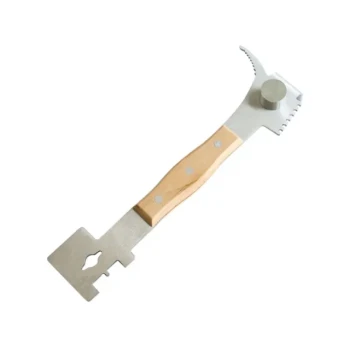
- HONESTBEE Professional Long Handled Hive Tool with Precision Cutting Blade
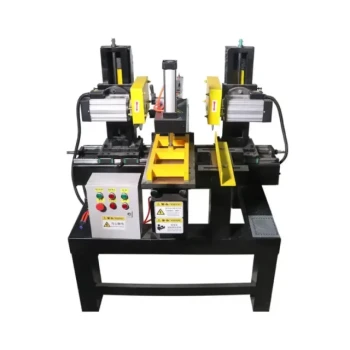
- Beehive Machine Double End Saw for Precision Hive Component Manufacturing
People Also Ask
- What are the benefits of using a bee box-making machine? Scale Your Apiary with Precision & Efficiency
- What type of joint is required on the inside of beehive boxes for frame support? Mastering the Essential Rabbet Joint
- What is the construction method that the machine is based on? Master the Lock Corner Technique for Beehives
- What are the advantages of using automated hive-making machines? Boost Efficiency in Large-Scale Africanized Apiaries
- Why are automatic hive-making machines essential for nucleus hive production? Scale Your Apiary with Precision