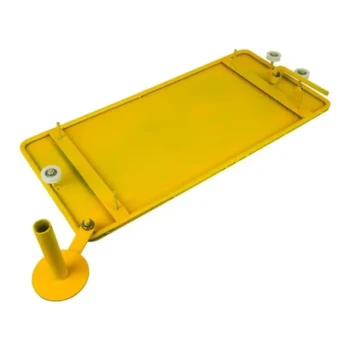
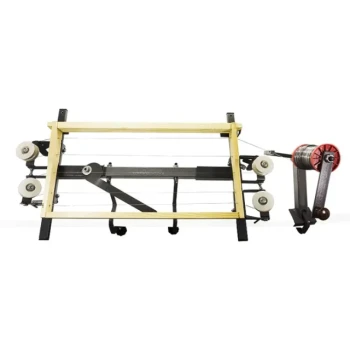
Standardized beehives and hive frame consumables serve as the backbone of mechanized beekeeping. By adhering to a uniform design, these components allow large-scale operations to move hundreds of colonies rapidly using professional forklifts and transport equipment. This physical consistency ensures interchangeability within extraction facilities, significantly reducing field management time and lowering the overall operational costs of commercial apiaries.
The Core Insight In commercial operations, standardization is not just a convenience; it is the prerequisite for mechanization. Uniform equipment transforms beekeeping from a labor-intensive, artisanal practice into a scalable industrial process capable of efficient migration and automated processing.
The Logistics of Large-Scale Mobility
Enabling Mechanized Transport
For mobile operations, speed is critical. Standardized hives allow for the use of professional forklifts to load and unload pallets of hives.
Because every unit shares the exact dimensions, they can be stacked securely for transport. This eliminates the manual labor previously required to move colonies one by one.
Facilitating Rapid Migration
Commercial pollination requires moving thousands of hives to different crop locations quickly.
Standardized modular systems streamline this process, ensuring hives fit perfectly onto transport trucks. This precise deployment capability is essential for fulfilling large-scale commercial crop pollination contracts.
Efficiency in Management and Processing
Universal Interchangeability
The primary driver of efficiency in the honey house is interchangeability.
In extraction facilities, automated machinery relies on consistent frame dimensions. Standardized consumables ensure that any frame from any hive fits into un-cappers and extractors without jamming, streamlining the harvesting workflow.
Non-Destructive Inspections
Modern standard hives utilize a movable frame design that revolutionizes colony management.
Beekeepers can inspect colony health, breeding progress, and honey stores without destroying the hive structure. This "non-destructive" approach minimizes disturbance to the bees and allows for scientific management of pests and diseases.
Optimized Maintenance
Field maintenance becomes strictly routine rather than a repair project.
If a component breaks, it can be instantly replaced with a generic spare from inventory. This consistency reduces downtime and maintenance costs, allowing staff to manage significantly more hives per person.
The Role of Precision Manufacturing
Scaling via Industrial Production
Achieving this level of standardization requires a shift from artisanal construction to industrial-grade manufacturing.
Automated machinery and CNC processes produce wooden or composite components with exact specifications. This mass production lowers the cost per unit, making it financially viable to scale from a small apiary to a farm with thousands of hives.
Stability and Yield
Precision equipment contributes directly to production stability.
By providing a standardized environment with precise air intake and insulation, these hives help buffer against climatic variances. This consistency supports higher productivity, with potential averages reaching 21.5 kg of honey per colony.
Understanding the Strategic Shifts
The Shift from Artisanal to Industrial
Adopting standardized equipment moves an operation away from custom, handcrafted solutions.
While this reduces hardware costs and ensures structural integrity, it requires a commitment to a specific system. Future equipment purchases must align with existing standards to maintain the efficiency gains of interchangeability.
Dependence on Infrastructure
Standardization implies a reliance on the entire industrial cycle.
To fully leverage these benefits, an operation needs not just the hives, but also the compatible machinery (forklifts, extraction lines) and a reliable supply chain for the standardized consumables.
Making the Right Choice for Your Goal
To maximize the benefits of standardization, align your equipment strategy with your specific operational focus.
- If your primary focus is Scalability: Prioritize CNC-manufactured components to ensure every new unit matches your existing inventory, allowing for seamless expansion without compatibility issues.
- If your primary focus is Migratory Pollination: Invest in modular hive systems designed specifically for palletization and forklift operations to minimize loading times and labor costs.
- If your primary focus is Production Efficiency: Ensure your extraction facility equipment matches your frame standards exactly to eliminate bottlenecks during the harvest.
Standardization is the bridge that allows a beekeeper to transition from managing colonies to managing a commercial enterprise.
Summary Table:
| Key Feature | Operational Benefit | Impact on Large-Scale Beekeeping |
|---|---|---|
| Uniform Dimensions | Mechanized Transport | Enables forklift loading and secure stacking for rapid migration. |
| Interchangeable Frames | Automated Processing | Ensures seamless extraction without machinery jams or manual adjustment. |
| Movable Frame Design | Non-Destructive Inspection | Reduces colony disturbance and allows for rapid, scientific health checks. |
| Industrial Manufacturing | Scaling & Maintenance | Lowers unit costs and simplifies repairs with instant, generic part replacement. |
Scale Your Apiary with HONESTBEE Solutions
Transition from artisanal labor to industrial efficiency with HONESTBEE. As a premier partner for commercial apiaries and distributors, we provide the complete infrastructure needed for modern beekeeping.
From CNC-manufactured standardized hives and durable frame consumables to professional honey-filling machines and specialized beekeeping hardware, our wholesale portfolio is designed to maximize your operational yield and minimize downtime.
Ready to optimize your production and logistics?
Contact HONESTBEE Today to access expert-grade equipment and machinery tailored for large-scale success.
References
- Arttu Malkamäki, Markku Kanninen. Impacts of land use and land use changes on the resilience of beekeeping in Uruguay. DOI: 10.1016/j.forpol.2016.06.002
This article is also based on technical information from HonestBee Knowledge Base .
Related Products
- Wooden Bee Hive Frames for Beekeeping and Wholesale
- Professional Galvanized Steel Frame Rest for Beehives
- Plastic Bee Frame Beekeeping Hive Frames for Wholesale
- Heavy-Duty Stainless Steel Clip-On Frame Perch
- HONESTBEE Durable Frame Wiring Board with Integrated Tensioner
People Also Ask
- How does balancing the number of frames impact hive productivity? Optimize Your Apiary's Biological Output
- How do wooden and plastic hive frames compare in terms of durability? Wood vs. Plastic Longevity & Repairability
- What are the main considerations when choosing between wooden and plastic bee hive frames? Optimize Your Apiary's Efficiency
- How should beehive frames be maintained to prolong their lifespan? 5 Pro Tips for Durable Beekeeping Equipment
- Can I reuse old beehive frames? Save Money and Boost Hive Productivity