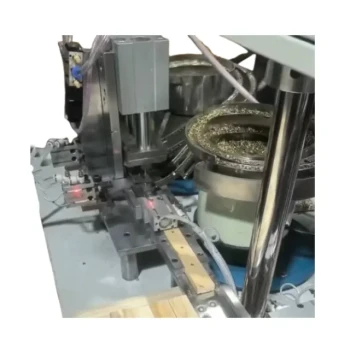
The mechanization of beekeeping through specialized tools acts as the primary catalyst for transforming traditional apiary practices into scalable industrial operations. By deploying high-precision hardware and hive-making equipment, producers can replace inconsistent manual labor with exact mechanical processes, facilitating the rapid adoption of advanced production techniques and significantly boosting overall output efficiency.
Core Takeaway
While manual beekeeping limits growth due to labor constraints, mechanization unlocks scalability by establishing strict hardware standardization and production independence. This shift not only improves immediate workflow efficiency but also creates a self-sufficient infrastructure capable of supporting large-scale, clean production models.
The Foundation of Scalability: Precision and Standardization
Mastering the Critical "Bee Space"
The most significant contribution of specialized machinery is the ability to strictly maintain bee space.
This technical standard defines the precise gap required between frames and hive walls.
When this dimension is exact, it prevents bees from building wild wax combs or sealing gaps with excess propolis, ensuring the internal components remain mobile and easy to manage.
Achieving Component Interchangeability
Mechanization ensures that every hive body and frame is produced to uniform specifications.
This standardization is fundamental for large-scale management, as it allows parts to be swapped seamlessly between different hives without friction or modification.
By ensuring a precise fit, machines enhance equipment durability and pave the way for subsequent automation, such as mechanized honey harvesting and colony rotation.
Economic and Operational Independence
Reducing Procurement Costs
Specialized hive-making machinery allows operators to manufacture their own hardware using local materials.
This eliminates the need to purchase expensive, pre-made hives from external suppliers, significantly lowering the barrier to entry for expansion.
Processing hives on-site allows for customization based on specific local climates and bee species, optimizing colony health.
Enabling Self-Sufficiency
Adopting these tools supports a circular economy model within the beekeeping operation.
Producers become less dependent on external resources and supply chains, ensuring a consistent availability of equipment regardless of market fluctuations.
This hardware independence is often the tipping point that allows a small operation to expand into a commercial enterprise.
Educational and Structural Implications
Bridging Theory and Practice
The presence of a full range of machinery—from hive-making to honey processing—clarifies the entire value chain for new entrants.
Demonstrating these tools helps trainees transition from theoretical knowledge to practical operational skills.
It provides a realistic view of the feasibility and technical requirements necessary to run a professional beekeeping project.
Understanding the Trade-offs
The Shift in Skill Requirements
Moving toward mechanization shifts the burden from biological intuition to technical operation.
While manual labor decreases, the need for skills in machine maintenance, calibration, and safety increases.
Operators must ensure that the pursuit of mechanical efficiency does not overshadow the biological needs of the colony.
Capital Investment vs. Operational Flow
Implementing high-precision hardware requires an upfront investment in machinery and training.
However, relying solely on manual construction often leads to "hidden costs" later, such as increased time spent prying apart propolized frames or repairing inconsistent gear.
Mechanization trades immediate capital expenditure for long-term operational fluidity.
Making the Right Choice for Your Goal
To determine how heavily you should invest in mechanization, consider your primary operational objective:
- If your primary focus is rapid commercial expansion: Prioritize machinery that ensures standardization and interchangeability, as this is critical for managing thousands of colonies efficiently.
- If your primary focus is cost control and sustainability: Invest in hive-making equipment to utilize local timber and eliminate reliance on external equipment suppliers.
- If your primary focus is education or training: specific tool kits and processing equipment are essential to demonstrate the complete value chain from breeding to production.
Mechanization is not just about faster work; it is about building a predictable, standardized infrastructure that allows the industry to grow beyond the limitations of human hands.
Summary Table:
| Aspect | Manual Beekeeping | Mechanized Beekeeping | Impact on Growth |
|---|---|---|---|
| Standardization | Low (Hand-crafted variance) | High (Precision Bee Space) | Improved hive durability and management speed. |
| Interchangeability | Poor (Custom fit parts) | Seamless (Universal specs) | Enables rapid scaling and automated harvesting. |
| Supply Chain | Dependent on external vendors | Self-sufficient (Local production) | Lowered procurement costs and hardware independence. |
| Labor Focus | High physical labor | Technical operation & maintenance | Increased output per worker and operational fluidity. |
Scale Your Apiary with HONESTBEE Precision Engineering
At HONESTBEE, we understand that transitioning from traditional methods to industrial-scale production requires more than just tools—it requires a standardized infrastructure. As a dedicated partner to commercial apiaries and distributors, we provide a comprehensive wholesale range designed to catalyze your growth:
- Hive-Making Machinery: Achieve hardware independence by manufacturing precision hives from local materials.
- Specialized Hardware: Ensure exact 'bee space' and component interchangeability for seamless management.
- Honey-Filling & Processing Machines: Streamline your production line for maximum efficiency and clean output.
- Consumables & Merchandise: Access a full spectrum of industry essentials and honey-themed cultural goods.
Ready to transform your operation? Contact us today to learn how our machinery and equipment can build the foundation for your global beekeeping success.
References
- Marcelo Werneck Barbosa. Government Support Mechanisms for Sustainable Agriculture: A Systematic Literature Review and Future Research Agenda. DOI: 10.3390/su16052185
This article is also based on technical information from HonestBee Knowledge Base .
Related Products
- Stainless Steel J Hook Hive Tool for Beekeeping
- HONESTBEE 15-in-1 Beekeeper Multi-Tool with Hammer and Pliers for Beekeeping
- HONESTBEE Professional Mini J-Hook Hive Tool for Beekeeping
- Durable Galvanized Steel Frame Grip
- Multi-Function Plier-Style Frame Grip Hive Tool
People Also Ask
- What specific challenges do beekeeping hive tools address during hive maintenance? Essential Solutions for Apiaries
- What are the features of a J-hook hive tool? Effortlessly Lift Frames with Superior Leverage
- What is a J-hook hive tool and why is it favored by some beekeepers? Master Gentle Frame Handling
- What is the purpose of the J-hook hive tool? Effortlessly Lift Frames with Superior Leverage
- How is a J-hook hive tool designed and what is its primary use? Master Effortless Hive Inspections