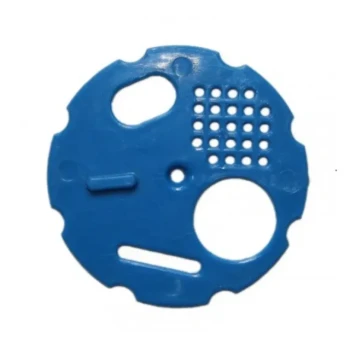
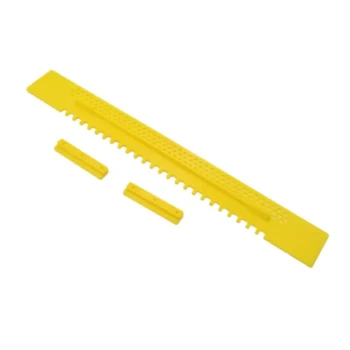
An entrance reducer should be utilized whenever a colony is in a vulnerable state or requires environmental assistance, rather than as a permanent fixture. Specifically, you must use it when a colony is weak or newly established, during winter to prevent drafts, during fumigation treatments, or when there is a risk of robbing by pests like yellow jackets.
The entrance reducer is a tool for balancing colony strength against external pressure. By matching the entrance size to the colony’s population, you allow the bees to effectively defend their resources and regulate their internal climate without exhausting themselves.
Critical Times for Installation
Protecting Vulnerable Populations
When a colony is in a weakened state, it lacks the numbers to defend a wide entrance.
This applies specifically when installing a new nuc or package of bees, or if a colony has suffered a population decline.
In these scenarios, the reducer limits the defendable area, ensuring the smaller workforce is not overwhelmed by intruders.
Preventing Robbing and Pest Intrusion
During a nectar dearth, food becomes scarce, and stronger hives or pests may attempt to rob weaker colonies.
Installing a reducer prevents yellow jackets and robber bees from easily entering the hive.
It acts as a physical bottleneck, allowing your guard bees to defend the hive one-on-one rather than facing a chaotic invasion.
Managing Winter Conditions
During winter months, the primary goal is to reduce internal drafts and conserve the heat generated by the cluster.
A reducer also serves a mechanical function by preventing small mammals, such as mice, from entering the hive seeking warmth.
Mice can destroy comb and disturb the cluster, so a reducer is standard practice for winterizing.
Increasing Treatment Efficacy
You should use a reducer during hive fumigation or when using treatments that rely on vapor.
The reducer restricts airflow, helping to contain natural essential oil vapors within the hive for the required duration.
This ensures the treatment concentration remains high enough to be effective against mites or other target pests.
Understanding the Trade-offs
The Risk of Overheating and Congestion
While protection is vital, an entrance reducer can become a liability during peak honey flow or extreme heat.
If the entrance is restricted when bee traffic is highest, you create a "bottleneck" that impedes foragers from efficiently collecting pollen and nectar.
Recognizing the Signals for Removal
You must observe the landing board for traffic congestion.
If bees are piling up trying to enter or exit, the reducer is costing the colony productivity.
Furthermore, in high heat, a restricted entrance limits ventilation, potentially making it difficult for bees to cure honey or cool the brood nest.
Making the Right Choice for Your Goal
To determine whether the reducer belongs on the hive today, assess your immediate objective:
- If your primary focus is establishing a new colony: Use the reducer on the smallest setting to help the bees secure their new home.
- If your primary focus is winter survival: Install the reducer to conserve heat, block drafts, and exclude mice.
- If your primary focus is maximizing honey production: Remove the reducer completely during the peak nectar flow to allow unrestricted traffic.
- If your primary focus is disease treatment: Install the reducer temporarily to contain fumigation vapors within the hive.
Successful beekeeping requires adjusting the hive configuration to match the season and the colony's current strength.
Summary Table:
| Condition | Recommended Setting | Primary Benefit |
|---|---|---|
| New Nucs/Packages | Smallest Opening | Easier defense for small populations |
| Nectar Dearth | Smallest Opening | Prevents robbing by pests and other bees |
| Winter Months | Small/Medium Opening | Blocks drafts and excludes mice/pests |
| Fumigation/Treatments | Smallest Opening | Retains medicinal vapors for better efficacy |
| Peak Honey Flow | Fully Removed | Maximizes traffic flow and hive ventilation |
Maximize Your Apiary’s Success with HONESTBEE
Protecting your colony is just the first step. At HONESTBEE, we specialize in supporting commercial apiaries and distributors with high-quality beekeeping solutions. From precision hive-making and honey-filling machines to essential beekeeping tools and consumables, we provide the hardware you need to scale your operations.
Whether you are looking for bulk wholesale supplies or specialized industrial equipment, our portfolio is designed to enhance your efficiency and productivity. Contact us today to discuss how our comprehensive equipment range can add value to your business.
Related Products
- Steel Round Disc Entrance Reducer for Flexzion Bee Hive Nuc Box Gate
- Beehive Entrance Reducer Guardian Metal Hive Entrance for Bees
- Professional Hive Front Entrance Bee Feeder
- HONESTBEE Entrance Bee Feeder Efficient Hive Front Liquid Feeding Solution for Beekeeping
- HONESTBEE Entrance Bee Feeder Professional Hive Nutrition Solution for Beekeeping
People Also Ask
- What is the purpose of an entrance reducer for a beehive? Strengthen Colony Defense and Prevent Robbery
- Why are entrance reducers used to counter hornet infestations? Protect Your Hive with Strategic Choke Points
- Why is it critical to maintain a smaller entrance for a newly established bee hive? Boost Colony Growth and Security
- What is the function of an entrance reducer on a beehive? Strengthen Colony Defense and Climate Control
- Under what conditions should a beekeeper adjust the size of a beehive entrance? Seasonal & Defense Management Tips