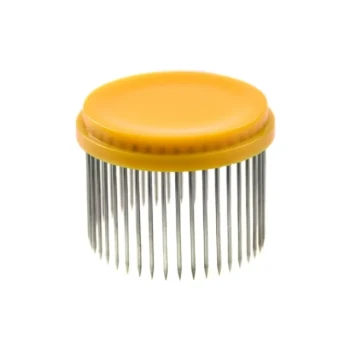
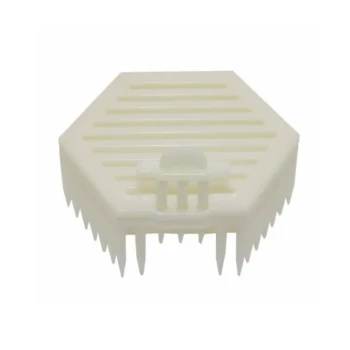
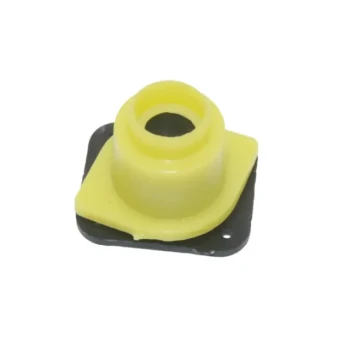
Scalvini Queen Cages are specialized cylindrical devices designed to house and protect queen bees during critical stages of development and transport. Also known as queen cups, these cages create a controlled micro-environment that allows for the safe rearing of queen larvae. They are engineered to ensure the developing queen receives necessary care from the colony while remaining isolated from potential aggression or overcrowding.
The Scalvini Queen Cage is a fundamental tool for precision beekeeping, allowing for the controlled management of genetics, safe queen introduction, and effective swarm prevention through a design that balances isolation with accessibility.
Design and Functionality
Engineered for Development
The physical design of the Scalvini cage is strictly functional. It features a specific cylindrical shape and size intended to house the queen without the risks associated with overcrowding. This spatial regulation facilitates optimal growth conditions for larvae.
Controlled Interaction
A critical feature of the Scalvini design is the inclusion of small apertures or mesh openings. These openings are large enough to allow worker bees to feed and tend to the queen but small enough to keep her securely contained. This ensures she receives essential nutrition and maintains pheromone contact with the hive while remaining physically protected.
Historical Evolution
Origins and Innovation
The concept was pioneered in the early 1900s by Italian beekeeper Giovanni Scalvini. His goal was to solve the problem of safely isolating and transporting queens without cutting off ventilation or care.
Material Shift
Original iterations of the cage were constructed from wood and wire mesh. Over time, manufacturing has shifted toward durable plastics. This evolution has made the cages more robust, easier to clean, and more cost-effective for long-term use.
Strategic Benefits for the Apiary
Genetic Management
By isolating specific queens, beekeepers gain greater control over breeding lines. Scalvini cages allow for the precise selection and protection of queens with desirable traits, enhancing the overall genetics of the apiary.
Swarm Control and Productivity
The cages stabilize the environment for the queen, minimizing stress during development and mating. A less stressed queen reduces the likelihood of swarming, thereby maintaining higher levels of hive productivity.
Versatility in Application
Beyond rearing, these cages are essential for hive maintenance tasks. They are standard tools for hive splits, introducing new queens to established colonies, and transporting queens between locations.
Operational Considerations
Maintenance and Hygiene
While modern plastic Scalvini cages are reusable, this benefit comes with a maintenance obligation. Because they house the most critical member of the colony, they must be meticulously cleaned and sterilized between uses to prevent the spread of pathogens.
Intervention vs. Naturalism
These cages represent a high-intervention approach to beekeeping. For beekeepers aiming for a strictly "natural" or hands-off hive style, the use of rearing cages may conflict with the philosophy of allowing the colony to manage its own queen succession.
Making the Right Choice for Your Goal
The utility of Scalvini Queen Cages depends largely on the level of control you wish to exert over your colonies.
- If your primary focus is genetic improvement: Use these cages to isolate larvae from high-performing stock to ensure specific traits are preserved and propagated.
- If your primary focus is colony stability: Utilize the cages during queen introduction or hive splits to protect the queen from worker aggression until she is accepted.
- If your primary focus is cost-efficiency: Take advantage of the reusable nature of modern plastic cages to lower your long-term equipment expenses.
By providing a secure boundary that allows for care without contact, Scalvini Queen Cages grant the beekeeper precise influence over the future of the hive.
Summary Table:
| Feature | Description | Key Benefit |
|---|---|---|
| Design | Cylindrical with small apertures | Allows worker feeding while ensuring isolation |
| Material | Durable, food-grade plastic | Easy to sterilize, cost-effective, and reusable |
| Primary Use | Queen rearing and introduction | Enhances colony stability and swarm prevention |
| Genetic Control | Isolated development environment | Facilitates precise breeding and trait preservation |
Elevate Your Apiary Operations with HONESTBEE
At HONESTBEE, we understand that precision is the foundation of a successful commercial apiary. As a premier provider to professional beekeepers and global distributors, we supply everything from high-quality Scalvini Queen Cages to advanced honey-filling machines and hive-making equipment.
Whether you are scaling your breeding program or stocking a distribution network, our comprehensive wholesale portfolio is designed to maximize your efficiency and productivity. Contact us today to discuss how our specialized tools and industry consumables can support your growth and deliver superior value to your beekeeping business.
Related Products
- Professional Queen Cage with Sliding Gate and Feeder Plug
- Professional Queen Bee Introduction and Transport Cage
- Durable Galvanized Steel Spring Queen Bee Cage
- Professional Multi-Functional Queen Bee Cage
- Professional Multi-Compartment Queen Cage with Sliding Lid
People Also Ask
- Why are specialized queen bee cages used for the banking of mated queen bees? Maximize Commercial Apiary Storage Efficiency
- What is the mechanism of action for using temporary queen bee cages? Master Successful Queen Introduction
- How is a queen bee released from a queen cage? Ensure Safe Colony Integration & Hive Success
- What is the step-by-step process for installing a queen bee's cage onto a frame? Ensure Hive Acceptance Safely
- What technical precaution must be taken regarding the mesh or grill side of a queen bee cage? Ensure Queen Survival